Meet Mike Copeland: From Cattle Vet to Ranch Owner and FarmKeep Advisor
After 40+ years working as a large-animal vet, Mike Copeland is now raising beef cattle in California and sharing what he’s learned with the next generation through FarmKeep. We had the amazing opportunity to spend time with him and hear more about his story.
An Unexpected Path into Ag
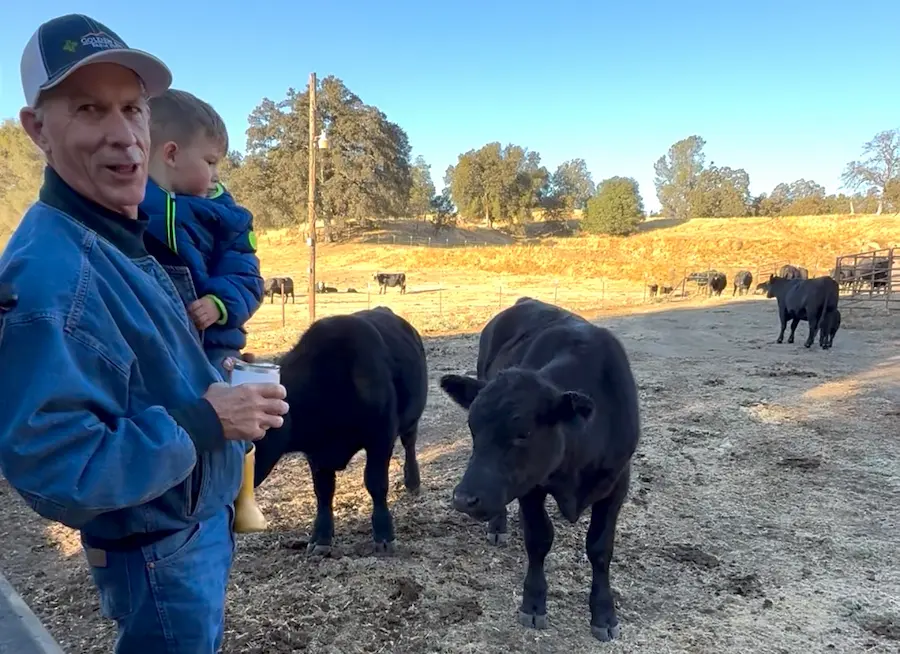
Mike didn’t grow up on a farm. He grew up in Worthington, Ohio — “a suburb of Columbus,” as he puts it — where agriculture wasn’t a big part of daily life. That changed thanks to a friend who invited Mike to ride horses, and things snowballed from there. By 15, he’d bought his own horse, was working at a local beef farm, and had joined 4H. Soon, he was showing cattle at the Ohio State Fair and helping out on farms all over the Midwest.
“I just fell in love with it,” he says. “The animals, the work, the lifestyle. It all clicked for me.” He admits he was “kind of an anomaly” in his suburban neighborhood — most kids didn’t know anything about cattle or agriculture.
How Losing a Horse Inspired a Career in Veterinary Medicine
At 17, Mike went on a camping trip, leaving his horse boarded at a local stable. While he was away, someone left a gate open and the horse was hit by a car.
“That was pretty devastating,” he said. “That was the trigger that made me want to be a veterinarian.”
The way the vets handled the situation stuck with him — not just the technical side, but the professionalism and care. Mike followed that calling to Utah State, where he studied animal science and pre-vet, finished his degree at Ohio State, and then completed an internship in large-animal medicine at the University of Georgia. From there, he built a 41-year career as a cattle vet — mostly working with dairy herds in California.
Four Decades of Vet Work on California Dairies
Mike spent most of his professional life working with large dairies in California, focused heavily on reproductive herd health. That meant early mornings checking cows for pregnancies, helping diagnose health issues, reviewing breeding records, and working closely with dairy producers on herd management strategies.
“A lot of what I did was reproductive herd health,” he said, which included helping clients review data to improve breeding, nutrition, and productivity. He also handled sick cow work, vaccinations, and day-to-day animal health management. He helped farmers improve breeding programs, reduce disease, and fine-tune operations for better production and animal welfare.
Over the years, he saw dairy cows go from producing 17,000 pounds of milk annually to over 30,000 in some herds — a result of better nutrition, genetics, and care.
“People don’t always see the side of ag where the animals are well cared for,” Mike says. “But that’s the goal. Healthier cows are more productive cows, and most of the dairymen I worked with really cared about doing it right.”
He watched the industry evolve. When he started, everything was on paper. Over time, software, ultrasound, and detailed record-keeping systems became standard — tools Mike helped his clients adopt to manage herds more effectively.
A Cow C-section in Front of 750 People
One of Mike’s most memorable moments as a vet happened in a rather public setting — a live cattle C-section demonstration at the Merced County Fair.
“I walked into the fairgrounds and there were 750 people in the stands,” he said. “It was the first time I’d done a C-section on a cow in front of that many people.”
The crowd watched as he delivered the calf, and when it started breathing on its own, the audience erupted in applause. “The calf lived, the cow lived, and I had a pretty good experience out of it. And the crowd thought it was great.” Mike said.
Family and the Almond Orchard Life
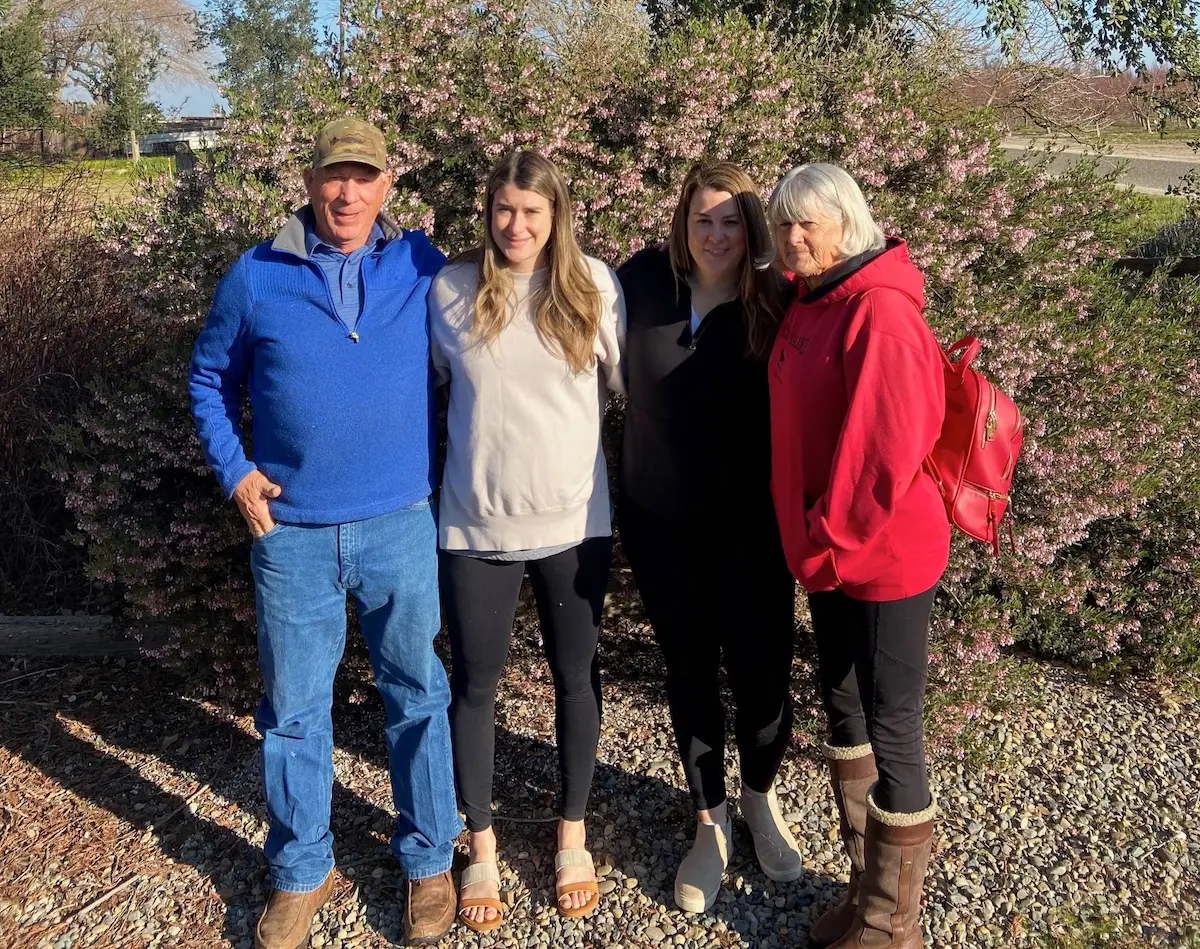
Mike and his wife Kathy, a lifelong equestrienne, also ran a 10-acre almond orchard in Atwater, CA for 32 years. “We planted the trees, irrigated, and ran it ourselves,” he said.
It wasn’t just trees. Their place was full of animals: pigs, goats, horses, even a potbellied pig at one point. “Our daughters were very involved in 4H,” Mike said. “They showed pigs, did horse shows, and were always around the animals.”
“Kathy did most of the animal handling,” Mike says. “She’s a natural horsewoman. She’s done everything from showing and training to breeding and even some Quarter Horse racing back in the day.”
Building the Ranch in Mariposa
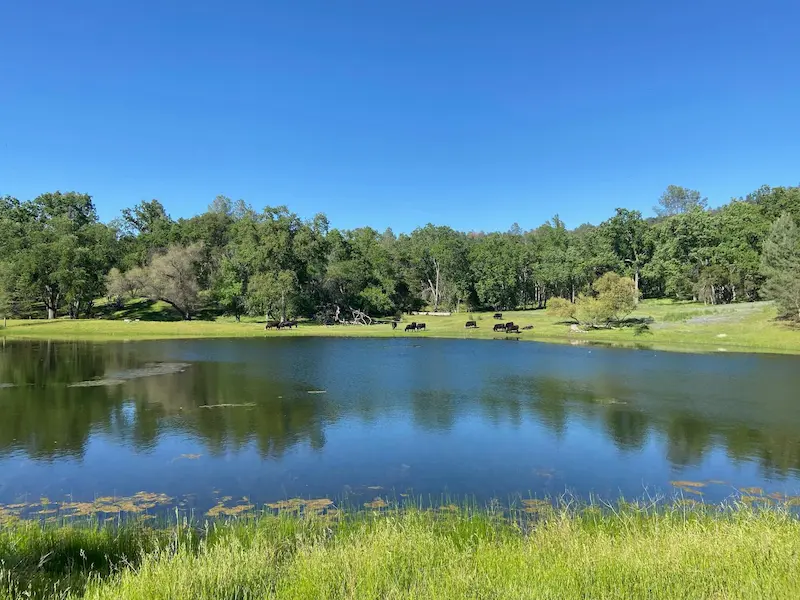
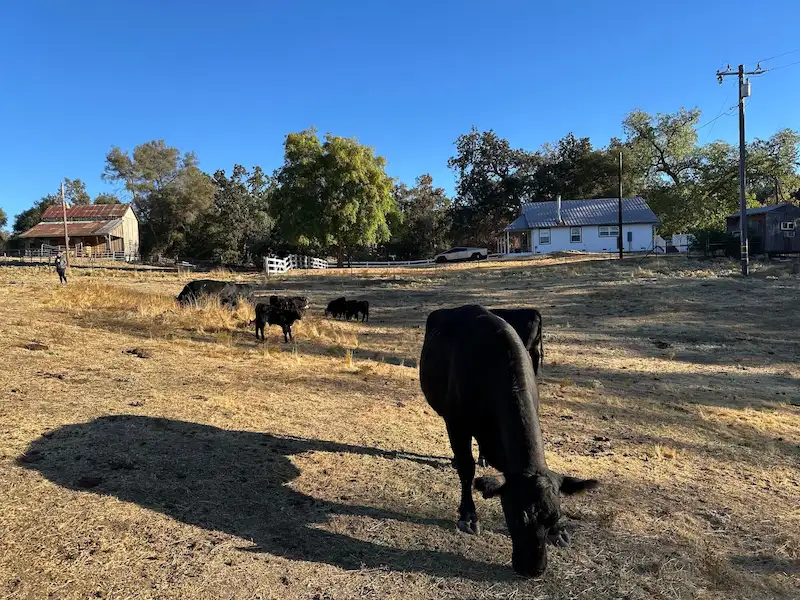
As retirement approached, Mike and Kathy bought a 240-acre property in Mariposa, CA. “It was kind of a wreck,” he said. The barn needed rebuilding, fences were down, and the house was dated.
But they saw the potential and worked hard to fix it up — redoing fencing, rebuilding the barn, and gradually turning the property into a functional beef cattle operation.
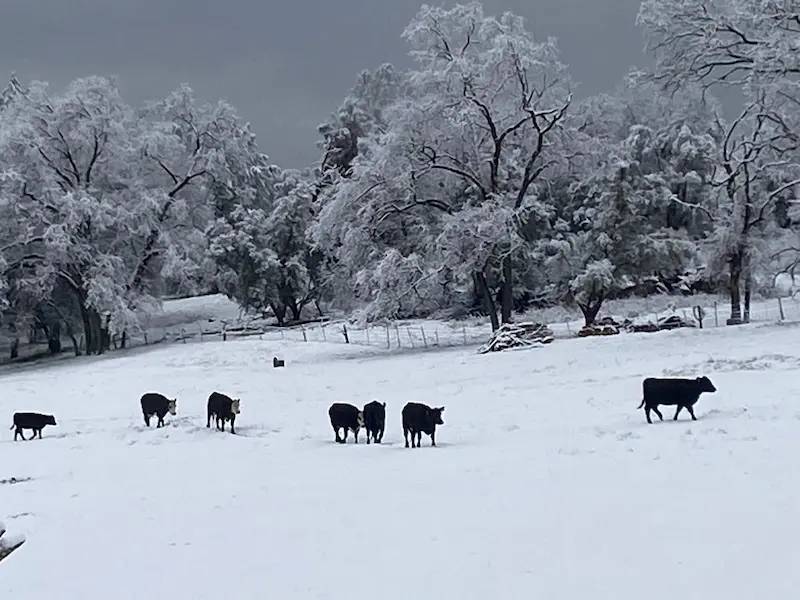
“I keep about 15 to 20 mother cows,” he said. “Mostly Angus, some Simmental crosses.”
He breeds them using artificial insemination, calves them in the fall, and manages a second property where he keeps the calves after weaning.
A Calm Approach to Cattle Handling
Mike’s approach to handling cattle is low-stress and quiet. “I don’t use a hot shot, and I don’t yell at them,” he said. “Now when I call them, they come.”
One of the tools he built is a Bud Box, a livestock handling design that guides animals through a chute using their natural instincts. “It’s easier on them and easier on us,” he said. “It just works.”
He’s focused on keeping the animals calm and minimizing stress at every stage — from handling to transport to weaning.
Breeding, Calving, and Animal Health
Mike typically calves in the fall to avoid the risks associated with acorns dropping from oak trees, which can be toxic if consumed in large amounts. Acorn consumption can cause limb deformities if consumed in the second trimester of pregnancy. He had an experience with an "Acorn calf" who had to have his leg splinted until he could walk. Mike kept the calf named "Timmy" (after Tiny Tim) for seven years as a pet.
Once the new calves are weaned, they are moved to a second property in Winton and started on grain and hay. After 30 days, some steers come back to the ranch to be prepared for butcher, some heifers are kept as replacements, and the rest are sold privately or at an auction.
Advice for People Getting Into Cattle
Mike’s advice is straightforward. “If you’re looking at it as a business, you better know your numbers,” he said. “If you’re getting into it to make a lot of money, you might want to rethink that,” he says. “But if you love working with animals and being outside, it’s a great way of life.”
He encourages people to keep it manageable, learn from others, and stay realistic. “If you’re breeding cattle, know what kind of animal you want and stick with it. Don’t chase trends. People think you just toss the bull in and wait for calves. But there’s so much more to it — nutrition, genetics, health, timing. It’s not as simple as it looks.”
He emphasizes the importance of temperament and animal handling: “A calm herd is just easier on everybody — including the cattle.”
He also encourages newcomers to ask questions, visit other operations, and stay humble. “You can do this for 40 years and still learn something new every day,” he says.
How He’s Involved with FarmKeep
Today, Mike is an advisor to FarmKeep. He’s been helping the team shape their tools based on what ranchers and producers actually need.
“FarmKeep is focused on helping people organize and simplify what they’re already doing,” he said. “It’s not about overcomplicating it — it’s about giving people a tool that makes record-keeping easier.”
He sees value especially for younger ranchers who are looking for practical tools to manage herd health, breeding records, and grazing plans. “I wish I’d had something like this back when I was starting out.”
A Legacy of Work, Land, and Livestock
Now retired, Mike spends most of his time on the ranch with Kathy, working with cattle, maintaining fences, and occasionally mentoring younger producers.
His daughters are grown and their lives have been influenced by their upbringing - one is a veterinarian and the other is a SVP at an agricultural lender.
When asked about what he wants to leave behind, he keeps it simple: “I want to leave it better than I found it.”
Want to hear more stories like Mike’s?
At FarmKeep, we believe in listening to the people who’ve done the work — and are still doing it. Mike’s one of those people, and we’re lucky to have his voice in our community. We work with producers and farmers who live the work every day — and help shape the future of livestock management with care, practicality, and a whole lot of experience.
And while he’s not one to brag, Mike's story is exactly the kind we need to hear more of — a reminder that behind every herd, every pasture, and every good ranching practice, there’s a person who cares.