The Complete Guide to Livestock Vaccines (and How to Track Them with FarmKeep)
Introduction: Why Livestock Vaccines Matter
Vaccinating your livestock isn’t just about preventing disease—it’s about protecting your animals, your investment, and your livelihood. Whether you run a small hobby farm or a large-scale operation, vaccines help prevent costly outbreaks, improve overall herd health, and increase productivity.
But a vaccine is only as effective as the schedule and records behind it. Missed doses, duplicate treatments, or unclear history can lead to gaps in immunity. That’s why consistent vaccine record-keeping is essential—and where FarmKeep can help you stay on track.
In this guide, we’ll break down the most important vaccines for each species, recommended schedules, and how to keep perfect health records.
General Best Practices for Livestock Vaccination
- Always consult a veterinarian before starting a vaccination program.
- Follow manufacturer guidelines for dosage, storage, and administration.
- Maintain cold chain storage (refrigeration) to ensure vaccine efficacy.
- Keep accurate records—date, vaccine type, dose, and the administering person.
📚 Source: Merck Veterinary Manual – Vaccination Programs
Why Vaccine Record-Keeping Matters
Without accurate records, you risk over- or under-vaccinating, causing immunity gaps or wasted costs. Good records help with:
- Regulatory compliance
- Proof of health for sales or shows
- Better breeding and production planning
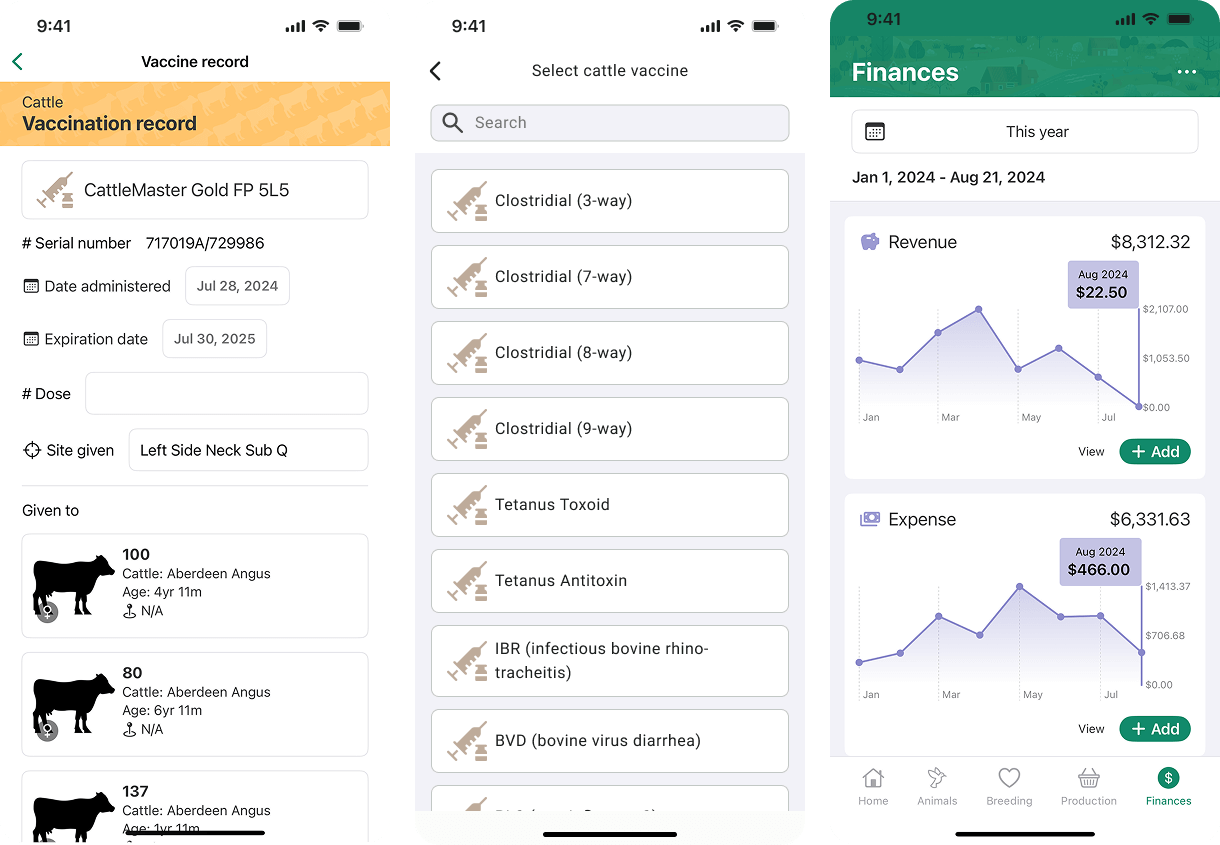
How FarmKeep Makes Livestock Vaccine Tracking Easy
FarmKeep is more than a farm management app—it’s your digital health record keeper. With FarmKeep, you can:
- Log every vaccine by date, animal, and dose.
- Set reminders for boosters and annual shots.
- Generate reports for sales, shows, or inspections.
- Track health alongside breeding, production, and expenses in one place.
FarmKeep ensures no vaccine is missed, your animals stay healthy, and your farm runs smoothly.
Cattle Vaccines
Cattle are prone to diseases like Bovine Viral Diarrhea (BVD), Blackleg, and Brucellosis. Vaccines help reduce losses from illness, stillbirths, and decreased milk/meat production.
Common Cattle Vaccines
- BVD (Bovine Viral Diarrhea) – Prevents reproductive issues and immune suppression.
- IBR (Infectious Bovine Rhinotracheitis) – Protects respiratory health.
- BRSV (Bovine Respiratory Syncytial Virus) – Reduces pneumonia cases.
- Leptospirosis – Protects against reproductive failure and kidney/liver damage.
- Blackleg (Clostridial disease) – Fatal bacterial infection, especially in young cattle.
- Brucellosis – Required in many states for heifers.
Cattle Vaccine Schedule
- Calves: Begin at 2–4 months (consult vet).
- Booster shots: 3–4 weeks after initial.
- Annual boosters: Maintain herd immunity.
📚 Source: Merck Veterinary Manual – Vaccination Programs for Beef Cattle
Sheep Vaccines
Sheep are vulnerable to Clostridial diseases and reproductive issues.
Common Sheep Vaccines
- CD-T (Clostridium perfringens Types C & D + Tetanus) – Core vaccine for all sheep.
- Caseous Lymphadenitis (CL) – Reduces abscess formation and weight loss.
- Campylobacter & Chlamydia – Protects pregnant ewes from abortions.
Sheep Vaccine Schedule
- Lambs: Vaccinate at 6–8 weeks old.
- Pregnant ewes: Booster 4–6 weeks before lambing for passive immunity to lambs.
- Annual boosters for all adults.
📚 Source: Sheep101 – Vaccinations Q&A
Goat Vaccines
Goats share many vaccination needs with sheep but have unique risks.
Common Goat Vaccines
- CD-T Vaccine – Essential for all goats.
- Rabies – Especially important for show goats or areas with wildlife exposure.
- Pneumonia Complex – Recommended for high-density herds.
Goat Vaccine Schedule
- Kids: First dose at 6–8 weeks, booster 3–4 weeks later.
- Annual boosters thereafter.
📚 Source: Goat Vaccination Program – Extension Resource
Poultry Vaccines (Chickens, Ducks, Turkeys, Quail)
Poultry are often vaccinated in hatcheries, but small farm flocks can benefit too.
Common Poultry Vaccines
- Marek’s Disease – Given at hatch.
- Newcastle Disease – Prevents respiratory issues.
- Infectious Bronchitis – Protects egg production and respiratory health.
- Fowl Pox – Protects against skin and mouth lesions.
📚 Source: Poultry Hub – Vaccination Programs
Horse Vaccines
Equine vaccines protect against life-threatening viruses and bacterial diseases.
Core Horse Vaccines (AAEP Guidelines)
- Tetanus
- Eastern/Western Equine Encephalomyelitis (EEE/WEE)
- West Nile Virus
- Rabies
Risk-Based Horse Vaccines
- Equine Influenza
- Strangles
- Potomac Horse Fever
📚 Source: AAEP – Vaccination Guidelines
Pig Vaccines
Swine health is vital for meat production efficiency.
Common Pig Vaccines
- Erysipelas – Protects against arthritis and skin lesions.
- Mycoplasma Hyopneumoniae – Reduces respiratory disease.
- Porcine Parvovirus – Prevents reproductive loss.
📚 Source: MSU Pork Resource