How to Tell If a Pig Is Pregnant (Signs of Pig Pregnancy)
Unlike some animals, pigs do not always show obvious pregnancy signs right away. In the early stages, many of the changes are subtle and can easily be missed. However, by understanding your sow’s heat cycle, behavior, and physical changes, you can often determine whether breeding was successful.
In this guide, we’ll explain the early signs of pig pregnancy, physical and behavioral changes to watch for, and how farmers typically confirm pregnancy.

Early Signs of Pig Pregnancy (First 3 Weeks)
During the first few weeks after breeding, pregnancy signs can be difficult to detect. The most important indicator is whether the sow returns to heat.
No Return to Heat
Female pigs typically have a heat cycle every 18–24 days. If your sow was successfully bred, she will usually not return to heat about 21 days later.
This is often the first strong indication that pregnancy has occurred.
Signs that a sow is in heat normally include:
- Standing reflex when pressure is applied to the back
- Swollen vulva
- Increased vocalization
- Restlessness
- Interest in boars
If these signs do not appear around day 21 after breeding, pregnancy is likely.
Changes in Appetite
Some farmers notice slight appetite changes early in pregnancy. Many pregnant sows develop a more consistent or increased appetite, though this varies between animals.
Because appetite changes can occur for other reasons as well, this sign should be considered supporting evidence rather than confirmation.
Physical Signs of Pig Pregnancy
As pregnancy progresses, physical changes become easier to notice.
Gradual Weight Gain
Pregnant sows will slowly gain weight as piglets develop. This change may become noticeable around 4 to 6 weeks after breeding.
However, weight gain can also result from diet changes, so it should be evaluated alongside other signs.
Enlarged Abdomen
As pregnancy advances, the sow’s abdomen will begin to expand and drop slightly as piglets grow.
This change becomes more noticeable during the second half of pregnancy (after about day 60).
Enlarged Teats
The sow’s teats may become more prominent or slightly enlarged during pregnancy. Mammary development becomes more obvious during the final month before farrowing.
Behavioral Signs a Pig Is Pregnant
Behavioral changes can also indicate pregnancy.
Calmer Temperament
Some sows become noticeably calmer or less active during pregnancy. They may spend more time resting and show less interest in social interactions.
Reduced Interest in Boars
A pregnant sow typically shows little or no interest in boars after successful breeding.
If a boar is present and the sow consistently ignores him during what would normally be her heat cycle, pregnancy is likely.
Nesting Behavior (Late Pregnancy)
During the final weeks before farrowing, sows may begin nesting behaviors such as:
- Gathering bedding
- Pawing at straw or hay
- Rearranging the pen
These behaviors help prepare a safe environment for piglets.
How to Confirm Pregnancy in Pigs
While behavioral and physical signs can suggest pregnancy, farmers often use additional methods to confirm it.
Tracking the Heat Cycle
The simplest method is observing whether the sow returns to heat after breeding.
If the sow does not show signs of heat around day 21, pregnancy is likely.
Ultrasound Scanning
Many farmers use ultrasound equipment to confirm pregnancy.
Ultrasound can typically detect pig pregnancy around 25–30 days after breeding.
This method provides one of the most reliable confirmations.
Veterinary Blood Tests
Blood tests can detect pregnancy hormones, though they are less commonly used on small farms compared to ultrasound or heat cycle observation.

Signs Your Pig Is NOT Pregnant
Sometimes breeding does not result in pregnancy, even when mating appears successful. Recognizing the signs that a sow may not be pregnant helps farmers quickly decide whether to attempt breeding again.
Return to Heat
The most reliable indicator that a sow is not pregnant is a return to heat approximately 18–24 days after breeding.
Signs a sow has returned to heat include:
- Standing reflex when pressure is applied to the back
- Swollen or reddened vulva
- Increased vocalization
- Restlessness or pacing
- Increased interest in boars
If these signs appear around three weeks after breeding, it usually means the sow did not conceive.
Continued Interest in Boars
A pregnant sow typically loses interest in boars after breeding. If the sow continues seeking out the boar or responding strongly to his presence, pregnancy is unlikely.
No Physical Changes Over Time
While early pregnancy signs can be subtle, most sows begin showing gradual body changes after about 45–60 days of pregnancy.
If the sow shows:
- no weight gain
- no abdominal enlargement
- no changes in teats
then pregnancy may not have occurred.
Repeated Heat Cycles
If a sow continues cycling every three weeks, it is a strong sign she is not pregnant.
Tracking heat cycles carefully can help farmers identify breeding problems early and adjust their breeding schedule.
What to Do If Your Pig Is Not Pregnant
If a sow returns to heat or shows no pregnancy signs:
- Monitor the next heat cycle closely.
- Rebreed the sow during her standing heat period.
- Ensure the boar is healthy and fertile.
- Review nutrition and body condition.
Once breeding is successful, you can estimate the due date using a pig gestation calculator, which predicts the farrowing date based on breeding day.
Pig Pregnancy Signs Chart
For quick reference, this chart summarizes the most common pig pregnancy signs throughout gestation. Farmers often rely on multiple signs together rather than a single indicator to determine pregnancy.
Quick Tip for Farmers
Because many early pregnancy signs can be subtle, the most reliable approach is to:
- track breeding dates
- monitor heat cycles
- confirm pregnancy with ultrasound when possible
- calculate the expected farrowing date
Once breeding is confirmed, tools like a pig gestation calculator make it easy to estimate when piglets will arrive and prepare for farrowing.
What to Do If Your Pig Is Pregnant
Once pregnancy is confirmed, the next step is preparing for farrowing and supporting the sow’s health.
Important management steps include:
Adjust Nutrition
Pregnant sows require balanced nutrition to support developing piglets. Feed quality and portion size may need to increase gradually during pregnancy.
Prepare a Farrowing Area
Most farmers move sows into a farrowing pen around day 90–100 of pregnancy. This provides time for the sow to adjust before giving birth.
Track the Due Date
Knowing the expected farrowing date helps farmers prepare for labor and piglet care.
Pigs are typically pregnant for 114 days.
You can estimate the due date using a pig gestation calculator, which calculates the farrowing date based on the breeding day.
Pig Pregnancy Timeline Overview
Pig pregnancy is commonly remembered as:
3 months, 3 weeks, and 3 days
During this time:
- Early pregnancy involves embryo implantation
- Mid pregnancy is when piglets grow rapidly
- Late pregnancy prepares the sow for farrowing
Tracking breeding dates makes it easier to plan housing, feeding, and piglet care.
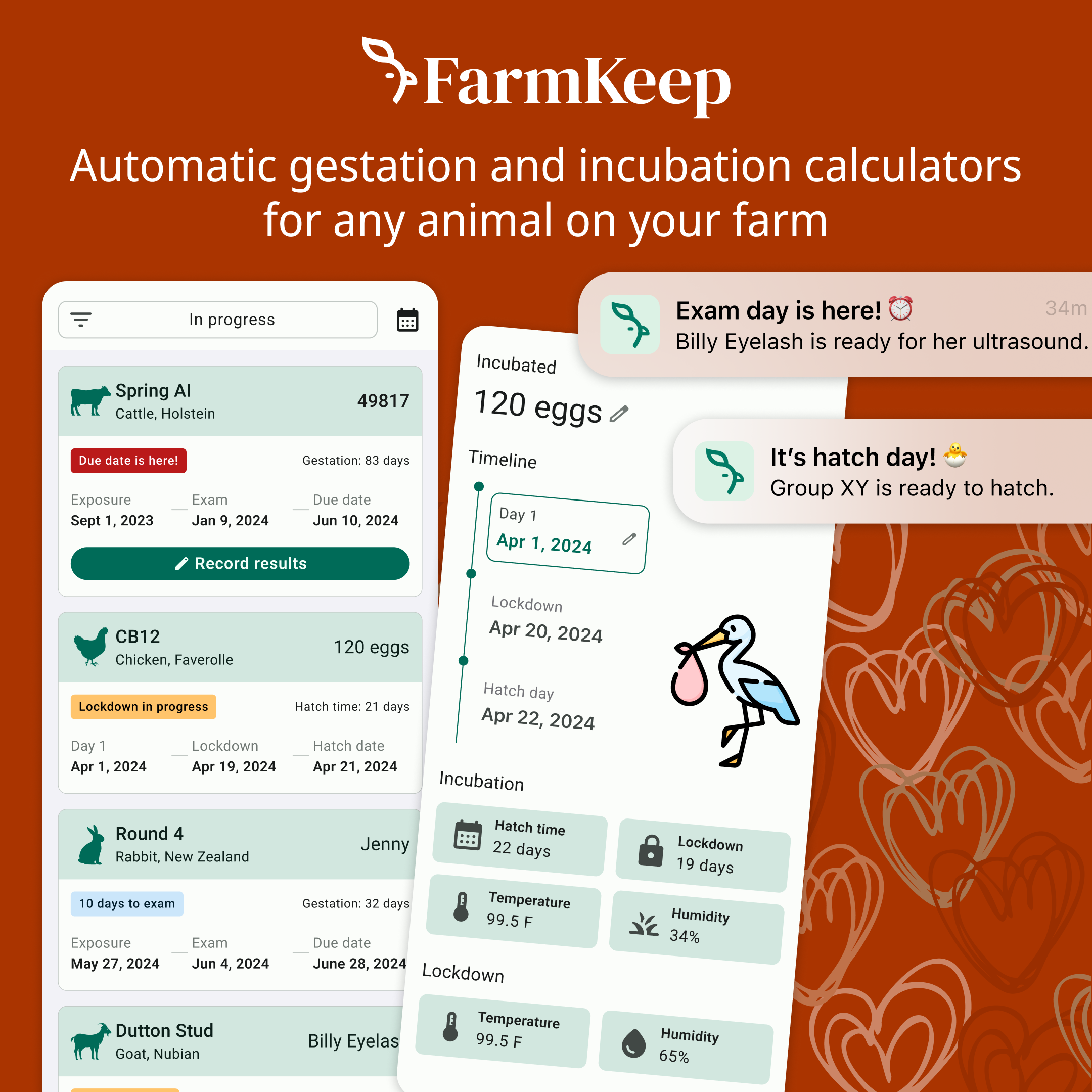
Manage Pig Breeding Records with FarmKeep
Keeping track of breeding dates, pregnancy timelines, and farrowing records is essential for successful pig management.
FarmKeep helps farmers organize livestock records in one place, including:
- breeding records
- gestation tracking
- farrowing logs
- litter records
- animal health data
With FarmKeep, you can track breeding schedules and automatically calculate farrowing dates without relying on manual notes or spreadsheets.
FAQ
How can you tell if a pig is pregnant without a vet?
Many farmers determine pregnancy by observing the sow’s heat cycle and behavior. If a sow does not return to heat about 21 days after breeding, pregnancy is likely. Other signs may include gradual weight gain, reduced interest in boars, and changes in appetite or temperament.
However, these signs are not always definitive, which is why some farmers use ultrasound or veterinary confirmation.
What is the earliest sign that a pig may be pregnant?
The earliest common sign is when the sow does not return to heat approximately three weeks after breeding. Because pigs normally cycle every 18–24 days, missing a heat cycle is often the first indicator of pregnancy.
Can a pig look pregnant but not actually be pregnant?
Yes. Sometimes pigs may gain weight due to diet, water retention, or normal body condition changes, which can make them appear pregnant. False pregnancy can also occur in rare cases. For this reason, farmers typically confirm pregnancy by tracking heat cycles or using ultrasound.
How soon after breeding can you confirm pregnancy with ultrasound?
Ultrasound can usually detect pregnancy around 25–30 days after breeding. Some experienced technicians may detect pregnancy slightly earlier, but accuracy improves after the first month.
Do pigs behave differently when they are pregnant?
Some pigs show behavioral changes during pregnancy, though this varies between animals. Possible changes include:
- becoming calmer or more relaxed
- resting more frequently
- reduced interest in boars
- increased appetite
Not every sow will show obvious behavioral changes.
Will a pregnant pig still show heat signs?
Most pregnant pigs do not show heat behavior. If a sow shows strong heat signs such as standing reflex, swollen vulva, or seeking out the boar about three weeks after breeding, it usually means she did not conceive.
Do pigs get morning sickness like humans?
No. Pigs do not typically experience morning sickness or vomiting related to pregnancy. Appetite may change slightly, but digestive symptoms are not common indicators of pregnancy.
When do physical pregnancy signs become obvious?
Physical signs often become more noticeable during the second half of pregnancy, typically after about 6–8 weeks. At this point, the sow’s abdomen may begin to expand and body shape may change.
How do farmers usually confirm pig pregnancy on small farms?
On small farms and homesteads, pregnancy is often confirmed through:
- tracking heat cycles
- observing behavioral changes
- monitoring body condition
Some farmers also use portable ultrasound scanners to confirm pregnancy.
Can pigs have a false pregnancy?
Yes, though it is uncommon. False pregnancy (also called pseudopregnancy) occurs when hormonal changes mimic pregnancy even though no piglets are present. The sow may stop cycling temporarily but eventually return to normal heat cycles.
Why is it important to confirm pig pregnancy early?
Confirming pregnancy helps farmers:
- plan breeding schedules
- adjust nutrition for the sow
- prepare a farrowing area
- estimate when piglets will arrive
Once pregnancy is confirmed, farmers often use tools like a pig gestation calculator to estimate the farrowing date and prepare for piglet care.
What should you do if your pig does not become pregnant?
If breeding does not result in pregnancy, farmers usually:
- Monitor the next heat cycle carefully
- Breed again during the standing heat period
- Check the boar’s fertility
- Evaluate the sow’s nutrition and body condition
Proper breeding timing is one of the most important factors for successful conception.