Cattle Gestation Calculator
A cattle gestation calculator is a practical tool that helps farmers predict when a cow will calve. The calculator estimates the due date by adding the average gestation period of 283 days (roughly 9 months and 10 days) to the breeding date. This tool enables farmers to plan labor, nutrition, veterinary care, and overall herd management more effectively.
How to Use a Cattle Gestation Calculator?
Using a cattle gestation calculator is straightforward. Here's everything you need:
Breeding Date: Enter the exact date you know the cow was bred.
Get the Exact Due Date: The calculator will then instantly provide the exact calving date.
How to Calculate Cattle Gestation Period Using Breeding Date?
Use this formula to calculate the average cattle gestation period using dates manually:
- Note the Breeding Date: This is the date when the cow was bred (exposed to a bull or inseminated).
- Add the Average Gestation Period: Cattle typically have a gestation period of 283 days.
- Calculate the Calving Date (Due Date): Adding 283 days to the breeding date gives the estimated calving date.
Calving Date = Breeding Date + 283 days
Example:
- Breeding Date: March 1, 2025
- Add 283 Days → December 9, 2025
- Expected Calving Date: Around December 9, 2025 (plus or minus a few days)
For a more detailed visual guide, below are service dates and their relevant due dates
Cattle Gestation Period Based on Breeds

While the average gestation length for cattle is 283 days, the exact number can vary depending on the breed, age, calf gender, and genetics. Dairy breeds and beef breeds often differ slightly, and even within the same category, variations can exist.
Here are a few examples of popular cattle breeds and their average gestation period:
Beef Breeds Gestation Period
Dairy Breeds Gestation Period
Key Factors Affecting Cattle Gestation
The length of a cow's pregnancy can vary due to several biological and environmental factors, such as
- Breed: Gestation varies slightly by breed.
- Age: Young or first-calf heifers may have slightly shorter or longer gestation periods compared to mature cows.
- Nutrition: Over- or underfeeding can impact the duration of pregnancy.
- Environment: Stress, housing, and temperature can impact gestation.
- Management: Timing, sire fertility, and breeding method (natural or artificial insemination, AI) can all affect a cow's pregnancy.
Why Use a Cattle Gestation Calculator?
A cattle gestation period calculator offers several key advantages for ranchers:
Accurate Calving Dates: Get a precise due date for every cow to eliminate uncertainty and reduce the risk of missed or difficult births.
Pregnancy Monitoring: Track pregnancy progress, detect potential issues early, and ensure timely veterinary care.
Improved Calving Preparation: Move cows to safe, clean pastures and prepare supplies in advance to reduce calf mortality and stress.
Proactive Health Intervention: Careful gestation monitoring can help you identify potential issues early, allowing timely action to protect the health and well-being of both cow and calf.
Efficient Time Management: Skip manual calculations and get due dates in seconds, saving hours of work in larger herds.
Enhanced Herd Performance: Provide timely calving support to produce healthier cows and stronger calves, boosting milk production and overall productivity.
Manage Cattle Gestation Effortlessly with FarmKeep
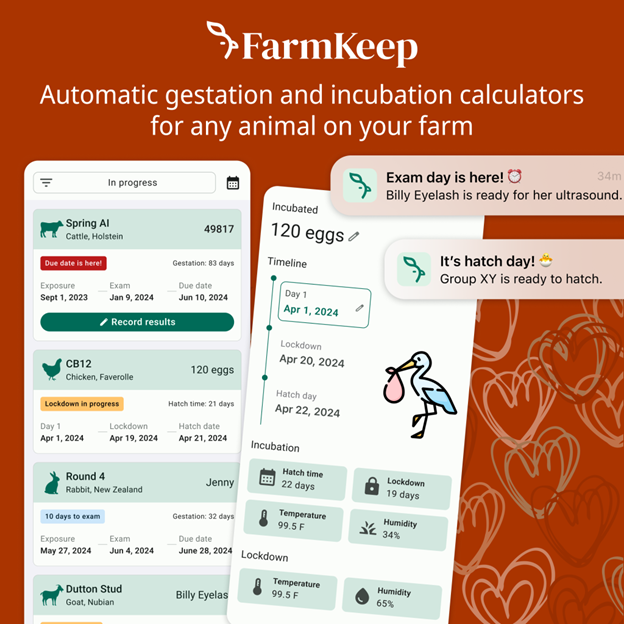
FarmKeep is an all-in-one farm management solution that not only tracks cattle gestation effortlessly but also helps you:
- Log breeding, AI, and due dates in intuitive calendars
- Set alerts for pregnancy checks and expected births
- Track outcomes, stats, and offspring records
- Centralize all breeding data; no loose papers or spreadsheets
When is the Best Time to Breed Your Cattle?
The best time to breed cattle primarily depends on their estrous cycle, also known as the heat cycle, and the overall breeding season. Most cows have a heat cycle of about 21 days, during which they are fertile for roughly 12 to 18 hours. Detecting when a cow is in heat is critical to ensuring successful conception, as breeding outside this window can reduce fertility rates.
Breeding Based on Heat Cycle
- Identify the Heat Cycle: Cows come into heat every 18 to 24 days.
- Look for Breeding Signs: Cows in heat often display behaviors such as restlessness, mounting behavior, mucus discharge, and increased vocalization.
- Plan for Breeding: The best time to breed is about 12 hours after standing heat, whether using natural service or artificial insemination.
Breeding Based on Season
- Spring: Calves born in winter or early spring; work for farms with indoor housing and feed.
- Summer: Calves typically arrive in the spring, when pasture is abundant, which is ideal for pasture-based systems.
- Fall: Produces late-summer calves; can align with market demand.
- Year-Round: Common in dairy operations; requires strong nutrition and management to maintain productivity.
How to Get Your Cattle Pregnant?

There are two primary methods to get a cow pregnant:
Natural Service: This involves placing a bull with a group of cows in a pasture. The bull will naturally breed the cows as they come into heat. This method is simple, but it makes it difficult to pinpoint exact breeding dates.
Artificial Insemination (AI): This method involves a professional technician manually breeding the cow using semen from a selected bull. Artificial Insemination is more complex but allows for greater genetic control and provides a precise breeding date, making the use of a gestation calculator much easier.
Check Out Our Other Animal Tools
- Goat Gestation Calculator
- Rabbit Gestation Calculator
- Mare Gestation Calculator
- Sheep Gestation Calculator
FAQs
What is the gestation period for cattle?
The gestation period is the length of time a cow is pregnant. The average cattle gestation cycle typically lasts about 283 days.
Do different breeds of cattle have different gestation periods?
Yes. While 283 days is the average, some breeds have slightly shorter or longer gestation periods. For example, Angus cows average 283 days, Hereford cows around 285 days, and Holstein cows about 280 days.
What factors can affect cattle gestation time?
Several factors can influence the length of a cow's pregnancy:
- Breed: Different cattle breeds have varying gestation periods.
- Calf Gender: Male calves are often carried a few days longer than female calves.
- Cow's Age: First-time mother cows may have a slightly shorter gestation period.
- Genetics: The genetics of the bull can also influence gestation length.
How accurate are cattle gestation calculators?
Cattle gestation calculators are very accurate. The calculator helps you estimate the target calving date based on the average gestation period for the breed. While the actual birth may happen a few days before or after the calculated date, the tool provides a window for you to prepare.
Can I calculate when to breed for a specific calving date?
Yes. Many calculators allow you to work backwards. You can enter your desired calving date, and the tool will tell you the ideal breeding date to aim for. This is particularly useful for planning seasonal calving.