Livestock Feed Calculator
Estimate how much feed your livestock need with our free livestock feed calculator. Calculate daily hay, grain, and pasture requirements, estimate feed waste, and plan purchasing costs for cattle, goats, sheep, and horses. Whether you’re planning your winter hay supply, budgeting feed expenses, or managing your livestock’s daily feeding schedule, this calculator makes it easier to plan ahead.
How to Use the Livestock Feed Calculator
Our livestock feed calculator estimates the amount of forage your animals will consume based on their body weight, estimated dry matter intake, and feeding conditions. Follow these steps to calculate your livestock’s feed requirements.
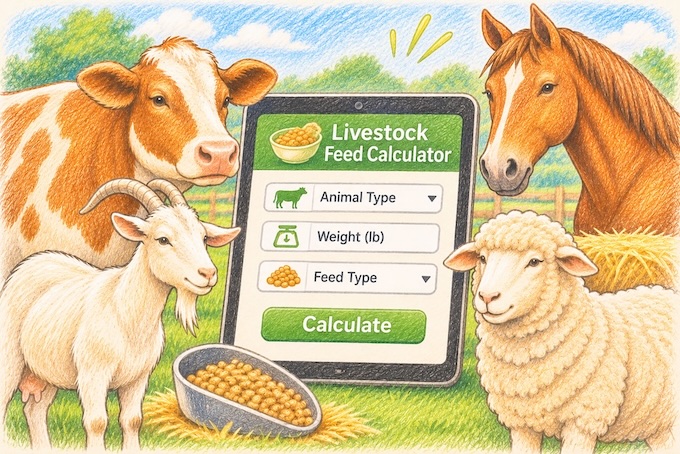
Step 1: Enter Your Livestock Information
Select your livestock species, enter the number of animals you’re feeding, and provide their average weight.
The calculator supports:
- Beef cattle
- Dairy cattle
- Goats
- Sheep
- Horses
Each species has different feeding requirements, so the calculator uses species-specific dry matter intake estimates to calculate daily feed consumption. You can adjust the recommended intake percentage to better reflect your animals’ needs.
Step 2: Select Your Feed Type
Choose the type of forage you’re feeding, such as grass hay, alfalfa hay, mixed hay, haylage, or silage. Different feeds contain different amounts of moisture, which affects how much feed an animal needs to consume. The calculator accounts for these differences using the feed’s estimated dry matter percentage. If you have a forage analysis report, you can enter the actual dry matter percentage for a more accurate estimate.
Step 3: Adjust Your Feeding Assumptions
Enter the percentage of your animals’ total diet supplied by the selected feed and the amount of feed you expect to lose through waste. For example, if your goats receive both pasture and hay, you can estimate what percentage of their total dietary dry matter comes from hay. The calculator also accounts for feed losses caused by trampling, spillage, and other waste.
Step 4: Choose Your Feeding Period
Select how long you plan to feed your livestock. You can calculate feed requirements for a single day, a week, a month, or an entire winter feeding season.
Step 5: Estimate Your Feed Costs
Enter your bale or bag weight and the price you pay for feed. The calculator estimates how much feed you’ll need to purchase and the total cost. You can also view the estimated feeding cost per animal.
How Much Feed Do Livestock Need?
Livestock feed consumption varies depending on the animal’s species, body weight, age, production stage, feed quality, and environmental conditions. A common way to estimate feed intake is to calculate the amount of dry matter an animal consumes as a percentage of its body weight.
The following table provides general planning estimates for common livestock species.
The more feed that is wasted, the more hay farmers need to purchase. Using appropriate feeders, protecting hay from moisture, and monitoring feeding practices can help reduce unnecessary losses.
Tips for Planning Livestock Feed Purchases
Estimating feed requirements is a useful starting point for managing livestock expenses. However, actual consumption can change throughout the year.
Monitor Animal Weight and Body Condition
As animals grow, gain weight, lose weight, or enter different production stages, their feed requirements may change. Regularly monitoring body condition can help identify when a feeding program needs adjustment.
Consider Seasonal Feeding Changes
Animals may require different feeding strategies during winter, drought, or periods of limited pasture availability. Farmers who rely on stored hay should estimate how much forage they’ll need during months when pasture growth is limited.
Account for Feed Quality
Two batches of hay may have different nutritional values even when they weigh the same. Forage testing can provide useful information about protein, energy, fiber, and moisture content.
Reduce Feed Waste
Improving feed storage and using suitable feeders can reduce losses and help purchased feed last longer.
Track Your Feed Expenses
Feed is an ongoing expense for livestock owners. Keeping records of feed purchases and expenses can help farmers understand their operating costs and plan future purchases.
Make Livestock Management Easier with FarmKeep
Calculating your livestock’s feed requirements is just one part of managing a farm. FarmKeep helps you organize your animals, record feeding activities, track expenses, and manage important farm information in one place. Whether you’re raising a small backyard herd or managing a growing livestock operation, FarmKeep gives you the tools to stay organized.
Spend less time managing spreadsheets and more time enjoying your farm. Get Started with FarmKeep →
More Livestock Calculators
Explore additional calculators and tools to help manage your farm. (Coming Soon)
- Goat Feed Calculator
- Cattle Feed Calculator
- Hay Calculator
- Sheep Feed Calculator
- Poultry Feed Calculator
- Chicken Feed Calculator
FAQ
How do I calculate how much feed my livestock need?
Multiply your animal’s weight by its estimated daily dry matter intake percentage. Then adjust for feed moisture, the percentage of the diet supplied by that feed, and expected waste. Multiply the daily amount by the number of feeding days to estimate the total quantity required.
What percentage of body weight should livestock eat daily?
It depends on the species, age, production stage, and feed quality. Mature beef cattle may consume around 2% of their body weight in dry matter daily, while goats and sheep can have different intake requirements. Use species-specific estimates as a starting point and adjust them to your animals’ circumstances.
How much hay do I need for winter?
Estimate your livestock’s daily hay requirements, account for expected waste, and multiply by the number of days you’ll rely on stored hay. The total can then be divided by the average weight of your hay bales to estimate how many bales to purchase.
How do I calculate livestock feed costs?
First, calculate the total feed quantity required for your selected period. Then divide by the weight of each bale or bag and round up to whole purchasing units. Multiply the number of units by the price per unit to estimate your feed purchasing cost.
What is dry matter intake?
Dry matter intake is the amount of feed consumed after excluding water. It allows farmers to compare feed quantities with different moisture levels and estimate how much actual feed is needed to supply a target amount of dry matter.
Does this calculator work for goats, sheep, cattle, and horses?
Yes. The FarmKeep Livestock Feed Calculator supports beef cattle, dairy cattle, goats, sheep, and horses. Each category includes a starting dry matter intake estimate that users can adjust.
Can I use this calculator for chickens or pigs?
Not currently. Chickens and pigs have feeding requirements that depend heavily on age, production stage, and feed formulation. FarmKeep plans to introduce additional species-specific calculators.
Does this calculator determine a complete livestock diet?
No. This calculator estimates forage quantities and purchasing costs. It does not determine whether a diet provides adequate energy, protein, minerals, vitamins, or other essential nutrients.
Sources & References
The calculator’s methodology and general feeding estimates are informed by agricultural extension resources, including:
- Oregon State University Extension — Calculating Livestock Winter Hay Needs
- Oregon State University Extension — Understanding Your Forage Test Results
- Oklahoma State University Extension — Supplementing Beef Cows
- Penn State Extension — Feed Inventory for the Dairy Herd: Planning for Shortages
- Penn State Extension — Nutrition Throughout Pregnancy for Meat Goat Does
- Oregon State University Extension — Nutrient Requirements of Sheep
- University of Minnesota Extension — Using Hay in Horse Diets
- University of Connecticut Extension — Calculating Winter Feed Requirements
Disclaimer: This calculator provides general estimates for forage consumption and purchasing. Actual feed requirements vary depending on animal health, age, production stage, feed quality, and environmental conditions. It is not a substitute for professional livestock nutrition guidance.