Mare Gestation Calculator
A mare gestation calculator is a practical tool that helps farmers predict when a mare (female horse) will foal. The calculator estimates the due date by adding the average gestation period of 340 days (roughly 11 months) to the breeding date. This tool enables farmers to plan labor, nutrition, veterinary care, and overall stable management more effectively.
How to Use a Mare Gestation Calculator?

Using a horse gestation calculator is straightforward. Here's everything you need:
Breeding Date: Enter the exact date you know the mare was bred.
Get the Exact Due Date: The calculator will then instantly provide the exact foaling date.
How to Calculate Mare Gestation Period Using Breeding Date?
Use this formula to calculate the average mare gestation period using dates manually:
- Note the Breeding Date: This is the date when the mare was bred (exposed to a stallion or inseminated).
- Add the Average Gestation Period: Mares typically have a gestation period of 340 days.
- Calculate the Foaling Date (Due Date): Adding 340 days to the breeding date gives the estimated foaling date.
Foaling Date = Breeding Date + 340 days
Example:
- Breeding Date: March 1, 2025
- Add 340 Days → February 5, 2026
- Expected Foaling Date: Around February 5, 2026 (plus or minus a few days)
For a more detailed visual guide, below are service dates and their relevant due dates
Mare Gestation Period Based on Breeds
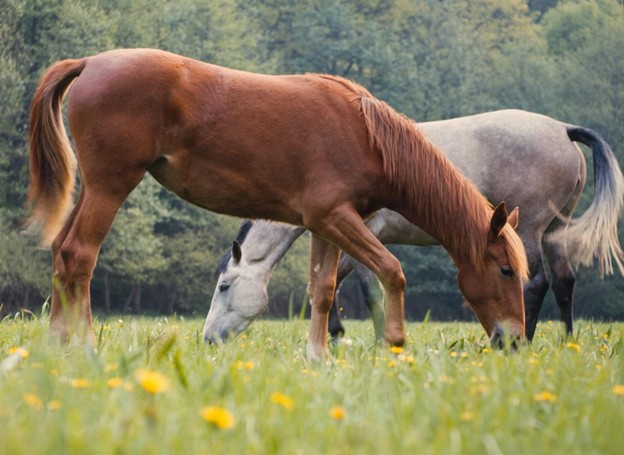
While the average gestation length for a mare is about 340 days (roughly 11 months), the exact number can vary depending on the breed, age, foal gender, and genetics. Racing breeds, sport horses, and work breeds may differ slightly, and even within the same category, variations can occur.
Here are a few examples of popular horse breeds and their average gestation period:
Racing Breeds Gestation Period
Sports Breeds Gestation Period
Utility Breeds Gestation Period
Key Factors Affecting Mare Gestation
The length of a mare’s pregnancy can vary due to several biological and environmental factors, such as
- Breed: Gestation can vary slightly among horse breeds.
- Age: Younger mares or first-time mothers may carry slightly shorter or longer than mature mares.
- Nutrition: Both overfeeding and underfeeding can influence the duration of pregnancy and foal development.
- Environment: Stress, housing, and temperature can impact gestation.
- Management: Breeding method (natural cover or artificial insemination), stallion fertility, and timing of conception can influence a mare’s pregnancy.
Why Use a Mare Gestation Calculator?
A mare gestation period calculator offers several key advantages for breeders and horse owners:
Accurate Foaling Dates: Get a precise due date for every mare to eliminate uncertainty and reduce the risk of missed or difficult foalings.
Pregnancy Monitoring: Track pregnancy progress, maintain health records, detect potential issues early, and ensure timely veterinary care.
Improved Foaling Preparation: Move mares to safe, clean stalls or paddocks and prepare foaling supplies in advance to reduce foal mortality and stress.
Proactive Health Intervention: Careful gestation monitoring can help you identify potential issues early, allowing timely action to protect the health and well-being of both mare and foal.
Vaccination Scheduling: Mares require specific vaccines during pregnancy, such as equine herpesvirus (EHV-1) at 5, 7, and 9 months, and boosters for tetanus, influenza, and West Nile virus in the final month to protect both dam (female horse) and foal.
Efficient Time Management: Skip manual calculations and get due dates in seconds, saving hours of work when managing multiple mares.
Enhanced Breeding Outcomes: Provide timely foaling support, ensure better foal survival rates, and maintain healthier, more productive mares.
Manage Mare Gestation Effortlessly with FarmKeep
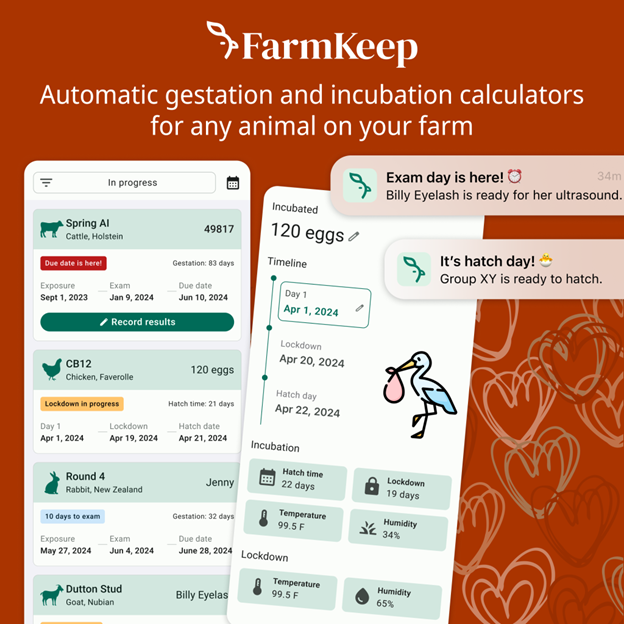
FarmKeep is an all-in-one farm management solution that not only tracks mare gestation effortlessly but also helps you:
- Log breeding, AI, and due dates in intuitive calendars
- Set alerts for pregnancy checks and expected births
- Track outcomes, stats, and offspring records
- Centralize all breeding data; no loose papers or spreadsheets
When is the Best Time to Breed Your Mare?
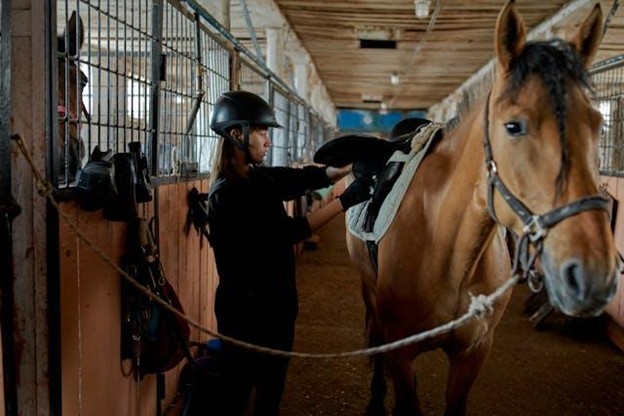
The best time to breed a mare depends on her estrous period (commonly called heat cycle) and the overall breeding season. Mares are seasonally polyestrous, meaning they naturally come into heat during the longer days of spring and summer.
Each reproductive phase lasts about 21 days, with mares typically being receptive to breeding for 5–7 days during that time. Detecting when a mare is in heat is critical to ensuring successful conception, as breeding outside this window reduces fertility rates.
Breeding Based on Heat Cycle
- Identify the Heat Period: Mares usually show signs of estrus every 19 to 22 days during the breeding season.
- Look for Breeding Signs: Common signs include frequent urination, raising the tail, "winking" of the vulva, increased interest in stallions, and changes in behavior.
- Plan for Breeding: The optimal time to breed is usually toward the end of heat, just before ovulation, whether using natural cover or artificial insemination.
Breeding Based on Season
- Spring Breeding: Foals born in late winter or early spring; works well for breeders aiming for early foals, such as in the racing industry.
- Summer Breeding: Produces foals in late spring or summer, aligning with natural pasture growth for easier mare and foal management.
- Fall Breeding: Less common, as mares naturally stop coming into heat when daylight decreases, but can be managed with artificial lighting programs.
- Year-Round Breeding: With the use of artificial lights and controlled environments, mares can be brought into estrus earlier (e.g., January) to produce foals that are competitive in age-based events.
How to Get Your Mare Pregnant?
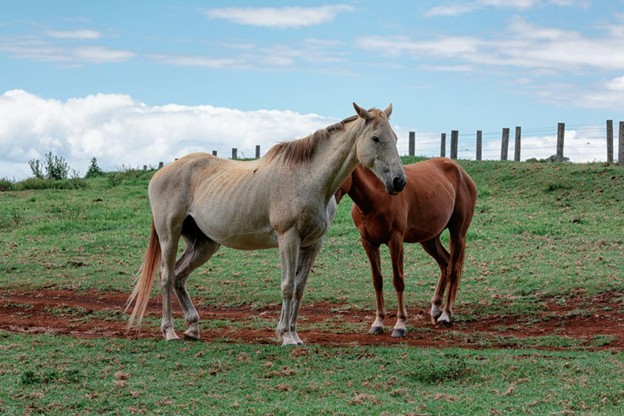
There are two primary methods to get a mare pregnant:
Natural Service: The stallion physically breeds the mare during estrus. While straightforward, it can make exact breeding dates harder to track.
Artificial Insemination (AI): Semen is collected from a stallion and introduced into the mare by a veterinarian or technician. This allows greater control over genetics, safer breeding, and accurate tracking of conception dates, which makes the use of a gestation calculator more precise.
Check Out Our Other Animal Tools
- Goat Gestation Calculator
- Rabbit Gestation Calculator
- Mare Gestation Calculator
- Sheep Gestation Calculator
FAQs
When is breeding season for horses?
Most mares are seasonally polyestrous, meaning they naturally come into heat during the longer days of spring and summer (typically from April to September in the Northern Hemisphere). With artificial lighting programs, breeders can bring mares into season earlier, often starting in January or February, to produce foals earlier in the year.
How long is the average horse pregnancy?
The average horse pregnancy lasts about 340 days (roughly 11 months). However, it can range anywhere from 320 to 360 days, depending on the mare and other factors.
Why do some mares foal later than 340 days?
Mares may carry longer due to factors such as breed, age, hormones, nutrition, season, and individual variation. For example, foals conceived later in the breeding season are often carried longer. It is normal for healthy mares to foal up to a year or slightly more without complications.
Can I use a mare gestation calculator for miniature horses?
Yes, but with caution. The miniature horse gestation calculator uses slightly shorter gestation periods, averaging 320 to 335 days. A mare gestation calculator is still useful, but close monitoring is especially important, as miniature mares can experience more foaling complications.
Does the foaling date depend on the foal's gender?
Yes, research suggests that male foals are often carried slightly longer than female foals. While the difference is usually only a few days, it can contribute to variation in the actual foaling date.