Livestock Breeding Software: Best Tools for Managing Breeding & Genetics (2026 Guide)
Breeding is one of the most important—and easiest to get wrong—parts of managing livestock. It’s not just about pairing animals.
It’s about:
- timing
- tracking
- genetics
- consistency
Miss a heat cycle, forget a breeding date, or lose track of lineage, and the impact compounds over time.
That’s where livestock breeding software comes in. The right system helps you move from scattered notes and memory to a structured process you can rely on.
.png)
What Is Livestock Breeding Software?
Livestock breeding software is designed to help farmers plan, track, and manage breeding activities across their animals.
It allows you to record:
- breeding events
- heat cycles
- gestation timelines
- birth outcomes
- lineage and pedigree
Some tools focus heavily on genetics, while others integrate breeding into a broader farm management system.
The key difference is how practical and usable the system is day-to-day.
Why Breeding Management Matters on a Farm
Breeding isn’t just a task—it’s a long-term strategy.
Timing Is Critical
Missing the right window can delay production cycles significantly.
Genetics Shape Your Herd
Tracking lineage helps you:
- improve quality
- avoid inbreeding
- make better breeding decisions
Productivity Depends on Consistency
Well-managed breeding leads to:
- predictable outcomes
- better planning
- more efficient operations
Mistakes Are Costly
A single missed or poorly tracked breeding event can affect:
- time
- output
- revenue
Systems reduce these risks.

What Livestock Breeding Software Helps You Track
The best tools support the full breeding lifecycle.
Breeding Events
- dates
- pairings
- notes
Heat Cycles
- tracking cycles
- identifying optimal timing
Gestation Timelines
- due dates
- reminders
- planning
Lineage & Pedigree
- parent tracking
- genetic history
Birth Outcomes
- litter size
- health
- survival rates
Reproductive Performance
- success rates
- patterns over time
The goal is visibility—knowing what’s happening and what’s coming next.
Types of Livestock Breeding Software
Not all breeding tools are built the same.
Full Farm Management Software with Breeding Features
These tools:
- include breeding as part of a larger system
- focus on practical daily use
Best for most farms.
Genetics & Pedigree Software
These tools:
- focus on lineage
- support detailed breeding programs
More specialized and often more complex.
Enterprise Breeding Systems
Designed for:
- large-scale operations
- advanced reporting
- compliance
Powerful, but often overkill for smaller farms.
Best Livestock Breeding Software On the Market
Here are some of the top tools available today, based on real-world use cases.

FarmKeep – Best for Practical Breeding Management & Multi-Species Farms
FarmKeep is designed for farmers who want a simple, usable system for managing breeding alongside their daily operations.
Key strengths:
- easy breeding event logging
- gestation tracking and reminders
- multi-species support
- mobile-first design
- integrates with overall livestock management
Why it stands out:
It focuses on usability. You can log breeding events quickly and stay consistent without extra effort.
Best for:
- small to medium farms
- multi-species livestock operations
- farmers who want a practical system they’ll actually use
If your goal is consistent, real-world tracking—not just theory—this is one of the most effective options.
Everbreed – Best for Rabbit Pedigree & Genetics Tracking
Everbreed is focused on detailed rabbit lineage and breeding program management.
Strengths:
- pedigree charts
- genetic tracking
- breeding program tools
Tradeoffs:
- more specialized
- less focused on daily farm operations
CattleMax – Best for Herd Breeding & Performance Tracking
CattleMax offers strong tracking for herd performance and breeding outcomes.
Strengths:
- detailed record keeping
- reporting tools
- herd management
Tradeoffs:
- more complex
- less mobile-first
AgriWebb – Best for Large-Scale Breeding Operations
AgriWebb supports breeding as part of a larger livestock management system.
Strengths:
- structured tracking
- reporting
- scalability
Tradeoffs:
- steeper learning curve
- designed more for larger farms
Comparison Table
Learn more about livestock management software.
How to Choose the Right Breeding Software
Start with your needs. Ask:
- What species am I managing?
- How detailed do I need my tracking to be?
- Do I need mobile access?
- How simple do I want the system?
For most farms:
- simpler tools lead to better consistency
- mobile access improves daily use
Common Breeding Management Mistakes
Breeding success isn’t just about pairing animals—it’s about timing, consistency, and accurate records over time. Small gaps in tracking can compound quickly, leading to missed opportunities, lower success rates, and long-term genetic issues. Avoiding these common mistakes can make a significant difference in both productivity and herd quality.
- Missing Breeding Windows: Without tracking, timing becomes unreliable. Heat cycles can be short and easy to miss, and even slight delays can reduce conception rates and extend your breeding timeline.
- Poor Record Keeping: Incomplete data leads to poor decisions later. Missing breeding dates, unclear outcomes, or gaps in health history make it harder to evaluate what’s working and improve future results.
- Not Tracking Lineage: This increases the risk of inbreeding and weakens long-term outcomes. Without clear lineage records, it’s difficult to maintain genetic diversity or make intentional breeding improvements.
- Inconsistent Systems: Switching between methods leads to gaps in data. Moving between notebooks, spreadsheets, and memory often results in lost or mismatched information, making it harder to trust your records over time.
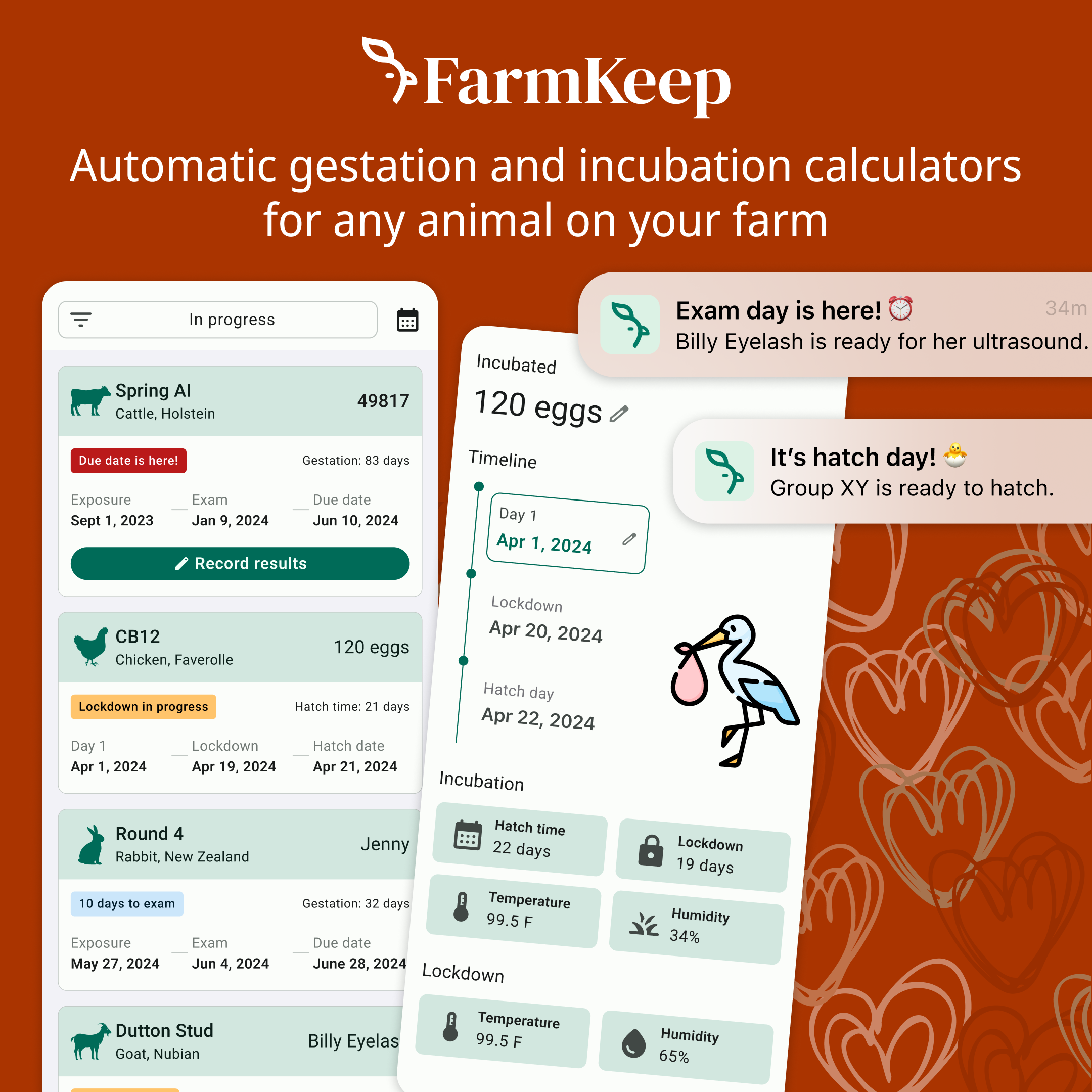
How FarmKeep Simplifies Breeding Management
FarmKeep is built around one core idea: Breeding management should be easy enough to do every day
It helps you:
- log events quickly
- track timelines automatically
- stay consistent over time
Instead of adding complexity, it gives you a system you can rely on.
Final Thoughts
Breeding isn’t just about pairing animals—it’s about managing a system over time.
The right software helps you:
- stay organized
- avoid costly mistakes
- and improve your herd with every cycle
Because the farms that track better… breed better.
FAQ
What is livestock breeding software?
It’s a tool that helps farmers track breeding events, manage timelines, and monitor genetic history.
What features matter most in breeding software?
The most important features are:
- breeding event tracking
- gestation timelines
- lineage tracking
- ease of use
Is there breeding software for small farms?
Yes. Some tools are designed specifically for small and multi-species farms, focusing on simplicity and usability.
Can I track multiple species in one system?
Some tools like FarmKeep support multi-species farms, while others are designed specifically for cattle or single-species operations.
Is breeding software worth it?
For farms focused on improving outcomes and consistency, it can significantly reduce mistakes and improve long-term results.
Can livestock breeding software help prevent inbreeding?
Yes, many tools allow you to track lineage and parentage, which helps you avoid pairing related animals. Even basic pedigree tracking can significantly reduce the risk of inbreeding over time.
How detailed should breeding records be?
Start with the essentials:
- breeding date
- animals involved
- outcome
As your system becomes more consistent, you can layer in additional details like weights, notes, or performance metrics. The key is consistency, not complexity.
Can I use breeding software for seasonal breeding programs?
Yes. Many farms use breeding software to plan around seasonal cycles by tracking timing, expected due dates, and historical patterns. This can help align breeding with weather, feed availability, or market timing.
Does breeding software work for small backyard or hobby farms?
Absolutely. Even small farms benefit from structured breeding records, especially as the number of animals or breeding cycles increases. Simpler tools are often the best fit in these cases.
Can livestock breeding software track artificial insemination (AI)?
Some tools allow you to record AI events alongside natural breeding. This can include:
- semen source
- timing
- outcomes
However, advanced AI-specific tracking features are usually found in more specialized systems.
How do breeding reminders work in these systems?
Many apps allow you to set or automatically generate reminders based on breeding dates. For example:
- expected heat cycles
- due dates
- follow-up checks
These reminders help reduce missed events and improve consistency.
Can I track breeding performance over time?
Yes. Some tools allow you to analyze trends such as:
- conception rates
- litter size
- birth outcomes
Even simple tracking over time can help you identify what’s working and what needs improvement.
Is it difficult to transition from paper records to breeding software?
Not usually. Most farmers start by:
- adding current animals
- logging new breeding events going forward
You don’t need to digitize everything at once—starting fresh is often the easiest approach.
Can breeding software be used alongside other farm systems?
Yes. Many farmers use breeding software as part of a broader system that may include:
- general farm management tools
- financial tracking
- spreadsheets for specific needs
Some all-in-one tools combine these functions into a single platform.
What happens if I stop using the software—do I lose my data?
This depends on the platform. Some tools allow you to export your data, while others may limit access after cancellation. It’s a good idea to check:
- export options
- data ownership
- access policies
Does breeding software work without internet access?
Some mobile apps offer offline capabilities, allowing you to log breeding events in the field and sync later when you have a connection. This is especially useful for farms in remote areas.
How quickly will I see benefits from using breeding software?
Many farmers notice improvements almost immediately in:
- organization
- consistency
- reduced missed events
Longer-term benefits, like improved genetics or productivity, build over time as your data accumulates.