Farm Business Plan: How to Create a Farm Plan That Works
Starting a farm is exciting, but turning a farm into a successful and sustainable business requires careful planning. Many farms struggle not because farmers lack passion or skill, but because they begin without a clear strategy for production, finances, and long-term growth. That’s where a farm business plan becomes essential.
A well-developed farm business plan helps farmers clarify their goals, understand their costs, identify profitable markets, and build systems that support efficient farm operations. Whether you are launching a new agricultural venture, expanding an existing farm, or transitioning from hobby farming to a commercial operation, creating a solid farm plan can dramatically improve your chances of success.
In this guide, we’ll walk through the fundamentals of a farm business plan, including how to build a farm plan, what to include in a farm business plan, and how modern farm management programs can help you manage and execute your strategy.

What Is a Farm Business Plan?
Farm business planning is the process of developing a structured strategy for how a farm will operate, generate revenue, and grow over time. It involves outlining production goals, financial projections, operational systems, and marketing strategies that guide the farm’s daily activities and long-term direction.
A farm business plan acts as a roadmap that helps farmers make informed decisions about land use, livestock production, crop selection, infrastructure investments, and resource management.
Unlike traditional business plans used in many industries, a farm plan must account for factors unique to agriculture, including seasonal production cycles, weather risks, biological growth timelines, and fluctuating commodity markets.
Effective farm business planning typically includes:
- defining farm goals and objectives
- analyzing market demand for agricultural products
- estimating startup and operational costs
- planning crop or livestock production cycles
- forecasting revenue and profitability
- identifying risk management strategies
By organizing these elements into a clear strategy, farmers can better manage uncertainty and build more resilient agricultural businesses.
Free Farm Business Plan Resources and Worksheets
The USDA Farm Service Agency provides an official farm business plan worksheet used for loan applications.
You can download the worksheet here: USDA Farm Business Plan Worksheet (PDF).
Another USDA worksheet is the FSA-2037 balance sheet template, which helps farmers document assets, equipment, and debts.
The worksheet collects information like:
- projected income and expenses
- farm assets and liabilities
- financial forecasts
- operational planning
The Minnesota Institute for Sustainable Agriculture (MISA) developed a free resources for farmers:
You can download the resource here: Building a Sustainable Business (SARE guide)
This guide includes:
- full farm business planning exercises
- worksheets
- financial planning tools
- marketing planning templates

Key Elements of a Farm Business Plan
A comprehensive farm business plan includes several key components that define how the farm will operate and generate income. While every farm is different, most successful farm plans include the following elements.
Farm Goals and Vision
The first step in farm business planning is defining the purpose and direction of the farm.
Farm goals may include:
- producing food for local markets
- raising livestock for breeding or meat production
- building a sustainable regenerative farm
- creating diversified income streams
- developing an agritourism destination
Clearly defining the farm’s mission and long-term vision helps guide all other decisions related to production, infrastructure, and marketing.
Market Research for Farm Products
Understanding the market for your products is essential for building a profitable farm.
Market research helps farmers identify:
- which products are in demand locally
- how much customers are willing to pay
- who the primary competitors are
- which sales channels are available
For example, a vegetable farm may choose to sell produce through farmers markets, CSA subscriptions, restaurants, or grocery stores. Each channel has different pricing structures, customer expectations, and logistical requirements.
Conducting thorough market research ensures that the farm produces products that customers actually want to buy.
Farm Production Planning
Production planning outlines how the farm will generate its products.
For livestock farms, this may involve planning breeding cycles, pasture management, feed systems, and animal health protocols.
For crop farms, production planning includes selecting crops, scheduling planting and harvest cycles, managing soil fertility, and designing irrigation systems.
A detailed farm production plan helps ensure that the farm operates efficiently and maintains consistent product supply.
Farm Financial Planning
Financial planning is one of the most important aspects of farm business planning.
This includes estimating both startup and ongoing operational costs.
Common farm expenses include:
- land acquisition or lease payments
- livestock purchases
- feed and veterinary care
- seeds and fertilizer
- equipment and machinery
- fencing and infrastructure
- labor costs
A strong farm business plan should also include revenue projections based on realistic pricing and production levels.
Financial planning helps farmers evaluate profitability and make informed investment decisions.
Risk Management
Agriculture involves unique risks that must be considered when developing a farm plan.
Common agricultural risks include:
- extreme weather events
- livestock illness or mortality
- crop failure
- fluctuating market prices
- rising input costs
Farmers often manage these risks through strategies such as diversification, insurance programs, and building financial reserves.
Incorporating risk management into farm business planning improves resilience and long-term sustainability.

How to Create a Farm Plan Step-by-Step
Building a farm plan can feel overwhelming, but breaking the process into manageable steps makes it much easier.
Here is a simple step-by-step framework for creating a successful farm plan.
Step 1: Define Your Farm Goals
Begin by identifying what you want your farm to achieve.
Questions to consider include:
- What products will the farm produce?
- Who are your target customers?
- What scale of operation do you envision?
- What lifestyle goals do you want the farm to support?
Clear goals provide direction for the rest of the planning process.
Step 2: Choose Production Systems
Next, determine how the farm will produce its goods.
This may include decisions such as:
- pasture-based livestock systems
- intensive vegetable production
- mixed crop and livestock farming
- specialty niche production
Choosing the right production system depends on available land, climate conditions, market demand, and available labor.
Step 3: Estimate Startup Costs
Startup costs vary widely depending on the type of farm.
Typical startup investments include:
- farmland or leasing costs
- livestock purchases
- equipment and machinery
- fencing and infrastructure
- irrigation systems
Estimating these costs early helps farmers determine funding requirements and financial feasibility.
Step 4: Plan Production Schedules
Agriculture operates on seasonal cycles. Planning these cycles helps ensure efficient use of time and resources.
Examples include:
- planting and harvest schedules for crops
- breeding and gestation timelines for livestock
- feed and pasture rotation schedules
A well-structured production schedule supports consistent output and better resource management.
Step 5: Forecast Revenue
Next, estimate how much income the farm may generate.
Revenue projections should consider:
- expected production levels
- realistic product pricing
- market demand
- seasonal sales variations
These projections help farmers determine whether the farm business plan is financially viable.
Step 6: Develop a Marketing Strategy
Even the best farm products must be marketed effectively.
Common farm marketing channels include:
- farmers markets
- community supported agriculture (CSA) programs
- farm stands
- local restaurants
- online stores
Developing a marketing strategy ensures that farm products reach the right customers.
Examples of Farm Business Plans
Different types of farms require different business planning strategies.
Here are a few examples.
Livestock Farm Plan
A livestock farm plan might include:
- breeding schedules
- herd management strategies
- pasture rotation plans
- feed procurement systems
- veterinary care protocols
Revenue may come from selling breeding stock, meat animals, dairy products, or fiber.
Vegetable Farm Plan
A vegetable farm plan focuses on crop rotation, soil health, planting schedules, and harvesting systems.
These farms often sell through farmers markets, CSA subscriptions, or wholesale produce buyers.
Diversified Small Farm Plan
Many small farms operate diversified systems that include both livestock and crops.
For example, a diversified farm may produce:
- eggs
- vegetables
- honey
- pasture-raised meat
Diversification can improve financial stability by spreading risk across multiple revenue streams.
Farm Management Programs That Help Run Your Farm
Once a farm business plan is created, farmers must manage the daily operations required to execute it. This is where farm management programs become extremely valuable. Farm management programs are digital tools designed to help farmers organize records, track production, monitor expenses, and analyze farm performance.
These programs help farmers manage critical information such as:
- livestock records and breeding data
- crop production tracking
- farm financial records
- feed and supply inventory
- equipment maintenance logs
- daily farm tasks and schedules
By centralizing farm data in one place, management programs allow farmers to make better decisions and improve operational efficiency.
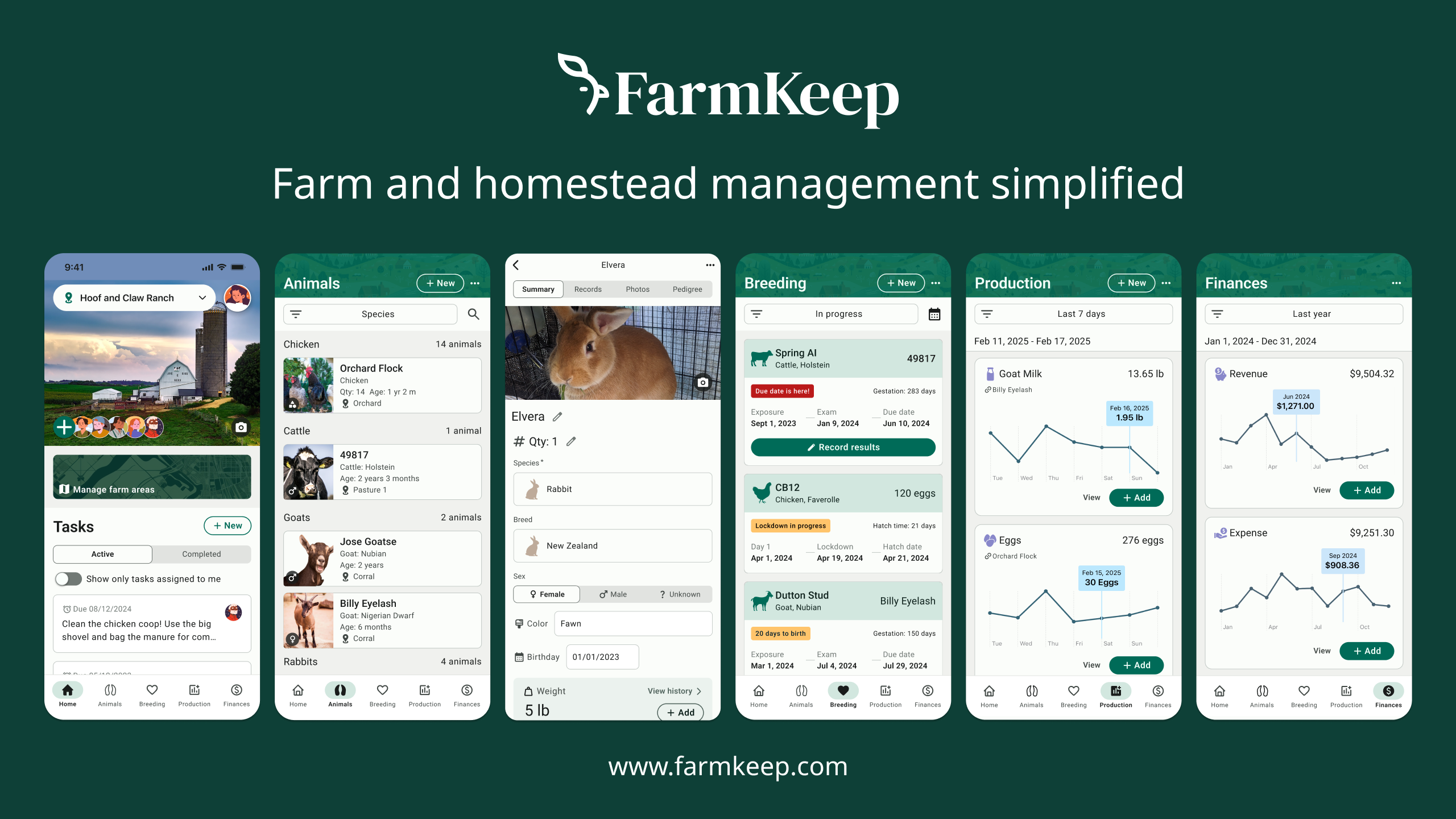
Using FarmKeep's Farm Management Software to Execute Your Farm Plan
Modern farms increasingly rely on farm management software like FarmKeep to implement and monitor their farm business plans.
Digital management systems allow farmers to track everything happening on the farm in real time.
FarmKeep can help farmers:
- record livestock health and breeding information
- monitor production levels such as eggs or milk
- record expenses and revenue
- analyze farm profitability
Having accurate records makes it easier to evaluate whether the farm plan is working and identify areas for improvement.
Digital tools also reduce paperwork and improve organization, allowing farmers to spend more time focusing on production and less time managing spreadsheets.
Common Farm Business Planning Mistakes
While farm business planning is essential, new farmers sometimes make mistakes that can limit their success.
Understanding these pitfalls can help you avoid them.
Overestimating Production
New farmers often assume that production levels will be higher than reality. Unexpected challenges such as weather, pests, or livestock health issues can affect output.
Underestimating Costs
Startup costs are often higher than expected. Infrastructure, equipment, and ongoing operational expenses can add up quickly.
Ignoring Market Demand
Producing a product is not enough. Farmers must ensure there is sufficient demand and a reliable sales channel for their goods.
Poor Record Keeping
Without accurate records, farmers cannot track performance or make data-driven decisions.
Using structured record keeping systems or farm management programs helps prevent this problem.
Final Thoughts
Farm business planning is one of the most important steps toward building a successful agricultural operation. By creating a clear farm plan that addresses production, finances, marketing, and risk management, farmers can make more informed decisions and improve their chances of long-term success.
While every farm is unique, thoughtful planning combined with modern farm management tools can help farmers build resilient, profitable agricultural businesses that thrive for years to come.
FAQ
What is a farm plan?
A farm plan is a detailed outline that describes how a farm will operate. It includes information about land use, production systems, infrastructure, livestock or crop management, and financial projections.
Farm plans often include sections such as:
- farm goals and mission
- crop or livestock production strategies
- equipment and infrastructure needs
- marketing and sales channels
- financial projections and budgets
Creating a farm plan helps farmers organize their operations and ensure the farm is financially and operationally sustainable.
How do you write a farm business plan?
Writing a farm business plan typically involves documenting several key steps including goals, products to be sold, market research, startup and operational costs, revenue projections, marketing strategy, and identifying risks. By documenting these elements, farmers can build a clear roadmap for launching and growing their farm.
Why is farm business planning important?
Farm business planning is important because it helps farmers evaluate whether their ideas are financially viable and operationally practical. Without a clear plan, it can be difficult to manage costs, predict income, or scale production.
A well-developed farm business plan also helps farmers:
- make informed financial decisions
- improve production efficiency
- secure loans or agricultural grants
- manage risk and uncertainty
- plan long-term growth
Ultimately, farm business planning increases the chances that a farm will become profitable and sustainable.
What should a farm business plan include?
A strong farm business plan typically includes several core sections.
These often include:
- farm mission and goals
- market research and customer analysis
- production planning for crops or livestock
- financial projections and startup costs
- marketing and distribution strategies
- risk management and contingency planning
Some farm plans also include timelines for expansion, equipment investments, or diversification into new products.
What are farm management programs?
Farm management programs are digital tools designed to help farmers organize and manage their operations more efficiently.
These programs allow farmers to track important information such as:
- livestock records and breeding schedules
- crop planting and harvest data
- farm expenses and revenue
- inventory and feed supplies
- daily tasks and workflows
Farm management programs help centralize farm data and make it easier to analyze performance and improve decision-making.
What is the difference between a farm plan and a farm business plan?
A farm plan is a broader operational strategy that outlines how a farm will function day-to-day, including land use, production systems, and infrastructure.
A farm business plan focuses more specifically on the financial and strategic aspects of running the farm as a business. It includes revenue projections, marketing strategies, cost analysis, and profitability goals.
In practice, many farms combine both elements into a single document that serves as both an operational guide and a financial planning tool.
How often should a farm business plan be updated?
Farm business plans should be reviewed and updated regularly, typically once per year. Agriculture is influenced by changing market conditions, weather patterns, and production cycles, so planning should evolve over time.
Farmers often update their plans when:
- expanding production
- introducing new crops or livestock
- investing in equipment or infrastructure
- entering new markets
Regular updates help ensure the farm remains aligned with financial goals and operational realities.
Can small farms benefit from farm business planning?
Yes, small farms can benefit significantly from farm business planning. In fact, planning is often even more important for small farms because resources are limited and margins can be tight.
A well-structured farm business plan helps small farmers:
- prioritize investments
- identify profitable crops or livestock
- reduce unnecessary expenses
- build reliable revenue streams
Even a simple farm plan can provide valuable clarity and direction for small-scale agricultural operations.
What are the most common mistakes in farm business planning?
Some of the most common mistakes farmers make when creating a farm business plan include:
- underestimating startup costs
- overestimating production yields
- failing to research market demand
- ignoring marketing and distribution strategies
- not tracking farm records and financial data
Avoiding these mistakes can significantly improve the chances of building a profitable farm business.
What tools can help with farm business planning?
Many farmers use a combination of tools when developing and managing their farm plans.
These may include:
- farm budgeting spreadsheets
- crop planning software
- livestock management systems
- farm management programs
Digital farm management tools can simplify record keeping, track production data, and provide insights into farm performance, helping farmers execute their business plans more effectively.
Disclaimer: This article is intended for educational purposes only and should not be considered legal advice. Agricultural regulations vary by location. Always consult your state Department of Agriculture, local extension office, or legal professional for guidance specific to your farm.