How to Choose Farm Management Software (Step-by-Step Guide for 2026)
Choosing farm management software sounds simple—until you start looking. There are dozens of tools. Each one promises to “do everything.” And most of them are built for farms that don’t look like yours. That’s where people get stuck.
They either:
- pick something too complex
- overpay for features they don’t use
- or give up and go back to spreadsheets
The goal isn’t to find the most powerful software. It’s to find the one you’ll actually use—every day.
This guide walks you through exactly how to choose the right farm management software based on your farm, your workflow, and what you truly need.

Why Choosing the Right Farm Software Matters
The software you choose becomes part of your daily routine.
If it’s:
- confusing → you won’t use it
- slow → you’ll avoid it
- overly complex → it creates more work
But if it fits your workflow:
- you stay organized
- you catch problems earlier
- you make better decisions over time
The right tool compounds value. The wrong one creates friction.
Step 1: Understand What You Actually Need to Manage
Before you look at software, start with your farm.
What are you tracking today—and what’s getting messy?
Livestock
- animal records
- breeding cycles
- health and treatments
Crops
- planting schedules
- yields
- field organization
Finances
- expenses
- income
- cost tracking
Tasks & Daily Operations
- recurring chores
- scheduling
- coordination
You don’t need everything—you need the pieces that matter to your operation.
Step 2: Identify Your Farm Type and Size
The size and structure of your farm heavily influence what kind of software will work.
Small Farms & Homesteads
You likely need:
- simplicity
- mobile access
- quick setup
Learn more about the best farm management software for small farms.
Medium Farms
You may need:
- more structured tracking
- better organization
- some reporting
Large Operations
You’ll likely need:
- compliance tools
- advanced reporting
- more robust systems
Choosing software built for the wrong scale is one of the most common mistakes.
.png)
Step 3: Decide Between Livestock, Crop, or All-in-One Software
Not all farm software is built the same.
Livestock-Focused Software
Best if your farm centers around:
- animals
- breeding
- health tracking
Lern more about livestock management software.
Crop-Focused Software
Better for:
- planting and harvest cycles
- field management
- yield tracking
All-in-One Software
Useful if you:
- manage both livestock and crops
- want everything in one system
The tradeoff is often:
- specialization vs flexibility
Step 4: Prioritize Ease of Use
This is where most decisions go wrong. Farmers often choose tools based on features—but end up not using them.
Why? Because they’re too complicated.
The best software:
- feels intuitive
- doesn’t require training
- fits naturally into your workflow
A simple tool you use daily beats a powerful tool you avoid.
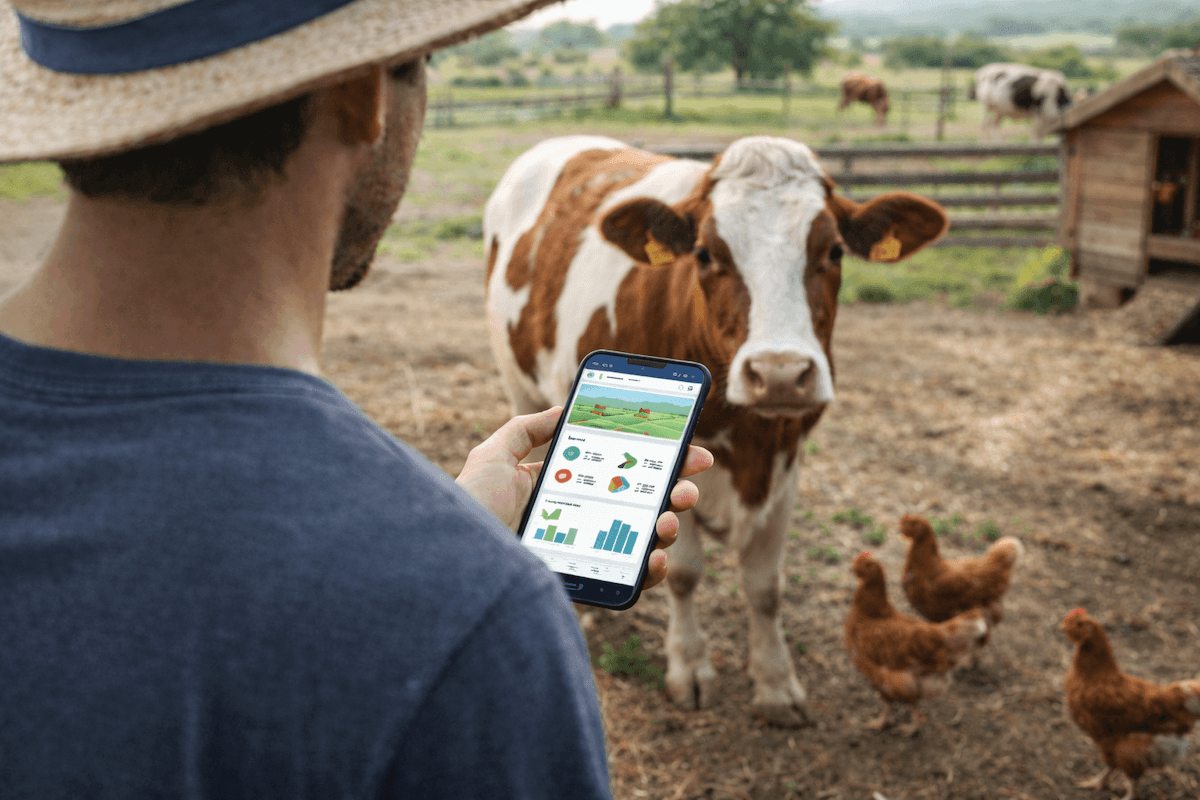
Step 5: Choose Mobile vs Desktop First
Think about where you actually work.
Mobile-First Tools
Best for:
- working in the field
- quick updates
- daily usage
Desktop-Based Tools
Better for:
- detailed reporting
- office-based workflows
- larger operations
Most small and livestock farms benefit from mobile-first tools.
Step 6: Evaluate Core Features (What Actually Matters)
It’s easy to get distracted by long feature lists. Focus on what you’ll actually use.
- Tracking: animals, crops, or production
- Record Keeping: health, breeding, planting
- Organization: keeping everything in one place
- Task Management: daily and recurring work
- Reporting: useful, but not always necessary for smaller farms
More features ≠ better software.
Step 7: Consider Pricing and Long-Term Value
Cost matters—but value matters more.
Think about:
- your current budget
- how your farm might grow
- whether the tool will still fit later
Some tools are:
- free or low-cost (great for starting out)
- mid-range (more features)
- expensive (enterprise-level)
You can explore a full breakdown here: Farm Management Software Cost Guide
Common Mistakes When Choosing Farm Software
Avoid these and you’ll already be ahead of most people.
- Choosing Software That’s Too Complex: If it feels overwhelming at the start, it won’t get easier.
- Overpaying for Features: You don’t need everything—just what you’ll use.
- Ignoring Mobile Usability: If it doesn’t work well on your phone, it won’t fit your workflow.
- Not Using It Consistently: Even the best tool won’t help if you don’t use it regularly.

A Simple Framework to Choose the Right Tool
If you’re still unsure, use this as a shortcut.
- Small livestock or multi-species farm → look for simple, mobile-first tools like FarmKeep
- Mixed farm with crops and livestock → consider broader platforms like Farmbrite
- Large livestock operation → tools like AgriWebb may fit better
- Cattle-specific farm → Herdwatch or CattleMax
The best software is the one that matches your farm—not the one with the most features.
Learn more about the best farm management software on the market.
When to Switch Farm Management Software
If you’re already using something, it may still be worth re-evaluating.
Consider switching if:
- your current system feels disorganized
- you’ve outgrown your tools
- you’re not using it consistently
- it slows you down
Software should make your life easier—not harder.
Final Thoughts
Choosing farm management software isn’t about finding the “best” tool. It’s about finding the right tool for your farm.
The one that:
- fits your workflow
- stays simple
- and actually gets used
Because in the end, consistency matters more than anything.
FAQ
What should I look for in farm management software?
Look for tools that match your farm type, are easy to use, and fit your daily workflow. Simplicity and consistency matter more than feature lists.
How do I know which farm software is right for me?
Start with your needs—what you manage daily, where you lose track of things, and how you work. Then choose software that fits those patterns.
Is it worth switching farm management software?
If your current system isn’t working, switching can be worth it. The key is choosing something you’ll actually use consistently.
What features matter most?
For most farms:
- tracking
- organization
- ease of use
- mobile access
are the most important.
Can I try farm management software before committing?
Many tools offer free plans or trials. This is one of the best ways to evaluate whether a tool fits your workflow before paying.
How long should I test a tool before deciding?
Give yourself at least 1–2 weeks of real use. Add actual farm data and use it during your daily routine. If it doesn’t fit naturally by then, it likely won’t long-term.
Should I involve others on my farm in the decision?
If multiple people will use the software, absolutely. Ease of use and adoption across your team can make or break whether the tool works.