How Much Feed Does a Chicken Eat Per Day?
An adult laying hen typically eats about ¼ pound (4 ounces or 113 grams) of complete chicken feed per day. For a flock of 10 hens, that's approximately 2.5 pounds daily, while 20 hens consume around 5 pounds.
These figures are useful starting estimates, but not every chicken eats the same amount. Age, breed, body size, egg production, weather, and feed quality all influence how much a bird consumes.
Understanding these differences can help you plan feed purchases, manage feeding costs, and ensure your chickens receive appropriate nutrition throughout their lives.

How Much Feed Do Chickens Need Based on Flock Size?
For a flock of adult laying hens, estimating feed requirements is relatively straightforward. Start with an average daily consumption of 0.25 pounds per hen, then multiply that amount by the number of birds in your flock.
Daily chicken feed (lb) = Number of hens × 0.25 lb
For example, 12 laying hens would consume approximately 3 pounds of feed daily. Over a 30-day period, that amounts to 90 pounds of feed.
The following chart shows estimated feed consumption for common backyard flock sizes.
These estimates represent the amount of feed consumed, not necessarily the amount you'll need to purchase. Some feed may be spilled, scattered, or contaminated before your chickens can eat it.
Actual intake also varies. The quarter-pound estimate is consistent with the adult layer feeding example published by Colorado State University Extension, but your flock's needs may differ.
For a more personalized estimate, use FarmKeep's free Poultry Feed Calculator to calculate feed requirements, bag quantities, and costs.

How Much Feed Do Chicks Need as They Grow?
Newly hatched chicks consume considerably less feed than mature chickens. However, their appetite increases as they grow, and their nutritional requirements change throughout development.
This means the ¼-pound daily estimate used for adult laying hens should not be applied to young chicks. Chicks need a diet formulated for growth, with appropriate amounts of protein, energy, vitamins, and minerals. As they mature, their feed formulation typically changes to match their stage of development.
Chick Starter Feed: The First Several Weeks
During their earliest weeks, chicks require a complete starter feed formulated to support rapid growth and development. Starter feeds generally contain more protein than feeds intended for mature laying hens. The exact length of the starter period depends on the feeding program. Some manufacturers recommend transitioning to grower feed after approximately six weeks, while others use starter formulations for longer.
Colorado State University Extension provides an example feeding program in which replacement pullets consume approximately 4 pounds of starter feed per bird during their first eight weeks. This represents total feed consumed over the period, not a daily allowance.
Grower Feed for Pullets
Pullets are young female chickens that have not yet begun laying eggs. During this stage, their nutritional needs shift away from the rapid early growth supported by starter feed toward steady development and preparation for maturity.
Grower or developer feeds are formulated for this period. Replacement pullets can consume approximately 4 pounds of grower feed per bird from weeks 8–12, followed by another 10 pounds of developer feed from weeks 12–21. These are planning examples rather than universal requirements. Breed, growth rate, season, and the feed manufacturer's program all influence the appropriate feeding schedule.
Layer Feed: When Hens Begin Laying Eggs
Most pullets begin laying eggs at approximately 20–25 weeks, although breed, season, and management can affect the timing. Once hens approach or begin egg production, they generally transition to a complete layer feed. Layer feeds are formulated to support egg production, particularly the increased calcium requirements associated with eggshell formation.
It is important to feed the appropriate protein, calcium, phosphorus, and other nutrients for laying hens. Avoid switching young, non-laying birds to a high-calcium layer formulation prematurely. Follow the feed manufacturer's recommendations for the appropriate transition.
Chicken Feed Consumption by Age
The following table summarizes an example feeding schedule for replacement pullets and adult laying hens.
The figures come from Colorado State University Extension's published small-flock feeding schedule. They describe one feeding program and should not be interpreted as fixed requirements for every breed.
How Much Feed Do Broiler Chickens Eat?
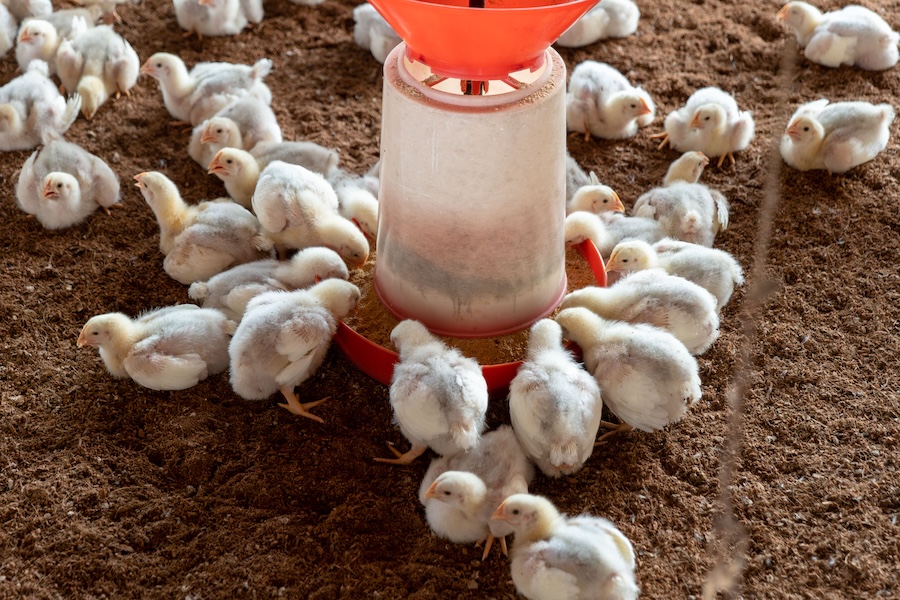
Broiler chickens are raised primarily for meat and have different feeding requirements from chickens bred for egg production. Commercial meat chickens are selected for rapid growth, and their feed consumption increases considerably as they mature. Because broilers grow quickly, calculating feed needs over an entire production period is more useful than assuming they eat the same amount every day.
Broiler Feed Consumption by Age
This is an example eight-week feeding program for broiler chickens. Under this program, each bird consumes approximately 2 pounds of starter feed during its first four weeks, followed by 6 pounds of finisher feed during weeks four through eight.
That equals approximately 8 pounds of feed per broiler over the full period.
For a flock of 25 broilers, this example would amount to approximately 200 pounds of feed over eight weeks, excluding feeding waste. However, feed consumption can vary substantially between broiler breeds and production systems. Fast-growing commercial broilers, slower-growing heritage meat chickens, and dual-purpose breeds may reach processing weight at different ages and require different total amounts of feed.
When planning feed purchases for meat chickens, use a feeding schedule appropriate for the breed or strain you're raising rather than relying on a single average for all broilers.
What Factors Affect How Much Chickens Eat?
Even chickens of the same age can consume different amounts of feed. Understanding the factors that influence appetite and nutritional requirements can help explain why your flock's actual consumption differs from a feeding chart.
Breed and Body Size
Larger chickens generally require more feed than smaller birds. A large dual-purpose hen, for example, may consume more than a lightweight egg-laying breed because maintaining a larger body requires more energy. Bantam chickens typically consume less feed than standard-sized birds. When estimating feed for a mixed flock, consider the different sizes and production purposes of your chickens.
Age and Growth
A chick's feed consumption increases as it develops. Young birds require nutrient-dense diets that support growth, while mature chickens need enough nutrition to maintain their bodies and, for laying hens, support egg production. This is why age-specific feeding programs are important, particularly when raising chicks or broilers.
Egg Production
Laying eggs requires additional nutrients, including protein, energy, and calcium. A hen's nutritional requirements change when she begins laying, and inadequate nutrition can affect egg production and shell quality. A laying hen must first meet her maintenance needs before additional nutrients can support egg production.
Temperature and Weather
Weather conditions can influence how much chickens eat. During cold weather, chickens may require additional energy to maintain body temperature. In hot weather, feed consumption may decline, particularly when birds experience heat stress. Maintaining access to fresh, clean water is essential. Inadequate water can reduce feed consumption and negatively affect growth and egg production.
Free-Ranging and Forage Availability
Free-ranging chickens may eat insects, seeds, vegetation, and other available foods. However, the amount of nutrition they obtain through foraging varies with season, habitat, flock size, and available food sources.
Foraging should not automatically be treated as a fixed replacement for complete chicken feed. A balanced commercial feed provides a more consistent source of essential nutrients, particularly for growing chicks and actively laying hens.
Feed Quality and Nutritional Balance
Not all chicken feeds provide the same nutritional value. A properly formulated complete feed contains a balance of energy, protein, amino acids, vitamins, and minerals appropriate for the bird's production stage.
Chickens regulate their intake partly according to dietary energy. A poorly balanced feed may therefore leave birds short of important nutrients even when they've consumed enough calories. Always choose feed appropriate for your chickens' age and purpose, and check the manufacturer's feeding instructions.
How Long Does a Bag of Chicken Feed Last?
Knowing your flock's daily feed consumption makes it easier to estimate how often you'll need to purchase feed. For example, if you have 10 laying hens consuming approximately 2.5 pounds daily, a 50-pound bag would last around 20 days before accounting for feeding waste.
The calculation is simple: Days of feed = Bag weight ÷ Daily flock feed consumption
You can use this formula for different flock sizes and bag weights.
How Long Do 25 lb and 50 lb Bags of Chicken Feed Last?
These estimates assume adult laying hens consuming approximately 0.25 pounds per day. In practice, some feed may be wasted, so the actual number of days may be slightly lower. For example, if 10 hens consume 2.5 pounds daily and 5% of the feed offered is wasted, you'll need to supply approximately 2.63 pounds per day. At that rate, a 50-pound bag would last approximately 19 days rather than 20. Keeping track of how quickly your flock uses feed can help you develop more accurate purchasing estimates over time.
How to Reduce Chicken Feed Waste
Feed waste increases the amount of feed you need to purchase and can contribute to unnecessary expenses. Some waste is difficult to eliminate entirely, but good feeding practices can help reduce it.
Choose appropriate feeders. Feeders should be suited to the size and age of your birds. Poorly positioned or overfilled feeders can allow chickens to scatter feed onto the ground.
Keep feed dry. Moisture can cause feed to spoil. Store bags in a dry, protected location and keep feeders sheltered from rain.
Protect feed from pests. Rodents and insects can contaminate stored feed. Secure containers can help protect feed between purchases.
Avoid purchasing more than you can store properly. Buying in bulk may reduce the price per pound, but feed quality can deteriorate during prolonged storage.
Monitor your flock's actual consumption. If your chickens are using substantially more feed than expected, inspect your feeders for spillage and check whether pests have access to stored feed.
Purchase fresh feed regularly and avoiding feed that is stale, rancid, or moldy. Maintaining good feeding records can help you recognize changes in consumption before they become expensive problems.
Calculate How Much Feed Your Chickens Need
The feeding charts in this guide provide useful starting estimates, but every flock is different. For a more personalized calculation, use FarmKeep's free Poultry Feed Calculator to estimate daily feed requirements, determine how many bags to purchase, and calculate feeding costs. The calculator also supports age-based feeding estimates for growing birds, making it useful for planning feed purchases for chicks, pullets, and meat chickens.
Visit to Poultry Feed Calculator
FAQ
Should chickens have access to feed all day?
Many backyard flocks are provided with free-choice access to an appropriate complete feed throughout the day. This allows chickens to eat according to their needs. However, feeding practices can differ for meat birds, breeding stock, and other managed production groups. Always provide fresh water and follow the feeding program appropriate for your birds.
Can chickens eat too much feed?
Chickens generally regulate their intake of a properly balanced complete feed, but excessive treats, scratch grains, or nutritionally unbalanced diets can interfere with appropriate nutrient intake. Certain meat-bird strains may also require specific feeding management. Follow the feed manufacturer's recommendations rather than assuming every chicken should be fed identically.
Do free-range chickens need commercial feed?
Yes, a suitable complete feed is generally recommended for backyard chickens, including free-ranging birds. Although chickens can obtain some nutrition from insects, plants, and seeds, the contribution varies considerably. A balanced feed helps ensure they receive essential nutrients throughout the year.
How much feed should I give 10 chickens?
Ten adult laying hens typically consume approximately 2.5 pounds of complete feed daily, based on an estimate of 0.25 pounds per hen. Over 30 days, that equals approximately 75 pounds before feeding waste. Actual requirements vary depending on breed, size, production, and other factors.
When should chicks switch to layer feed?
Pullets generally transition to layer feed as they approach or begin egg production. Many begin laying around 20–25 weeks, but timing varies by breed and management. Follow the recommendations for your chosen feed and avoid giving high-calcium layer feed to immature chicks before it's appropriate.