Livestock Record-Keeping Guide: A Farm Management Tool For Farmers!

Keeping accurate livestock records is essential for running a productive and profitable farm. An effective livestock record-keeping guide helps farmers log daily activities, track animal health, monitor breeding cycles, and measure performance with confidence.
As farms grow more complex, the shift from manual notebooks to digital tools becomes increasingly important. Farm management software like FarmKeep simplifies data entry, reduces errors, automates reminders, and supports better decision-making. By adopting modern tracking systems, farmers can streamline operations and improve overall productivity.
Why Livestock Record-Keeping Matters
Modern livestock record-keeping delivers practical, everyday advantages. Some of the most important include:
Better Herd Management
Detailed records help you monitor growth rates, track weight gains, compare performance between animals, and identify which genetics are delivering the best results. This makes culling or breeding decisions far more accurate.
For example, if two goats are the same age but one consistently gains slower despite equal feed, your records will show it's time to reassess its place in the herd.
Preventive Healthcare Tracking
Logging vaccinations, deworming dates, injuries, and treatments ensures nothing is missed. Early detection becomes easier when you can compare today's behavior or weight to last month's entries.
If an animal's vaccination is due soon, digital alerts can prompt you to act so you do not miss their appointment.
Budgeting and Profitability Management
Good records reveal exactly how much you spend and earn per animal. Tracking feed and fodder costs, medication, breeding expenses, and sale revenue helps you pinpoint which animals or production lines are most profitable.
For example, if dairy goats from one bloodline produce higher milk yields for the same feed cost, your records highlight where to invest.
Regulatory Compliance & Animal Identification
Digital logs make audits, health certifications, and movement records far easier. When buyers or regulators ask for proof of vaccination history, birth records, or source verification, you can retrieve it instantly. This reduces paperwork headaches and builds trust with customers and agencies.
Operational Efficiency
Record-keeping saves time by organizing everything in one place and reducing manual mistakes. Digital tools like FarmKeep can automate reminders for breeding cycles, medication schedules, and feed inventory.
Instead of flipping through notebooks, farmers can plan ahead with accurate data, improving day-to-day decisions and long-term productivity.
Types of Livestock Records

Before diving deeper into the tools and benefits, it helps to understand the different types of livestock records farmers should maintain and how each one contributes to better management.
Livestock Production and Performance Records
Production and performance records help you understand how much your animals are producing over time so you can identify your top performers and adjust your breeding or feeding strategy.
- Examples include tracking milk yield, weight gain, growth rates, egg counts, kidding or calving rates, and the quantity of animals sold.
Animal Health and Breeding Records
Animal health records and breeding records give you a complete picture of an animal's medical history and reproductive performance, helping you prevent diseases, schedule treatments, and plan breeding with confidence.
- Examples include vaccination dates, deworming schedules, illnesses, treatments, mating dates, pregnancy checks, birth outcomes, and lineage.
Identification, Genealogy, and History Records
Identification and history records keep every animal's background transparent and traceable, making it easy to manage large herds and meet regulatory requirements.
- Examples include tag numbers, birth dates, breed details, parentage, ownership history, pasture movements, and sale or transfer records.
Budgets and Financial Records
Financial records show what each animal costs and earns, helping you understand your profitability and make decisions based on real numbers rather than estimates.
- Examples include feed expenses, vet bills, medication costs, breeding expenses, equipment costs, milk or egg sales, livestock sales, and profit per animal.
Daily Management Records
Daily management records make it easier to stay organized, streamline chores, and monitor routine farm activities that affect long-term productivity.
- Examples include feeding logs, pasture rotations, water checks, task lists, cleaning schedules, and notes on daily observations or behavior changes.
Methods of Livestock Record-Keeping
Choosing the Right Livestock Record-Keeping App
Choosing the right livestock record-keeping app is essential for maximizing farm productivity and efficiency. A good app should be easy to use, allow you to log and access data quickly, provide alerts for health, breeding, and feeding schedules, and generate reports for performance and financial tracking.
Selecting the right tool ensures your records are accurate, organized, and actionable, helping you make informed decisions that improve herd management and farm profitability.
FarmKeep: The All-in-One Livestock Record-Keeping Solution
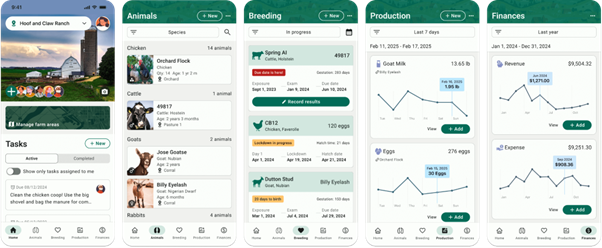
FarmKeep is a digital livestock record-keeping guide and app that helps farmers track their herd's production, health, breeding, and finances all in one place.
- Automated reminders for vaccinations, breeding schedules, and daily tasks
- Easy logging of performance metrics such as weight, milk yield, and growth rates
- Financial tracking to monitor feed costs, revenue, and profit per animal
- Real-time reports accessible from mobile devices for quick decision-making
- Helps save time and reduce errors in record-keeping
- Supports smarter herd management decisions
- Improves compliance and traceability for audits and movement logs
- Provides insights for optimizing feed, breeding, and overall herd productivity
Simplify your records and boost productivity with FarmKeep today.
Best Practices to Maintain Accurate Records

- Update Records Daily or Weekly: Regular updates ensure no information is missed and your data remains current and reliable.
- Use Consistent Naming Conventions: Label animals, pens, and tasks consistently to avoid confusion and make data easy to search and analyze.
- Set Reminders for Vaccinations, Breeding Windows, and Treatments: Automated or manual reminders help you stay on top of important herd management tasks and prevent missed schedules.
- Review Data Monthly to Identify Trends: Regularly analyzing your records helps spot patterns in growth, production, health, and finances, allowing you to make informed decisions.
- Backup Data: Keep a secure copy of your records to prevent loss from technical issues, accidental deletion, or damage to physical logs.
Step-by-Step Guide on Livestock Record-Keeping
1. Set Up Your Herd
Add each animal to your system with a unique ID, birthdate, and breed. This creates a clear foundation for tracking every individual in your herd.
2. Define Key Events
Decide which events you want to log, such as vaccinations, weight checks, illnesses, breeding, and births. Having a consistent list ensures nothing is missed.
3. Log in the Moment
Record events as they happen using a mobile device in the barn or pasture. Real-time logging keeps data accurate and reduces errors.
4. Schedule Auto-Reminders
Set automatic alerts for important events like booster shots, breeding windows, or expected births. This helps you stay proactive with herd management.
5. Review & Report Monthly
Analyze trends in weight, milk production, health, and veterinary costs. Monthly reviews help you make informed decisions and identify patterns before problems arise.
6. Export for Compliance & Vet Use
Easily export your records for veterinary reviews, organic audits, or tax preparation. Organized data saves time and ensures you meet legal and certification requirements.
Conclusion
Accurate livestock record-keeping empowers farmers to make informed decisions, improve herd health and productivity, and simplify compliance and reporting. By following a consistent system, managing your herd becomes easier, more efficient, and more profitable.
FAQs
What records should I keep for livestock?
You can keep production and performance records (weight, milk yield, growth rates), health and breeding records (vaccinations, treatments, breeding dates), identification and history records (ID, birthdate, breed, lineage), financial records (feed costs, revenue, profit), and daily management logs (feeding, chores, movements).
What is the best livestock record-keeping app?
FarmKeep is a farm management app designed for all-in-one livestock record-keeping, helping farmers track herd health, production, breeding, and finances efficiently.
How often should I update my livestock records?
Records should be updated daily or weekly to ensure accuracy and capture all key events.
What is the advantage of digital livestock record keeping?
Digital record-keeping saves time, reduces errors, provides real-time reports, automates reminders, improves compliance and traceability, and helps farmers make smarter management decisions.
What makes FarmKeep different from other livestock apps?
FarmKeep offers automated reminders, easy performance logging, financial tracking, mobile accessibility, and comprehensive reports, making herd management simpler and more efficient.
Can livestock record keeping improve herd performance?
Yes, accurate records allow farmers to track growth trends, identify underperforming animals, optimize breeding, and make data-driven decisions that boost productivity.
Can I track multiple species in one software?
Yes, modern apps like FarmKeep allow tracking of multiple livestock species within a single platform.
How much does livestock record-keeping software cost?
The cost of livestock record-keeping software varies depending on features and herd size. Many apps, like FarmKeep, offer a basic version that is free to use, which covers essential record-keeping features. There is also a premium version with additional tools, available with a free 14-day trial.