How Much Does a Cow Cost in 2026? Beef & Dairy Cattle Price Guide
In 2026, cattle markets are still influenced by herd contraction, tight supplies, and strong demand—meaning prices can feel shockingly high compared to previous years. USDA’s Economic Research Service (ERS) has raised 2026 cattle price projections based on recent sales strength, including an annual forecast for fed steer prices and feeder steer prices. The real answer to the question “how much does a cow cost,” is: it depends on the type of cattle, the weight, your region, and how you’re buying.
This guide breaks down average cow prices in 2026, explains how auction pricing works, shows realistic per-head price examples, and walks through ROI math so you can estimate what cattle may actually cost—and what they might return.
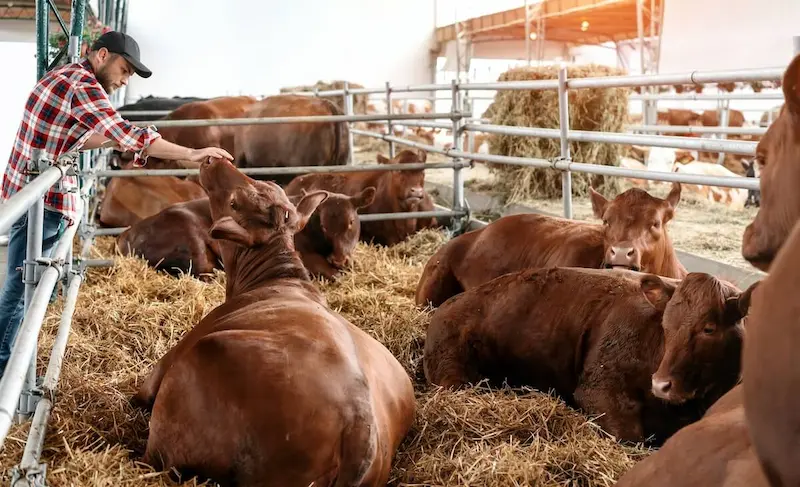
2026 Cattle Price Snapshot: What You Might Pay Today
A common mistake is thinking “cattle price” is one number. In reality, the price changes dramatically depending on whether you’re buying:
- a lightweight calf,
- a feeder steer,
- a bred heifer,
- a mature bred cow,
- or a dairy cow in milk.
USDA ERS reported that feeder steer prices (750–800 lb, Oklahoma City) are projected to average about $357/cwt in 2026, and fed steer prices (5-area negotiated live) are projected to average around $235.75/cwt in 2026. (ERS | USDA Outlook Report)
That gives us a solid baseline for “market-level” pricing, but you’ll still need to translate that into per-head estimates based on live weight—and account for whether you’re buying breeding animals (priced per head), feeders (often per cwt), or specialty dairy stock.
To add a “forward-looking” layer, feeder cattle futures markets also show 2026 contracts trading around the mid-to-high $350s per cwt, depending on the month—useful as a directional signal for 2026 pricing expectations. (CME Group)
Average Cost of Beef Cattle in 2026: Calves, Heifers, Bred Cows, and Pairs
Calves and Feeder Cattle (Often Sold Per CWT)
Feeder cattle are usually sold by the hundredweight (cwt). A 600 lb calf is 6 cwt. So if the local market is $350/cwt, that calf is roughly $2,100.
Recent USDA AMS auction reports show feeder cattle prices commonly landing in ranges that support these high market conditions (for example, 600–700 lb steers selling in the $350/cwt neighborhood in major auction markets).
Bred Heifers and Bred Cows (Typically Sold Per Head)
Breeding cattle are usually sold per head, not per cwt, because pregnancy status, genetics, and age matter more than weight.
In USDA AMS replacement cattle reports, you can see bred heifers commonly selling in the $3,500–$5,000+ range depending on stage of pregnancy, age, and region.
Cow-Calf Pairs (Also Per Head)
Cow-calf pairs are typically priced per pair and can be among the most expensive cattle you’ll buy up front, because you’re purchasing both current production and a calf on the ground.
USDA AMS reports show cow-calf pairs commonly selling around $4,600–$6,100 per pair in examples from early 2026 market reporting.
Beef vs Dairy: How Much Does a Dairy Cow Cost in 2026?
A dairy cow’s price depends heavily on whether she’s:
- a springing heifer (close to calving),
- a fresh cow (recently calved and lactating),
- a proven older cow with production history,
- or a registered animal with premium genetics.
Unlike feeders and many beef cattle, dairy replacement pricing is often reported across specialized dairy channels and auction summaries. USDA AMS dairy comprehensive reporting tracks replacement categories (like fresh cows and bred heifers), though pricing can vary widely by region and quality.
As a general rule for 2026:
- Commercial dairy cows are often priced for production value (milk, components, health, reproduction).
- Registered dairy cows can command significantly higher prices if they’re from elite lines.
If your goal is family milk, a healthy, appropriately managed animal matters more than papered genetics—unless you’re building a breeding program.
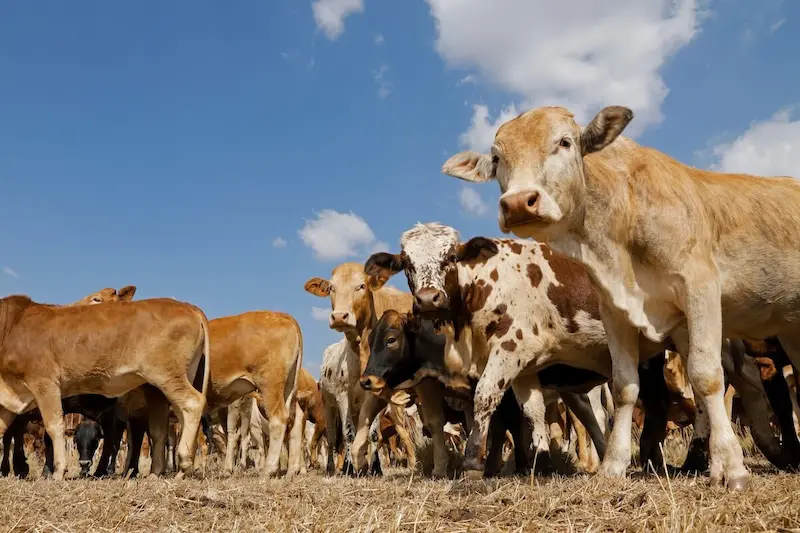
Auction Prices vs Private Treaty: Why Your “Cow Cost” Will Vary
How much does a cow cost at auction? You’ll often see wildly different price ranges compared to private sale listings. That’s because auctions are influenced by:
- number of buyers present,
- seasonal runs,
- drought and hay supply,
- local feed costs,
- and the type/quality of animals running that day.
USDA’s MyMarketNews and AMS auction reports show real weekly price ranges—these are excellent references when you’re trying to estimate “what cows are selling for near me.”
Private treaty sales often price cattle higher when:
- animals are handled, vaccinated, and preconditioned,
- pregnancy is confirmed,
- health history is documented,
- genetics are known,
- and buyers can inspect the herd.
The Hidden Cost Most Buyers Miss: Owning Cattle Isn’t Just the Purchase Price
Even if you buy a cow for $2,500 or $4,500, the annual cost to own a cow can surprise first-time cattle owners.
The biggest cost drivers are usually:
- hay and winter feeding
- mineral supplementation
- fencing and water infrastructure
- veterinary care and vaccines
- hauling and handling equipment
If you are also wondering how much does it cost to raise a cow per year, the honest answer is: it depends on your forage base and winter feed needs. But you can estimate annual ownership costs by modeling:
- hay feeding days × hay per day × hay price,
- plus minerals, health, and overhead.
Using a cattle cost calculator can help with planning and estimating overall costs.
ROI Example: What Does It Cost to Raise a Steer for Beef?
Let’s run a simplified ROI example for a small farm. (You can adjust these numbers to match your local market.)
Scenario: Buy a 600 lb feeder, finish it, and sell as beef
Assume:
- Purchase: 600 lb steer at $350/cwt
- = 6 cwt × $350 = $2,100
- Feed & hay during finishing: $900
- Vet, vaccines, minerals: $150
- Processing (varies by state/processor): $800
- Total cost: $3,950
If the finished steer yields:
- 1,250 lb live weight
- ~62% dressing = 775 lb hanging weight
- ~65% cut yield = ~500 lb packaged beef
Cost per lb packaged beef = $3,950 / 500 = $7.90/lb
That number might beat retail pricing depending on your area and cuts—but it also shows why accurate records matter. Small changes in feed cost or processing fees can affect the rate of gain for animals and move your break-even fast.
ROI Example: Cow-Calf Pair as a Small Farm Investment
Now consider a cow-calf pair:
- Purchase pair: $5,000
- Annual cow costs: $900–$1,800+ (depends on hay season length)
- Calf sold at weaning: say 550 lb at $360/cwt (illustrative market-level value)
- = 5.5 × $360 = $1,980
If the cow rebreeds reliably and produces a calf every year, that’s where “cow ownership” can make sense. If she doesn’t breed back, needs high vet intervention, or you have expensive hay, the ROI can collapse quickly.
This is exactly why experienced producers say: the cheapest cow is often the most expensive cow if she doesn’t stay productive. Keeping accurate records is the best way to track breeding history, performance, and production across your herd.

Common Cattle Purchase Types and 2026 Price Ranges
Here’s a practical “what you’ll likely pay” table that combines 2026 market projections with real market reporting examples.
Note: These are typical ranges. Your local auction, drought conditions, and breed quality can move pricing significantly.
How to Find “Cattle Prices Near Me” in 2026
If you want prices that match your area, use these sources:
- USDA AMS MyMarketNews Auction Reports – searchable by market and date; this is one of the most reliable free references for real sale prices.
- USDA AMS regional auction PDFs – show weight classes and price ranges.
- CME Feeder Cattle futures – helps understand market direction and risk (not a local cash price, but useful for projections).
- USDA ERS Livestock Outlook – provides quarterly and annual price forecasts and explains what’s driving them.
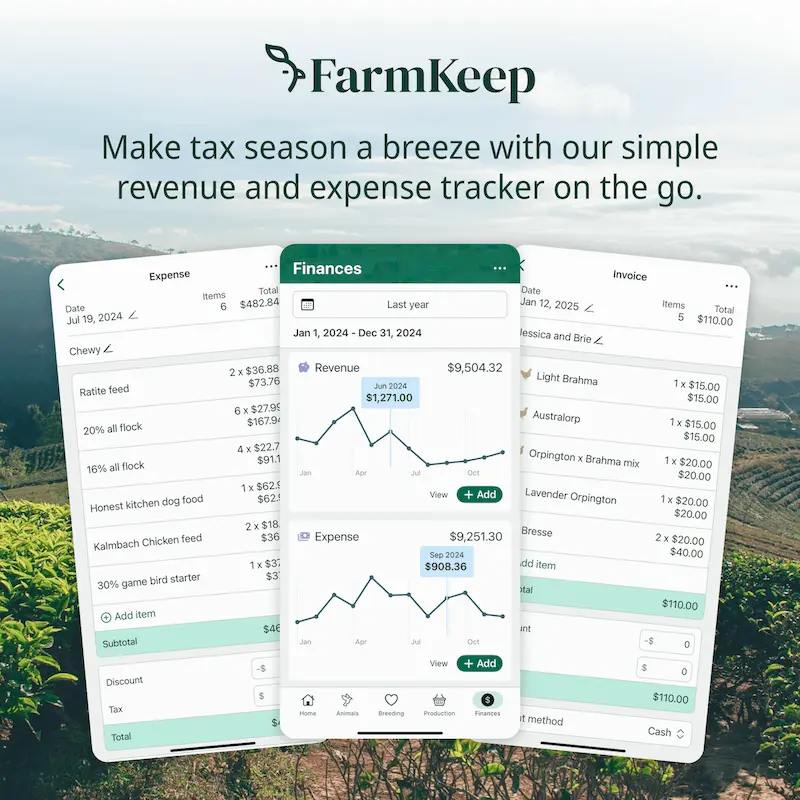
How FarmKeep Helps You Know What Your Cow Actually Costs
Most people searching “how much does a cow cost” stop at the purchase price. But farms win by knowing:
- cost per animal,
- cost per pound gained,
- cost per calf produced,
- and profit per enterprise.
With FarmKeep, you can:
- log the purchase invoice and link it to an Animal ID
- track feed, hay, vet, and supplies as expenses
- track weights and calculate rate of gain
- log production outcomes (calf born, sale, butcher)
- calculate enterprise ROI over time
That’s how you turn “market prices” into your real profit numbers.
FAQs
How much does a cow cost in 2026?
In 2026, the cost of a cow varies widely depending on type and region. Feeder calves often sell between $1,400 and $2,700 per head depending on weight and auction conditions. Bred heifers commonly range from $3,500 to over $5,000 per head, while cow-calf pairs may sell between $4,600 and $6,100 or more. Market conditions, herd size, and regional demand significantly influence final prices.
How much does a beef cow cost?
A mature beef cow typically costs between $2,400 and $4,400 in 2026, depending on age, health, and pregnancy status. Younger bred cows or high-quality genetics may sell for more. Feeder cattle are usually priced per hundredweight (cwt), so final cost depends on weight and the current per-cwt market rate.
How much does a dairy cow cost?
Dairy cow prices vary based on lactation stage, production history, and genetics. A commercial dairy cow may cost anywhere from $2,000 to $4,000, while registered or high-production animals can sell for significantly more. Springing heifers (close to calving) often command premium pricing.
How much does a calf cost at auction?
Calves are typically sold per hundredweight (cwt). For example, a 600 lb calf priced at $350 per cwt would cost about $2,100. Auction prices fluctuate weekly based on supply, demand, and regional feed conditions, so checking USDA AMS market reports is recommended.
How much does it cost to raise a cow per year?
Annual ownership costs depend on hay prices, feed needs, land, and management style. A common estimate for annual expenses ranges from $900 to $1,800 per cow for feed, minerals, veterinary care, and basic overhead. Drought conditions and hay shortages can increase this number substantially.
How much land do you need per cow?
Land requirements vary by region and forage quality. In areas with strong pasture growth, one cow may require 1.5–2 acres. In drier regions, it may require 5 acres or more per cow. Carrying capacity depends on rainfall, soil health, and pasture management practices.
Is buying a cow profitable?
Profitability depends on your business model. In a cow-calf operation, profit comes from selling weaned calves each year. In a direct-to-consumer beef model, profit depends on feed costs, processing expenses, and final sale price per pound. Without tracking expenses and production carefully, it is difficult to determine true ROI.
What is the cheapest way to buy a cow?
Auction markets often offer lower entry prices compared to private sales, but animals may come with less history or health documentation. Private sales may cost more upfront but can reduce risk if the seller provides vaccination records, pregnancy checks, and herd history.
Why are cow prices so high in 2026?
Cattle prices in 2026 remain elevated due to continued herd contraction in recent years, strong beef demand, and tight feeder cattle supplies. USDA projections reflect higher average prices compared to historical norms, especially for feeder cattle.
How much does it cost to raise a steer for beef?
Raising a steer for beef typically involves purchase price, feed, veterinary costs, and processing fees. Depending on input costs, total expenses may range between $3,500 and $5,000. When divided by packaged beef yield, the final cost per pound may land between $6 and $9 per pound, depending on your management efficiency.
Should beginners buy a calf or a bred cow?
Beginners often start with feeder calves or cow-calf pairs, as bred cows require breeding management knowledge. Calves may require more time and feed before generating income, while bred cows can produce calves sooner but require larger upfront investment.
How can I track whether my cattle are profitable?
Tracking purchase price, feed costs, veterinary expenses, and sale revenue is essential. Using farm management software like FarmKeep to link expenses to specific animals and enterprises allows you to calculate real per-animal profit and identify areas for improvement.