How to Start a Pig Farm: Complete Beginner’s Guide to Raising Pigs
Pig farming is one of the most popular livestock enterprises for small farms, homesteaders, and commercial producers. Pigs grow quickly, convert feed efficiently, and can provide a reliable source of income through meat sales or breeding stock.
But starting a pig farm involves more than simply buying a few pigs and putting them in a pen. Successful pig farming requires planning for housing, feed, health management, breeding, and marketing.
Whether you’re interested in raising pigs for your family, starting a small livestock business, or expanding an existing farm, this guide will walk you through everything you need to know about starting a pig farm.

Is Pig Farming Profitable?
Pig farming can be profitable when managed efficiently. Pigs grow quickly, reach market weight in a relatively short time, and can produce large litters.
However, profitability depends on several factors:
- Feed costs
- Breed selection
- Market prices for pork
- Farm management practices
- Scale of production
Many small farms combine pig farming with direct-to-consumer pork sales, which often produces much higher profit margins than selling pigs through commodity markets.
Average Profit Per Pig
Profit varies widely depending on feed costs and pork prices. A simplified example might look like this:
Expense
Feeder pig: $75–$150
Feed: $250–$400
Processing: $150–$300
Misc costs: $50–$100
Total cost: $525–$950
If pork sells for $4–$7 per pound hanging weight, the revenue from a finished pig can range from $800–$1,400.
Profit margins increase significantly when farmers sell directly to customers through farm shares, farmers markets, or local meat sales.
Small-Scale vs Commercial Pig Farming
Pig farms can operate at very different scales.
Small Farm:
- 2–20 pigs
- Often pasture raised
- Direct meat sales
- Lower startup cost
Commercial Farm
- Hundreds or thousands
- Confinement barns
- Commodity markets
- Higher infrastructure cost
Many beginners start with 2–6 feeder pigs to gain experience before expanding.
Market Opportunities for Pig Farmers
There are multiple ways pig farmers generate income.
Common revenue streams include:
- Direct pork sales to customers
- Farmers market meat sales
- Heritage breed pork
- Selling feeder pigs
- Selling breeding stock
- Farm-to-table restaurant partnerships
Direct-to-consumer pork sales often offer the highest margins.
Choosing the Right Pig Breed
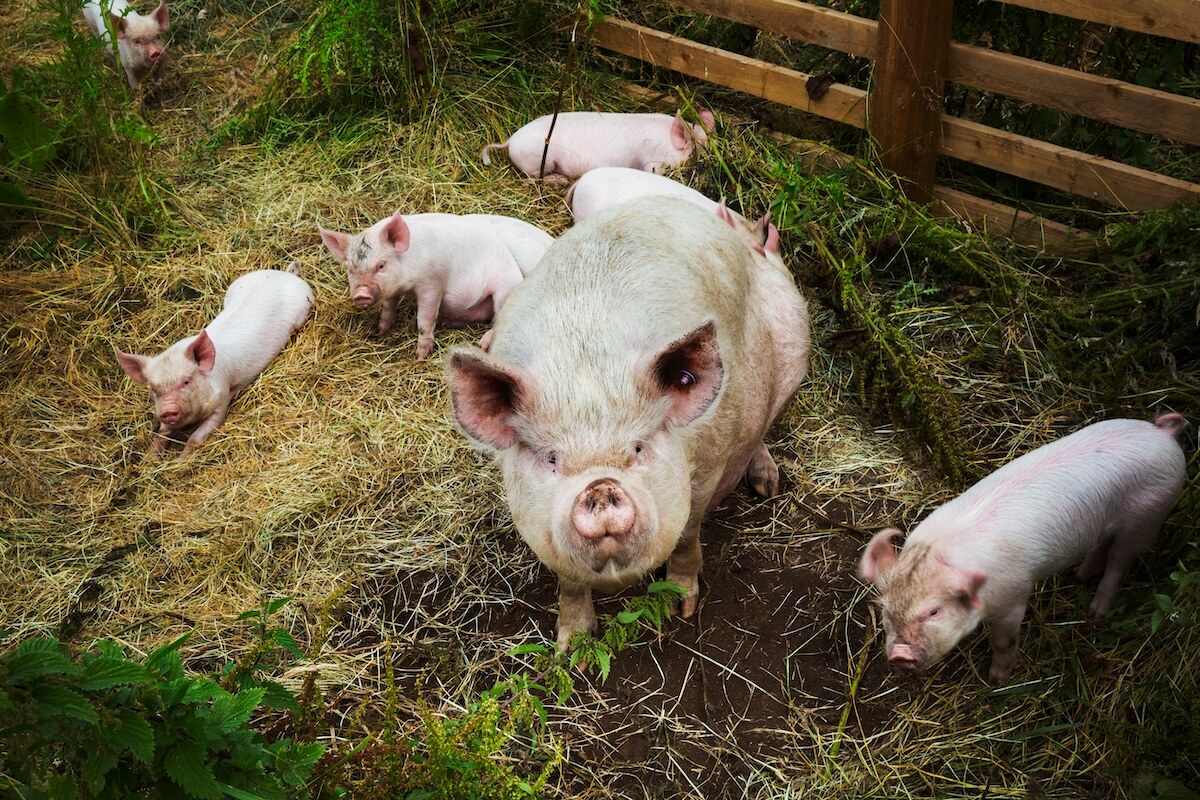
Breed selection plays a major role in productivity, meat quality, and temperament.
Different breeds excel in different environments and production systems.
Best Pig Breeds for Meat Production
Several commercial breeds dominate pork production because they grow quickly and produce high-quality meat.
Popular meat breeds include:
Yorkshire
- Excellent mothering ability
- Large litters
- Common in commercial production
Duroc
- Fast growth
- Good feed efficiency
- Excellent meat quality
Hampshire
- Lean meat
- Strong growth rate
- Hardy animals
Landrace
- Highly productive sows
- Excellent maternal instincts
Berkshire
- Premium pork quality
- Excellent marbling
- Popular in specialty markets
Heritage Pig Breeds
Heritage pigs are traditional breeds often raised on pasture.
Examples include:
- Gloucestershire Old Spot
- Large Black
- Tamworth
- Red Wattle
These breeds may grow more slowly but often command higher prices due to premium pork quality.
Best Pigs for Small Farms
For beginners, the best pigs usually have these traits:
- Calm temperament
- Hardy health
- Good feed conversion
- Adaptability to pasture systems
Breeds like Berkshire, Duroc, and Tamworth are often recommended for small farms.
How Much Land Do You Need for Pigs?
The amount of land needed depends on the production system.
Pigs can be raised in:
- Pasture systems
- Outdoor pens
- Barn confinement systems
Pasture Pig Farming
Pasture-based systems require more land but can reduce feed costs.
A common guideline is: 6–10 pigs per acre
However, this varies depending on soil type, rotation systems, and climate.
Rotational grazing helps prevent pasture damage and improves soil health.
Housing and Pen Requirements
Pigs need enough space to move comfortably and maintain good health.
Typical space recommendations include:
Piglets: 4–6 sq ft
Growing pigs: 8–12 sq ft
Breeding sows: 20+ sq ft
More space is recommended for outdoor systems.
Fencing for Pigs
Pigs are strong animals and surprisingly skilled escape artists.
Common fencing solutions include:
- Electric fencing
- Hog panels
- Woven wire fencing
Electric fencing is widely used because pigs quickly learn to respect it.

Building Pig Housing
Shelter protects pigs from weather, heat stress, and cold temperatures.
Pig housing does not need to be complicated.
Simple Pig Shelter Designs
Common structures include:
- Three-sided sheds
- Hog huts
- Hoop houses
- Converted barns
These shelters protect pigs from wind, rain, and extreme temperatures.
Ventilation and Bedding
Good ventilation prevents respiratory issues and keeps pigs comfortable.
Important housing considerations include:
- Proper airflow
- Dry bedding
- Moisture control
- Clean living areas
Straw bedding is commonly used in outdoor systems.
Feeding Pigs
Feed represents the largest expense in pig farming.
Proper nutrition is critical for growth, health, and profitability.
What Do Pigs Eat?
Pigs are omnivores and eat a wide range of foods.
Typical pig diets include:
- Commercial pig feed
- Corn and grains
- Soybean meal
- Pasture forage
- Fruits and vegetables
In some regions, kitchen scraps may be allowed, but regulations vary.
Pig Feeding Schedule
Pig diets change as they grow.
Piglets: Creep feed
Growers: High protein feed
Finishers: High energy feed
Pigs usually eat 2–3 times per day in small farm settings.
It's good practice to track the rate of gain for pigs to know how much to feed.
Feed Cost Estimates
Feed costs vary depending on location and grain prices.
Typical feed consumption:
- 600–800 pounds of feed per pig to reach market weight
Feed costs typically represent 60–70% of production expenses.
Pig Health and Biosecurity
Maintaining healthy animals is essential for any pig farm.
Disease outbreaks can spread quickly if biosecurity practices are poor.
Common Pig Diseases
Some diseases that affect pigs include:
- Swine influenza
- PRRS (Porcine Reproductive and Respiratory Syndrome)
- Internal parasites
- Mange
Regular observation and veterinary support help prevent serious issues.
Vaccination Programs
Vaccination protocols vary depending on region and herd size.
Work with a veterinarian to develop a herd health plan that may include vaccines for:
- Parvovirus
- Erysipelas
- Leptospirosis
Biosecurity Practices
Strong biosecurity reduces disease risk.
Important practices include:
- Quarantining new pigs
- Limiting visitor access
- Cleaning equipment
- Maintaining clean feeding areas

Pig Breeding Basics
Breeding pigs allows farms to produce their own piglets instead of buying feeder pigs.
Pig Reproductive Cycle
Pigs have a relatively short gestation period and many sows can produce two litters per year.
Typical timeline:
- Gestation: 114 days
- Average litter size: 8–12 piglets
- Weaning age: 4–8 weeks
Use a pig gestation calculator to help you track due dates.
Breeding Methods
Pig breeding typically occurs through:
- Natural breeding
- Artificial insemination
Monitor sows for signs of pregnancy after breeding.
Farrowing Management
Farrowing is the process of giving birth.
Good farrowing management includes:
- Clean bedding
- Warm environment for piglets
- Monitoring newborn piglets
- Ensuring piglets nurse properly
Equipment Needed for a Pig Farm
Basic equipment helps ensure pigs are fed, watered, and managed efficiently.
Pig Farming Equipment List
Essential equipment includes:
- Feeders
- Automatic waterers
- Fencing systems
- Shelter structures
- Handling panels
- Transport trailers
Optional Equipment
Larger farms may also use:
- Livestock scales
- Heat lamps
- Automatic feeding systems
- Farrowing crates
Startup Costs for a Pig Farm
Startup costs vary depending on farm size and infrastructure. It's important to create a farm business plan to help you understand true feasibility.
Cost of Buying Pigs
Typical pig prices include:
Feeder pig: $75–$150
Breeding gilt: $250–$600
Registered breeding stock: $800+
Prices vary by region and breed quality.
Infrastructure Costs
Initial infrastructure costs may include:
- Fencing
- Shelters
- Feeders
- Water systems
- Equipment
Small farms may spend $1,000–$5,000 on basic infrastructure.
Feed Costs
Feed is the largest ongoing expense.
Estimated feed cost per pig: $250–$400
Feed efficiency and local grain prices strongly affect profitability.
Pig Farm Regulations and Permits
Farmers should always research local regulations before starting a pig farm.
Zoning Laws
Some areas restrict livestock based on zoning.
Check local zoning regulations to confirm:
- livestock limits
- land requirements
- noise restrictions
Environmental Regulations
Pig farms must manage manure properly to prevent water contamination.
Regulations may apply depending on herd size.
Meat Processing Regulations
Farmers selling pork must follow processing regulations.
Options include:
- USDA inspected processing (for retail sales)
- Custom exempt processing (for whole or half hog sales)
Regulations vary by state.
For regulatory guidance, farmers can consult resources from the USDA and industry education materials from the National Pork Board.
Marketing and Selling Pork
Successful pig farmers develop strong marketing channels.
Selling Direct to Customers
Direct pork sales are increasingly popular.
Options include:
- Farm stores
- Farmers markets
- Community supported agriculture (CSA)
- Online farm stores
Direct sales allow farmers to capture more value per pig.
Selling to Restaurants and Butchers
Local restaurants and butcher shops often look for locally raised pork.
This can create reliable wholesale relationships.
Branding Your Farm
Branding helps farms stand out.
Popular marketing angles include:
- pasture-raised pork
- heritage breed pork
- sustainable farming practices
- local food systems
Manage Your Pig Farm Records the Smart Way
Running a successful pig farm requires keeping detailed records.
Farmers need to track:
- breeding dates
- farrowing records
- pig growth and weights
- feed costs
- health treatments
- pork sales and profitability
Many farmers start with notebooks or spreadsheets, but as farms grow this quickly becomes difficult to manage.
FarmKeep Makes Pig Farm Management Easier
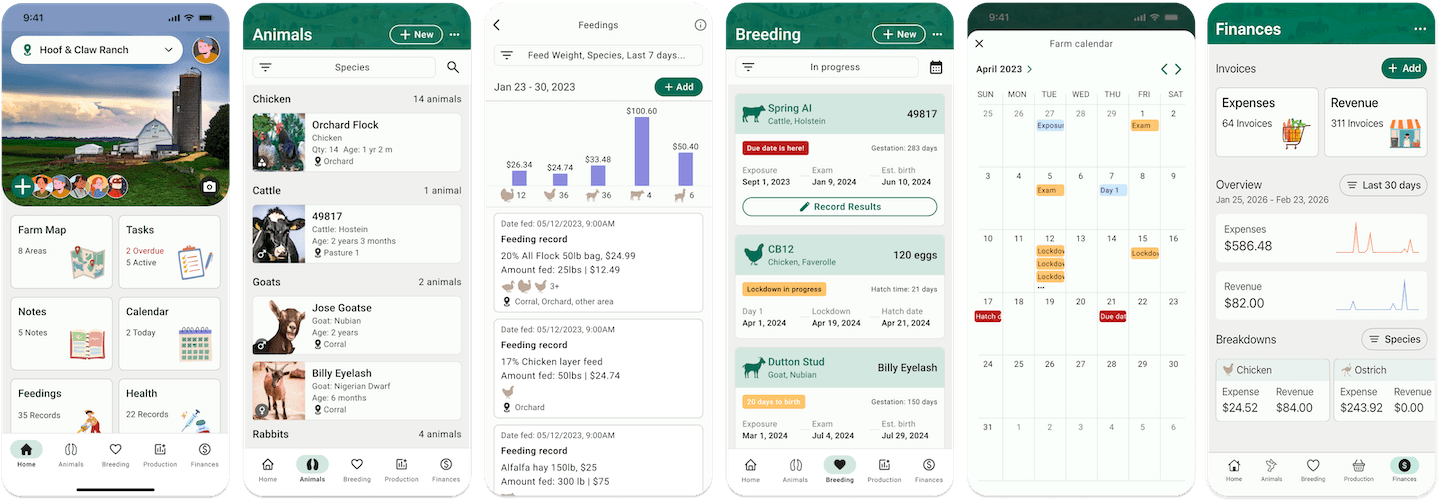
FarmKeep is a farm management app designed specifically for livestock operations. It helps farmers organize all their pig records in one place.
With FarmKeep you can:
- Track pig IDs and pedigrees
- Record breeding and farrowing events
- Log vaccinations and health treatments
- Monitor weight gain and production performance
- Track expenses and income for each animal
- See profitability insights across your farm
Instead of juggling spreadsheets, notebooks, and calendars, FarmKeep keeps everything organized and accessible from your phone.
For new pig farmers, having accurate records can make a huge difference in improving herd health, tracking growth performance, and building a profitable operation.
Common Mistakes New Pig Farmers Make
Many beginner pig farmers run into similar challenges.
Common mistakes include:
- Underestimating feed costs
- Using weak fencing
- Overcrowding pigs
- Poor sanitation practices
- No marketing plan for pork sales
Starting small and learning gradually helps avoid expensive mistakes.
Tips for Success in Pig Farming
Successful pig farmers focus on good management practices.
Key tips include:
- Start with a small herd
- Choose healthy breeding stock
- Maintain strong fencing
- Develop direct pork customers
- Track farm records carefully
Consistency and attention to detail often determine long-term success.
FAQ
How many pigs should a beginner start with?
Most beginners start with 2–6 pigs. This allows farmers to learn pig care, feeding, and management without large upfront costs.
How long does it take to raise a pig for meat?
Most pigs reach market weight in 5–7 months, depending on breed and feeding program.
How much land do pigs need?
Pasture systems typically support 6–10 pigs per acre, though this varies based on soil conditions and rotation systems.
Are pigs easy to raise?
Pigs are generally considered one of the easier livestock animals to raise because they grow quickly and adapt well to many environments.
How much does it cost to raise a pig to slaughter?
The total cost to raise a pig often ranges between $500 and $900, depending on feed costs and processing fees.
What do pigs eat on a farm?
Pigs usually eat a diet consisting of:
- commercial pig feed
- grains
- vegetables and produce
- pasture forage
Do pigs smell bad on farms?
Well-managed pig farms with clean bedding and proper manure management typically have minimal odor problems.
Can pigs be raised on pasture?
Yes. Many small farms successfully raise pigs on pasture using rotational grazing systems.