This article is intended for educational purposes and is not a substitute for veterinary diagnosis or treatment. Contact your veterinarian if you are concerned about your goat’s health.
Barber Pole Worm in Goats: Symptoms, Testing & Treatment
Barber pole worm (Haemonchus contortus) is a blood-feeding gastrointestinal parasite and one of the most important internal parasites affecting goats. Heavy infections can cause severe anemia, weakness, weight loss, bottle jaw and, in serious cases, death.
Managing barber pole worm can be challenging because the parasite has developed resistance to commonly used dewormers on many farms. Instead of routinely deworming every goat on a schedule, modern parasite-control programs focus on identifying animals that need treatment, using tools such as FAMACHA© and fecal testing when appropriate, and monitoring whether treatments remain effective.
Understanding what barber pole worm does, how to recognize the signs, and how goats become infected can help you build a more effective parasite-management program for your herd.
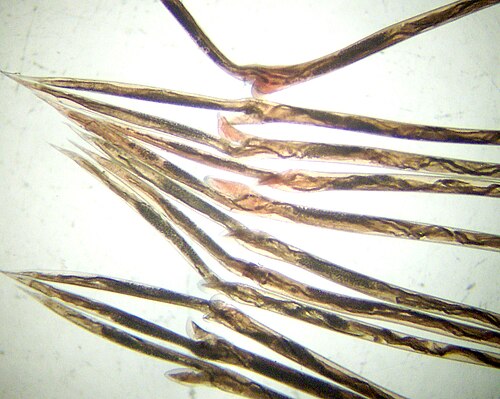
What Is Barber Pole Worm?
Barber pole worm, scientifically known as Haemonchus contortus, is a gastrointestinal roundworm that infects goats, sheep and other ruminants. Adult worms live in the abomasum, one of the compartments of a goat’s stomach, where they feed on blood. The parasite gets its common name from the appearance of the adult female worm. Its white reproductive tract wraps around its blood-filled digestive tract, creating a red-and-white spiral that resembles a barber pole.
What makes barber pole worm particularly dangerous is its ability to cause substantial blood loss. A goat carrying a heavy parasite burden can become severely anemic, and serious infections can sometimes progress rapidly. Barber pole worm also contributes to protein loss. In heavily affected animals, this can lead to edema and the characteristic swelling beneath the jaw known as bottle jaw.

Barber Pole Worm Symptoms in Goats
The signs of barber pole worm can vary depending on the severity of infection and the condition of the individual goat. Common signs associated with a significant infection include:
- Pale lower eyelids or other mucous membranes
- Anemia
- Weakness or lethargy
- Poor body condition
- Weight loss or poor growth
- Reduced performance
- Bottle jaw
- Poor overall appearance
- Collapse or sudden deterioration in severe cases
One important thing to know is that diarrhea is not a characteristic sign of a pure barber pole worm infection. A goat can have a serious barber pole worm problem while continuing to produce normal-looking, formed feces. When diarrhea is present, other gastrointestinal parasites or health problems may also be involved.
Pale Eyelids and Anemia
Because barber pole worms feed on blood, anemia is one of the most important clinical signs of infection. As anemia becomes more severe, the normally pink-to-red mucous membranes inside a goat’s lower eyelid can become increasingly pale. This relationship between barber pole worm and anemia is why the FAMACHA system is particularly useful for managing this parasite.
However, pale eyelids should not be treated as a complete diagnosis on their own. Anemia can have other causes, and an animal’s overall condition should be considered.
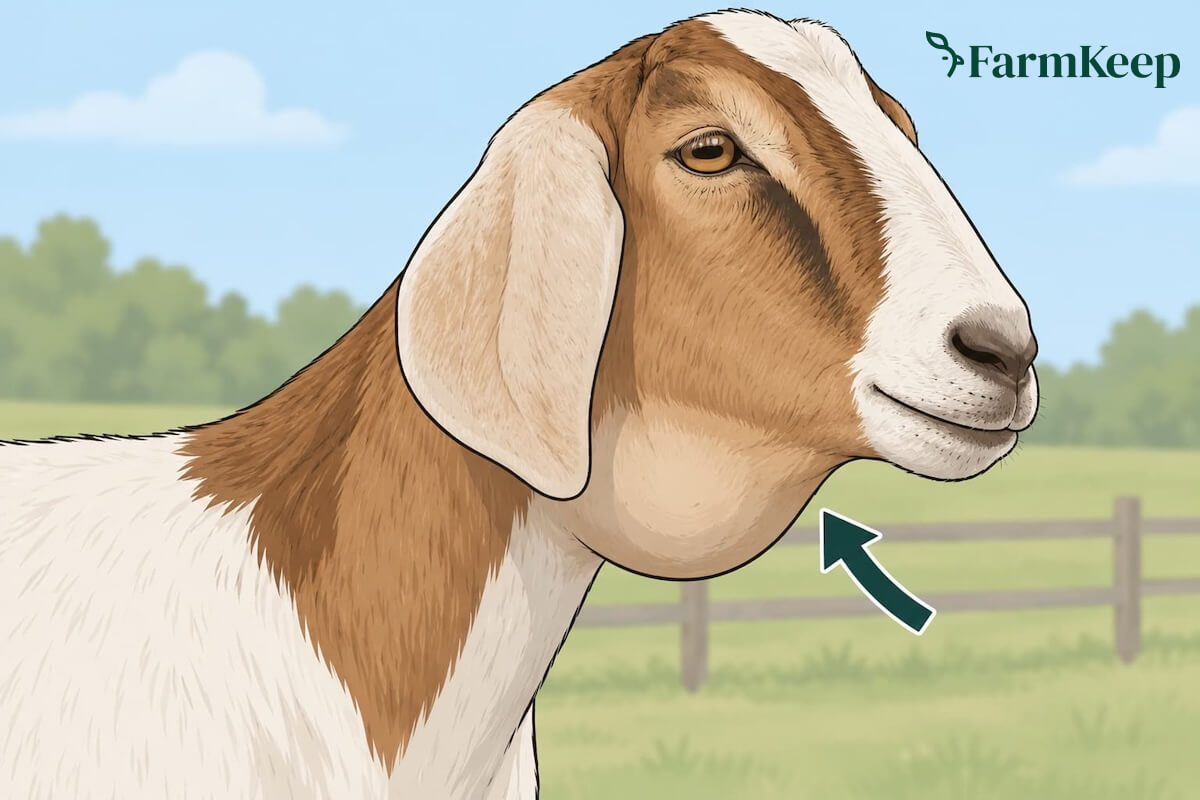
Bottle Jaw
Barber pole worm can also contribute to the condition commonly called bottle jaw. Heavy gastrointestinal parasitism can result in loss of blood and plasma proteins. When blood protein levels become too low, fluid can move out of the circulation and accumulate in tissues. Beneath the jaw is one place this swelling can become particularly noticeable.
A simplified way to understand the process is:
Heavy barber pole worm infection
↓
Blood and protein loss
↓
Anemia + low blood protein
↓
Fluid accumulates beneath the jaw
↓
Bottle jaw
Bottle jaw is an important warning sign, but it is not proof by itself that a goat has barber pole worm. Other diseases can also cause edema, protein loss or swelling around the jaw.
Related guide: Bottle Jaw in Goats: Causes, Symptoms & What to Do
How Do Goats Get Barber Pole Worms?
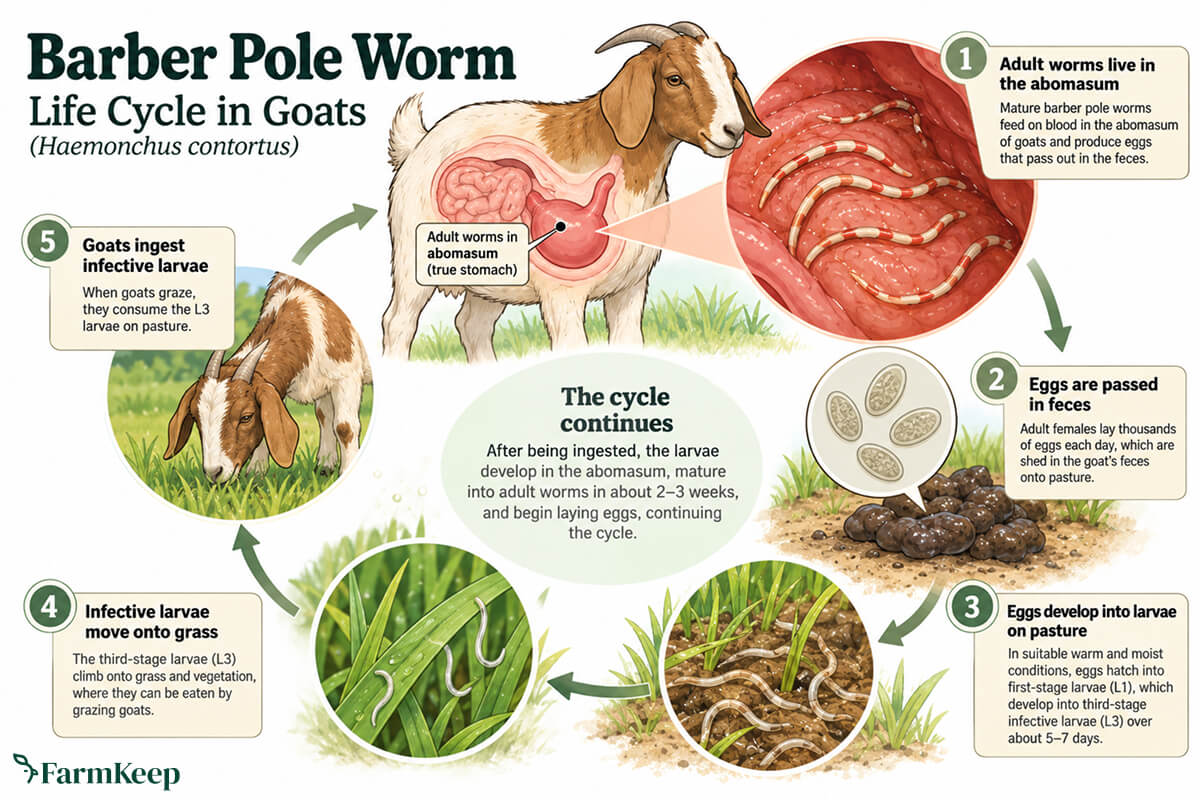
Barber pole worm has a direct life cycle, meaning it does not require another animal or intermediate host to complete its development. Adult worms living inside an infected goat produce eggs. Those eggs pass out of the goat in manure and develop in the environment. Under suitable conditions, the eggs hatch and eventually develop into infective larvae on pasture. Goats ingest these larvae while grazing. The larvae then continue their development inside the goat and mature into adults.
The cycle looks roughly like this:
- Adult worms live inside the goat
- Eggs pass onto pasture in manure
- Eggs hatch and larvae develop
- Infective larvae are present on forage
- A goat consumes the larvae while grazing
- Larvae mature into adult worms
Warm, moist conditions are particularly favorable for parasite development. Larvae tend to be concentrated closer to the base of forage, which is one reason grazing and pasture management can play an important role in controlling parasite exposure. Goats naturally prefer browsing shrubs, brush and vegetation higher above the ground when that forage is available. When goats are forced to graze very short pasture, they may be more likely to encounter infective larvae.
How Do You Check a Goat for Barber Pole Worms?
There isn’t one observation that tells you everything you need to know about a goat’s parasite status. Instead, parasite-management programs generally recommend considering several indicators together.
These may include:
- FAMACHA score
- Bottle jaw
- Body condition
- Weight gain or loss
- Overall health and performance
- Fecal soiling or diarrhea
- Fecal testing
- Previous parasite and treatment history
The Five Point Check© expands this approach by examining five areas of the animal: the eye, jaw, back, tail and nose. These observations can help identify different signs associated with internal parasites rather than focusing exclusively on barber pole worm. No single observation should be used as a universal deworming rule.
Using FAMACHA to Check for Anemia
The FAMACHA© system is one of the best-known tools used to manage barber pole worm in sheep and goats. FAMACHA compares the color of the mucous membrane inside the lower eyelid with an official scoring card. The color provides an estimate of the animal’s degree of anemia. This is particularly useful for barber pole worm because Haemonchus contortus feeds on blood.
FAMACHA is used as part of targeted selective treatment—identifying individual animals that may benefit from deworming while leaving animals that do not require treatment untreated. There is an important limitation: FAMACHA measures anemia. It is not a general test for worms. Other gastrointestinal parasites can cause disease without producing significant anemia. A goat with a favorable FAMACHA score is therefore not necessarily free of parasites.
Proper technique also matters. Producers should receive FAMACHA training and use an official FAMACHA card rather than attempting to compare eyelid colors with photographs, homemade charts, computer screens or phone displays. Keep FAMACHA observations alongside bottle jaw, body condition, fecal results and treatment history so you can see how an individual goat changes over time.
Related guide: FAMACHA Score for Goats - What It Means & How It’s Used
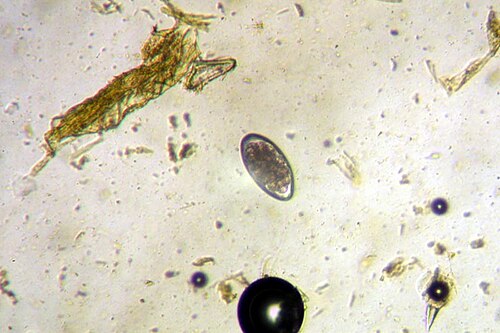
Fecal Testing for Barber Pole Worms
Fecal testing provides another useful tool for monitoring gastrointestinal parasites. A quantitative fecal egg count (FEC) estimates the number of parasite eggs present in a manure sample. Results are commonly reported as eggs per gram, or EPG. Fecal egg counts can help producers and veterinarians monitor parasite shedding, identify animals that consistently shed large numbers of eggs, understand parasite patterns within a herd, and evaluate whether a dewormer remains effective.
But fecal egg counts have limitations. The number of eggs found in manure does not perfectly correspond to the number of adult worms inside the goat. Egg production can vary, different parasite species produce different quantities of eggs, and immature worms may be present before they begin producing eggs. For that reason, there is no single universally accepted EPG threshold at which every goat should automatically be dewormed. Fecal results are most useful when interpreted alongside the animal’s clinical signs, FAMACHA score, body condition, performance and treatment history.
Related guide: Goat Fecal Testing & Fecal Egg Counts
Barber Pole Worm Treatment in Goats
Treatment for barber pole worm generally involves an anthelmintic, commonly called a dewormer, when an animal has been identified as needing treatment. However, parasite treatment is no longer as simple as choosing a dewormer and treating every goat on a schedule. Barber pole worms have developed resistance to dewormers on many farms. Resistance means that a drug that once killed most of the parasites may no longer be sufficiently effective against the parasite population on a particular farm.
Modern parasite management therefore focuses on targeted selective treatment: treating animals that need treatment while avoiding unnecessary treatment of animals that do not. The decision may incorporate FAMACHA score, bottle jaw, body condition, weight changes, other clinical signs and veterinary assessment. Goats showing severe weakness, very pale or white mucous membranes, difficulty standing, rapid deterioration or other serious signs should receive prompt veterinary attention. Severe haemonchosis can be life-threatening.
What Is the Best Dewormer for Barber Pole Worms in Goats?
There is no single dewormer that can be considered the best choice for every goat or every farm. Several classes of anthelmintic drugs are used to control gastrointestinal parasites, but resistance patterns can differ substantially between farms. A dewormer that remains highly effective on one farm may perform poorly on another.
Drug selection and dosing can also be more complicated in goats than simply following treatment practices used for another livestock species. Some parasite-control uses in goats may involve extra-label drug use, which should be done under the direction of a veterinarian within a valid veterinarian-client-patient relationship.
Related guide: The Best Dewormer for Goats
Why Dewormer Resistance Matters
Every time a parasite population is exposed to a dewormer, susceptible worms are more likely to die while worms carrying resistance traits are more likely to survive. If every animal in a herd is repeatedly treated, particularly when treatment is not necessary, resistant parasites can make up an increasingly large share of the surviving population.
Targeted selective treatment helps preserve a population of parasites that has not been exposed to the drug. This untreated population is known as refugia. Maintaining refugia helps slow the development of dewormer resistance and preserve the usefulness of the medications available to producers. This is one reason routine calendar-based whole-herd deworming is no longer recommended as the default approach to parasite management.
How Do You Know if the Dewormer Worked?
Seeing a goat improve after treatment is encouraging, but clinical appearance alone does not necessarily tell you how effective a dewormer is against the parasite population on your farm. A Fecal Egg Count Reduction Test (FECRT) can be used to evaluate dewormer effectiveness.
The basic process involves:
- Collecting fecal samples before treatment
- Administering the treatment
- Collecting another fecal sample after the appropriate interval
- Comparing the pre- and post-treatment egg counts
The amount that egg shedding decreases provides information about how effectively the treatment is working. Timing, sampling and interpretation matter, so FECRT is best performed using an established protocol and with veterinary or laboratory guidance when needed. Keeping the original fecal result, treatment used, treatment date and follow-up fecal result together makes it much easier to evaluate treatment history over time.
Preventing Barber Pole Worm Problems
Completely eliminating gastrointestinal parasites from a goat herd is neither realistic nor necessarily the goal. Instead, sustainable parasite management aims to reduce clinical disease while slowing the development of dewormer resistance.
A parasite-management program may include:
- Regularly monitoring individual animals
- Using FAMACHA appropriately when barber pole worm is a concern
- Watching body condition and weight changes
- Performing fecal testing when useful
- Using targeted selective treatment
- Monitoring dewormer effectiveness
- Avoiding unnecessary whole-herd deworming
- Managing grazing and pasture exposure
- Maintaining appropriate nutrition
- Identifying animals that repeatedly struggle with parasites
Pasture management can also reduce exposure. Because infective larvae are associated with contaminated pasture and tend to be concentrated lower on forage, avoiding severe overgrazing and allowing adequate pasture recovery can be useful components of an integrated parasite-control program. No single strategy eliminates the problem. Combining monitoring, grazing management, selective treatment and good records is generally more sustainable than relying on dewormers alone.
Some Goats Are More Susceptible Than Others
Two goats living on the same pasture can respond very differently to parasite exposure. Some animals repeatedly become anemic, develop bottle jaw, shed large numbers of parasite eggs or require treatment. Others remain comparatively healthy under similar conditions.
These individual differences are important. Animals that repeatedly require treatment can contribute disproportionately to pasture contamination and increase reliance on dewormers. Conversely, identifying goats that consistently perform well despite parasite exposure can be valuable when making long-term herd-management and breeding decisions. The challenge is remembering those patterns over several months or years. That’s where individual parasite records become particularly useful.
Keep a Parasite History for Every Goat
Barber pole worm management isn’t a one-time event. A FAMACHA check tells you something about an animal today. A fecal test provides another snapshot. A treatment record tells you what was given. A follow-up test tells you whether that treatment worked. Those pieces become considerably more useful when you can see them together as part of an animal’s health history.
For each goat, consider tracking:
- FAMACHA observations
- Bottle jaw and other clinical signs
- Body condition
- Weight changes
- Fecal test and EPG results
- Dewormers and other treatments
- Treatment dates
- Follow-up observations
- Repeat fecal test results
Over time, those records can help you identify goats that repeatedly struggle with parasites, remember which treatments have been used, evaluate response to treatment, and provide better information when working with your veterinarian.
FAQ
What are the symptoms of barber pole worms in goats?
Common signs of a significant barber pole worm infection include pale mucous membranes, anemia, weakness, poor body condition, weight loss and bottle jaw. Severe infections can cause rapid deterioration and may be fatal.
Can barber pole worms cause bottle jaw in goats?
Yes. Heavy gastrointestinal parasitism can result in blood and protein loss. When blood protein becomes too low, fluid may accumulate beneath the jaw, producing bottle jaw.
Do barber pole worms cause diarrhea in goats?
Diarrhea is not a characteristic sign of a pure barber pole worm infection. Goats with significant Haemonchus infections may continue producing formed feces. If diarrhea is present, other parasites or health problems may also be involved.
How do you test goats for barber pole worms?
There is no single test or observation that provides the entire picture. FAMACHA can be used to assess anemia associated with barber pole worm, while fecal egg counts provide information about parasite egg shedding. Clinical signs, body condition, animal history and veterinary assessment may also be important.
Can FAMACHA tell if a goat has barber pole worms?
Not exactly. FAMACHA evaluates anemia by examining lower-eyelid mucous membrane color. Because barber pole worm is a blood-feeding parasite, FAMACHA is particularly useful in managing haemonchosis, but it does not directly identify worms and is not a general parasite test.
What is the best dewormer for barber pole worms in goats?
There is no universally best dewormer. Resistance varies between farms, so a treatment that remains effective on one farm may perform poorly on another. Work with your veterinarian to determine an appropriate parasite-control protocol and consider testing dewormer effectiveness.
How do you know if a goat dewormer worked?
A Fecal Egg Count Reduction Test can help evaluate dewormer effectiveness by comparing fecal egg counts before and after treatment. Following an established testing protocol is important for meaningful results.
Can barber pole worms kill goats?
Yes. Heavy Haemonchus contortus infections can cause severe anemia and potentially fatal disease. Goats that are extremely weak, have very pale or white mucous membranes, are having difficulty standing or are rapidly deteriorating require prompt veterinary attention.
Can goats get barber pole worms again after treatment?
Yes. Treatment does not permanently protect a goat from future exposure. Infective larvae can remain in the environment, and goats may ingest them while grazing. Ongoing monitoring and pasture management are therefore important parts of parasite control.
Sources & Further Reading
The following veterinary, university Extension and small-ruminant parasite-control resources were used in preparing this guide:
- University of Minnesota Extension — Managing Barberpole Worms in Sheep and Goats
- University of Maryland Extension — When Should I Deworm My Sheep/Goats?
- MSD Veterinary Manual — Common Gastrointestinal Parasites of Small Ruminants
- American Consortium for Small Ruminant Parasite Control — FAMACHA Resources
- Penn State Extension — Does My Dewormer Still Work?