This article is intended for educational purposes and is not a substitute for veterinary diagnosis or treatment. Contact your veterinarian if you are concerned about your goat’s health.
Bottle Jaw in Goats: Causes, Symptoms & What to Do
If you notice a soft, puffy swelling beneath your goat’s lower jaw, you may be looking at a condition commonly called bottle jaw. Bottle jaw is a form of edema, or fluid accumulation, that develops in the tissues beneath the jaw. In goats, bottle jaw is often associated with a significant internal parasite problem, particularly barber pole worm (Haemonchus contortus). These blood-feeding parasites can cause severe blood and protein loss, leading to anemia and low blood protein levels. When protein levels become too low, fluid can move out of the bloodstream and collect in tissues, including beneath the jaw.
Bottle jaw is a symptom, not a disease itself. If a goat develops bottle jaw, the important next step is determining why it is happening and addressing the underlying problem.
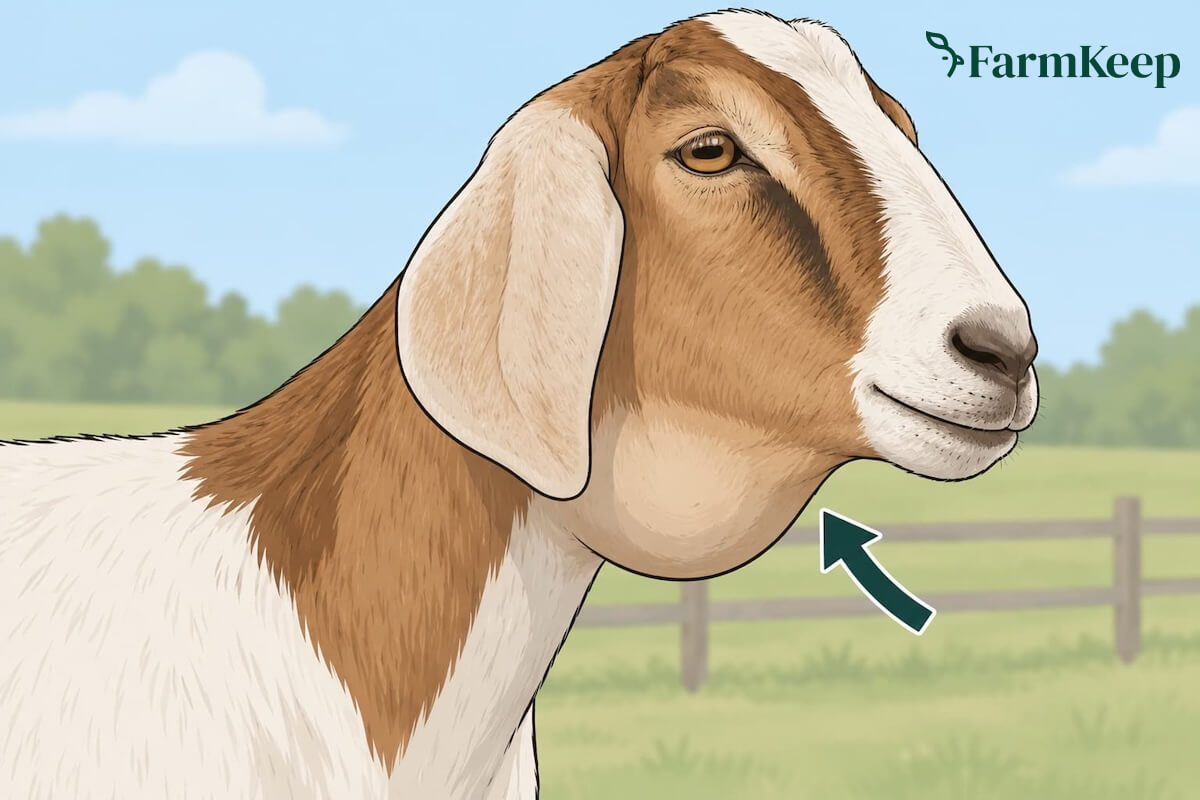
What Does Bottle Jaw Look Like in Goats?
Bottle jaw usually appears as a soft, fluid-filled swelling directly beneath the lower jaw. It may look like a pouch or bulge hanging below the goat’s chin. Because “swollen jaw” can describe several different conditions, location and appearance matter. Bottle jaw refers specifically to submandibular edema—fluid collecting in the tissues beneath the jaw. A firm lump, abscess, one-sided swelling, or swelling associated with an injury may have a different cause.
If you aren’t sure whether the swelling you’re seeing is bottle jaw, or if your goat appears seriously ill, a veterinarian can help determine what is causing it.
What Causes Bottle Jaw in Goats?
Bottle jaw develops when fluid leaks from blood vessels and accumulates beneath the jaw. This can happen when the level of protein—particularly albumin—in the blood becomes abnormally low.
In goats, gastrointestinal parasitism is an important cause of this protein loss, and barber pole worm is one of the most significant parasites associated with bottle jaw.
Barber Pole Worms and Bottle Jaw
The barber pole worm (Haemonchus contortus) is a gastrointestinal parasite that lives in the abomasum, one of a goat’s stomach compartments. Unlike many intestinal worms, barber pole worms feed on blood. A heavy infection can cause substantial blood loss. At the same time, damage caused by the parasites can contribute to loss of plasma proteins. The result can be both anemia and hypoproteinemia, or abnormally low blood protein.
When blood protein falls far enough, fluid is more likely to move out of the circulation and into surrounding tissues. Because of gravity and the anatomy of the animal, one place this fluid can become particularly noticeable is beneath the jaw.
A simplified way to think about it is:
Heavy barber pole worm infection
↓
Blood and protein loss
↓
Anemia + low blood protein
↓
Fluid accumulates beneath the jaw
↓
Bottle jaw
Barber pole worm can become a serious health problem quickly, particularly when parasite conditions are favorable or an animal already has a substantial parasite burden.
Related guide: Barber Pole Worm in Goats: Symptoms, Testing & Treatment
Is Bottle Jaw Always Caused by Barber Pole Worm?
No. Although barber pole worm is an important cause of bottle jaw in goats, bottle jaw should not automatically be treated as proof that a goat has barber pole worms. Other gastrointestinal parasites can contribute to protein loss, and other diseases can also cause low blood protein or submandibular edema. Chronic diseases that result in protein loss, for example, may sometimes produce similar swelling. Anemia can also have causes unrelated to barber pole worm, including certain nutritional deficiencies and chronic disease.
And not every swelling beneath or around a goat’s jaw is true bottle jaw. Abscesses, injuries, and other localized problems can also produce visible swelling. That is why it is important to evaluate the whole animal, rather than diagnosing the problem from the swelling alone.
Symptoms of Bottle Jaw in Goats
Bottle jaw itself may be the first thing you notice, but look for other changes in the goat as well.
When internal parasites are involved, signs may include:
- Soft swelling beneath the jaw
- Pale lower eyelids or other mucous membranes
- Poor body condition or weight loss
- Weakness or lethargy
- Poor growth or reduced performance
- Poor coat condition
- Reduced appetite
- In severe cases, collapse or sudden deterioration
One important detail: diarrhea is not a characteristic sign of a pure barber pole worm infection. A goat can have a significant barber pole worm burden while continuing to produce normal-looking pellets. If diarrhea is present, other parasites or health problems may also be involved. For this reason, normal-looking manure does not rule out barber pole worm.
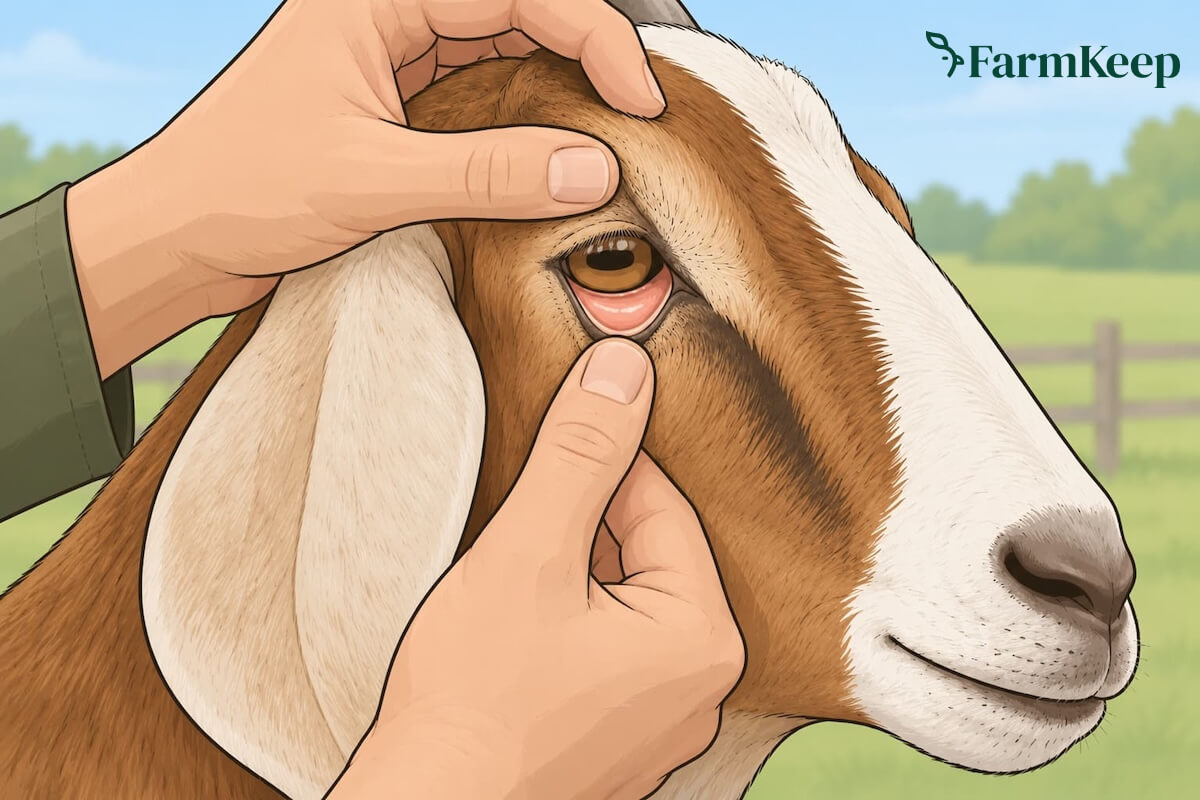
Checking a Goat’s Eyelids for Anemia
Because barber pole worms feed on blood, checking for anemia can provide useful information when evaluating goats for this parasite. One commonly used system is FAMACHA©.
FAMACHA uses the color of the mucous membrane inside the lower eyelid to estimate the degree of anemia. The system was developed specifically to help sheep and goat producers identify animals that may require treatment for Haemonchus contortus while avoiding unnecessary treatment of animals that do not.
It is important to understand what FAMACHA does—and what it does not do. FAMACHA is an anemia assessment, not a general test for worms. Other gastrointestinal parasites may cause disease without producing significant anemia, so a good FAMACHA score does not mean an animal is free of parasites.
The American Consortium for Small Ruminant Parasite Control recommends proper FAMACHA training and use of an official card. Photos, printed copies, and colors displayed on a phone or computer screen should not be used as substitutes for the official scoring card.
Related guide: FAMACHA Score for Goats: What It Means & How It’s Used
How Do You Know if Parasites Are Causing Bottle Jaw?
There usually isn’t one observation or test that tells the entire story. University Extension parasite-management programs increasingly recommend looking at multiple indicators when evaluating an animal rather than relying on a single sign.
That may include:
- FAMACHA score
- Presence of bottle jaw
- Body condition
- Weight gain or loss
- Fecal soiling or diarrhea
- Overall appearance and performance
- Previous parasite and treatment history
- Fecal testing when appropriate
This is sometimes formalized through systems such as the Five Point Check©, which evaluates the eye, jaw, back/body condition, tail, and nose for different signs associated with parasitism.
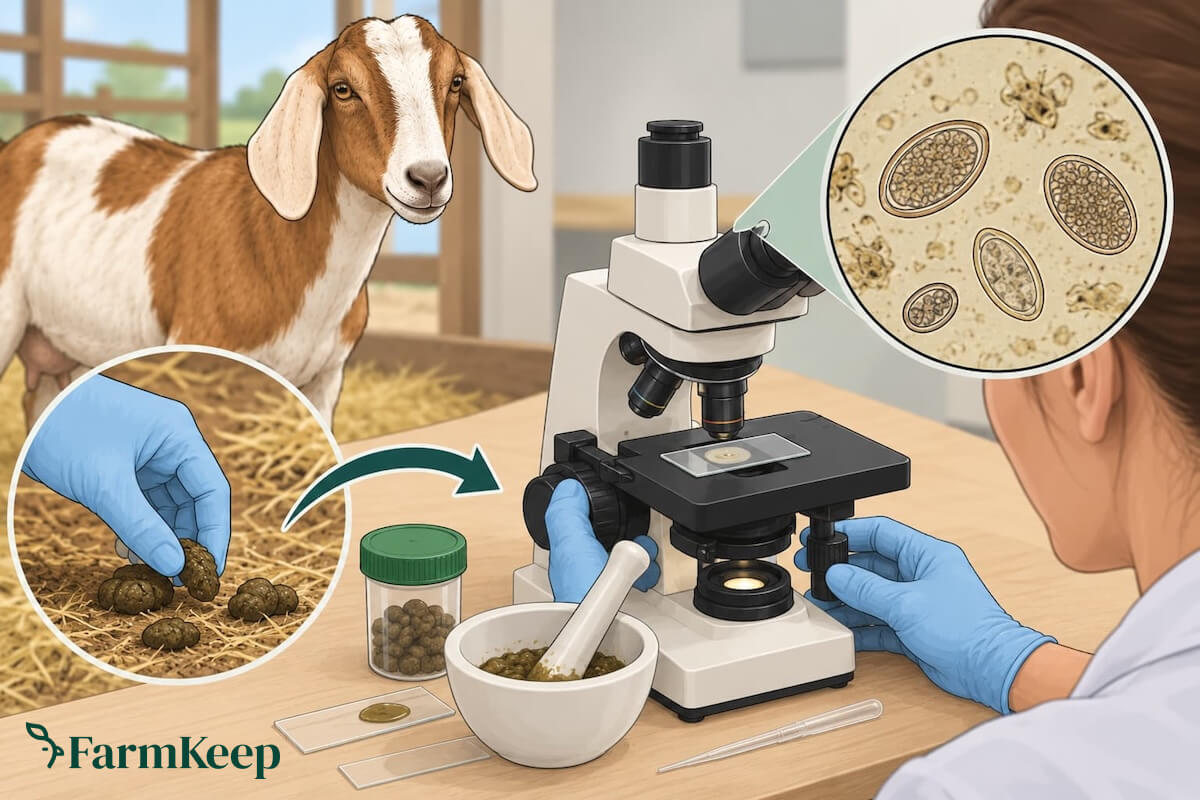
Fecal Testing and Fecal Egg Counts
Fecal testing provides another piece of the parasite-management picture. A quantitative fecal egg count (FEC) estimates how many parasite eggs are present in a manure sample and commonly reports the result as eggs per gram, or EPG.
Fecal egg counts can help identify patterns of parasite shedding, monitor parasite contamination within a herd, identify animals that repeatedly shed large numbers of eggs, and evaluate whether a dewormer is still working. But an FEC is not a perfect measurement of the number of adult worms living inside a goat. Different parasite species produce different numbers of eggs, immature parasites may be present before they begin producing eggs, and egg production can vary.
For that reason, there is no single universal EPG threshold that means every goat should automatically be dewormed. Fecal egg counts are best interpreted alongside clinical signs, FAMACHA scores, body condition, herd history, and veterinary guidance.
Related guide: Goat Fecal Testing & Fecal Egg Counts: A Practical Guide
How Is Bottle Jaw in Goats Treated?
Treatment depends on what is causing the bottle jaw and how severely the goat has been affected. If gastrointestinal parasites are responsible, treatment involves addressing the underlying parasite infection rather than simply trying to reduce the swelling.
A veterinarian can help assess the goat’s condition and determine an appropriate treatment plan based on its clinical signs, parasite history, fecal testing when appropriate, and the effectiveness of dewormers on your farm. A goat that is extremely weak, has very pale or white mucous membranes, is struggling to stand, has difficulty breathing, or is rapidly deteriorating should receive prompt veterinary attention. Severe haemonchosis can cause profound anemia and can be fatal.
Should You Deworm a Goat With Bottle Jaw?
A goat with bottle jaw associated with gastrointestinal parasitism may require treatment, but parasite management is more complicated than simply deworming every goat on a fixed schedule. Gastrointestinal parasites have developed resistance to commonly used dewormers on many sheep and goat farms. Routine whole-herd treatment can accelerate that resistance by repeatedly exposing the parasite population to the same drugs.
Modern small-ruminant parasite programs therefore emphasize targeted selective treatment—identifying animals that need treatment rather than automatically treating every animal. Bottle jaw can be one important sign in that decision, along with FAMACHA score, body condition, weight changes, other clinical signs, and veterinary assessment.
What Is the Best Dewormer for Bottle Jaw in Goats?
There is no single dewormer that is automatically the “best” treatment for every goat with bottle jaw. First, the underlying cause needs to be identified. If parasites are responsible, the appropriate treatment also depends on which dewormers remain effective against the parasite population on your farm.
Resistance can vary substantially between farms. One way producers and veterinarians evaluate dewormer effectiveness is through a Fecal Egg Count Reduction Test (FECRT). This compares fecal egg counts collected before treatment with counts collected after treatment to determine how much egg shedding decreased.
Keeping accurate records of the dewormer used, treatment date, animal treated, fecal results, and follow-up results makes this kind of parasite management much easier.
Related guide: The Best Dewormer for Goats
Is Bottle Jaw in Goats Contagious?
Bottle jaw itself is not contagious. A goat cannot catch bottle jaw simply by standing next to another goat that has it. However, if gastrointestinal parasites are causing the bottle jaw, other goats sharing the same pasture may be exposed to the same parasites.
Adult gastrointestinal worms produce eggs that pass out of the animal in manure. Under suitable environmental conditions, those eggs develop into infective larvae on pasture. Grazing animals then ingest the larvae and continue the parasite life cycle. So while bottle jaw itself does not spread from goat to goat, the parasite problem behind it can affect multiple animals in the same herd.
Preventing Bottle Jaw From Happening Again
Preventing future parasite-related bottle jaw is less about repeatedly deworming the herd and more about building a sustainable parasite-management program.
Depending on your farm, climate, herd, and veterinarian’s recommendations, that may include:
- Regularly monitoring individual animals
- Using FAMACHA correctly when barber pole worm is a concern
- Watching body condition and weight changes
- Performing fecal testing when appropriate
- Using targeted selective treatment
- Monitoring dewormer effectiveness
- Managing pasture exposure
- Maintaining appropriate nutrition
- Identifying animals that repeatedly struggle with parasites
Individual animals can differ substantially in their susceptibility to parasites. Over time, records can help identify goats that repeatedly develop anemia, bottle jaw, high fecal egg counts, or require treatment more frequently than their herd mates.
Keep a Parasite History for Each Goat
A parasite check tells you what is happening today. Good records help you understand what has been happening over time.
For each goat, consider keeping a history of:
- FAMACHA observations
- Bottle jaw and other clinical signs
- Body condition
- Fecal test and EPG results
- Dewormers and other treatments
- Treatment dates
- Follow-up observations
- Repeat fecal test results
That history can help you recognize recurring problems, remember what treatments were previously used, evaluate how an animal responded, and have better information available when working with your veterinarian.
FAQ
Is bottle jaw in goats always caused by worms?
No. Gastrointestinal parasites are an important cause of bottle jaw in goats, and barber pole worm is particularly significant, but other conditions can also cause protein loss, edema, anemia, or swelling around the jaw. Bottle jaw should be treated as a clinical sign rather than a diagnosis.
Can barber pole worms cause bottle jaw?
Yes. Barber pole worms feed on blood and can cause substantial blood and protein loss. Severe infections may lead to anemia, low blood protein, and fluid accumulation beneath the jaw.
Can a goat have barber pole worms without diarrhea?
Yes. Diarrhea is not a characteristic sign of a pure barber pole worm infection. A goat can have a significant Haemonchus contortus infection while continuing to produce formed feces.
Is bottle jaw in goats contagious?
Bottle jaw itself is not contagious. If gastrointestinal parasites are responsible, however, other goats grazing the same environment may also be exposed to infective parasite larvae.
How do you treat bottle jaw in goats?
Treatment depends on the underlying cause. When gastrointestinal parasites are responsible, treatment focuses on controlling the parasite infection and supporting the affected animal as needed. Because dewormer resistance is common, work with your veterinarian to determine an appropriate treatment strategy rather than relying on trial-and-error deworming.
What is the best wormer for bottle jaw in goats?
There is no single dewormer that is best for every farm or every goat. Parasite resistance varies between farms, and the first step is confirming that parasites are actually responsible. Fecal Egg Count Reduction Testing can help determine whether a particular dewormer remains effective.
Should I get a fecal test if my goat has bottle jaw?
Fecal testing can provide useful information about gastrointestinal parasites and may be recommended as part of a broader evaluation. Fecal egg counts should be considered alongside the goat’s clinical signs, FAMACHA score, body condition, treatment history, and veterinary assessment.
Sources & Further Reading
- University of Minnesota Extension — Managing Barberpole Worms in Sheep and Goats
- University of Maryland Extension — When Should I Deworm My Sheep/Goats?
- MSD Veterinary Manual — Gastrointestinal Parasites of Small Ruminants
- Penn State Extension — Does My Dewormer Still Work?
- American Consortium for Small Ruminant Parasite Control — FAMACHA Resources