Easter Egger Chicken: Egg Colors, Temperament & Complete Care Guide
What Is an Easter Egger Chicken?
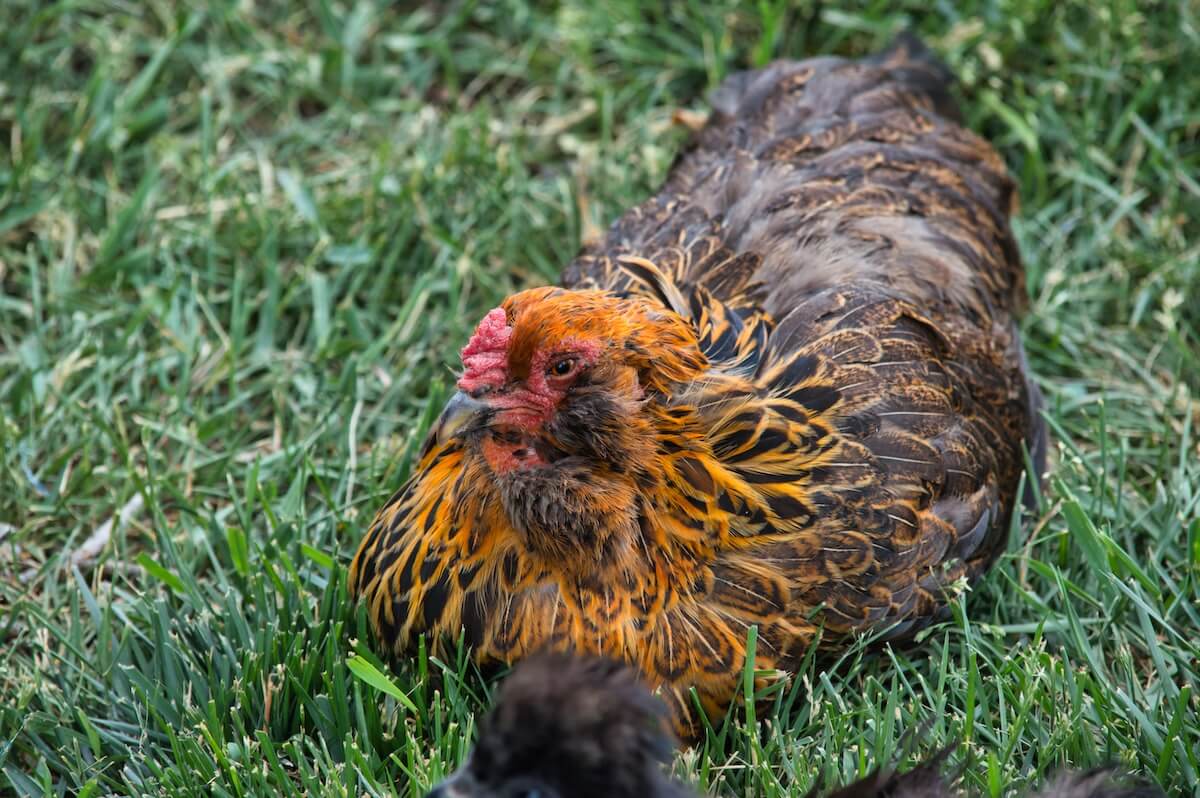
At first glance, Easter Eggers look like a defined breed—but they’re not. Instead, they’re best understood as a hybrid or mixed-breed chicken that carries the blue egg gene, typically originating from crosses involving Ameraucana or Araucana lines. Because they are not standardized, Easter Eggers don’t follow any strict breed guidelines, which is exactly what makes them so unique.
This lack of standardization means their appearance can vary widely from one bird to the next. Feather colors, patterns, and even physical traits like beards or comb types can differ significantly. Their genetics are just as unpredictable—especially when breeding—so offspring may not resemble their parents or produce the same egg colors.
In practical terms, Easter Eggers are one of the most accessible ways to enjoy colorful eggs without the higher cost or strict breeding requirements associated with purebred chickens.
History of the Easter Egger Chicken
Unlike standardized breeds, Easter Eggers don’t have a single, well-documented origin story. However, their roots can still be traced back to South American chickens known for laying blue eggs. These birds were brought to North America in the early 20th century and eventually became the foundation for further breeding efforts.
Two key breeds played a major role in shaping what we now call Easter Eggers. The Araucana, known for its rumpless body and distinctive ear tufts, contributed the original blue egg gene. Later, the Ameraucana was developed in the United States as a standardized version with more predictable traits. When these blue egg–laying chickens were crossed with other breeds, the result was a more diverse, hardy, and productive bird.
Over time, breeders intentionally mixed these lines with other chickens to improve qualities like temperament, adaptability, and egg production. These crosses produced birds that were easier to raise and more resilient in a variety of environments, while still retaining the highly desirable trait of colored eggs.
As their popularity grew, the term “Easter Egger” emerged as a convenient label. Today, it broadly refers to any mixed-breed chicken that lays colored eggs but does not meet the strict standards required to be classified as an Ameraucana or Araucana.
Easter Egger Chicken Overview
What to expect as an owner
- You won’t know egg color until they lay
- Each hen sticks to her color for life
This unpredictability is exactly why people love them.
Pros and Cons
Pros
- Colorful eggs
- Friendly temperament
- Hardy and adaptable
- Beginner-friendly
Cons
- Not a true breed
- Unpredictable breeding results
- Can be mislabeled by sellers
Easter Egger Temperament: Friendly or Feisty?
Easter Eggers tend to land firmly on the “easy to live with” side of the spectrum.
Typical personality traits
- Curious and alert
- Social with flock members
- Comfortable around humans
- Often good with children
Things to keep in mind
- Pecking order still applies
- Individual personalities vary
- Roosters can be unpredictable (as always)
If you want a low-drama flock, Easter Eggers are a strong choice.

Egg Production: Are Easter Eggers Reliable Layers?
They’re not just novelty birds—they actually produce.
What you can expect
- 200–280 eggs per year
- Consistent laying in warmer months
- Seasonal slowdown in winter
Compared to other chickens
- More productive than heritage breeds
- Slightly less consistent than industrial hybrids
Translation: They balance beauty + productivity better than most breeds.
Easter Egger vs Ameraucana vs Araucana
Read the Top Egg Laying Chickens Guide
Quick takeaway
- Want predictability → Ameraucana
- Want rarity → Araucana
- Want fun + affordability → Easter Egger
Appearance: No Two Look the Same
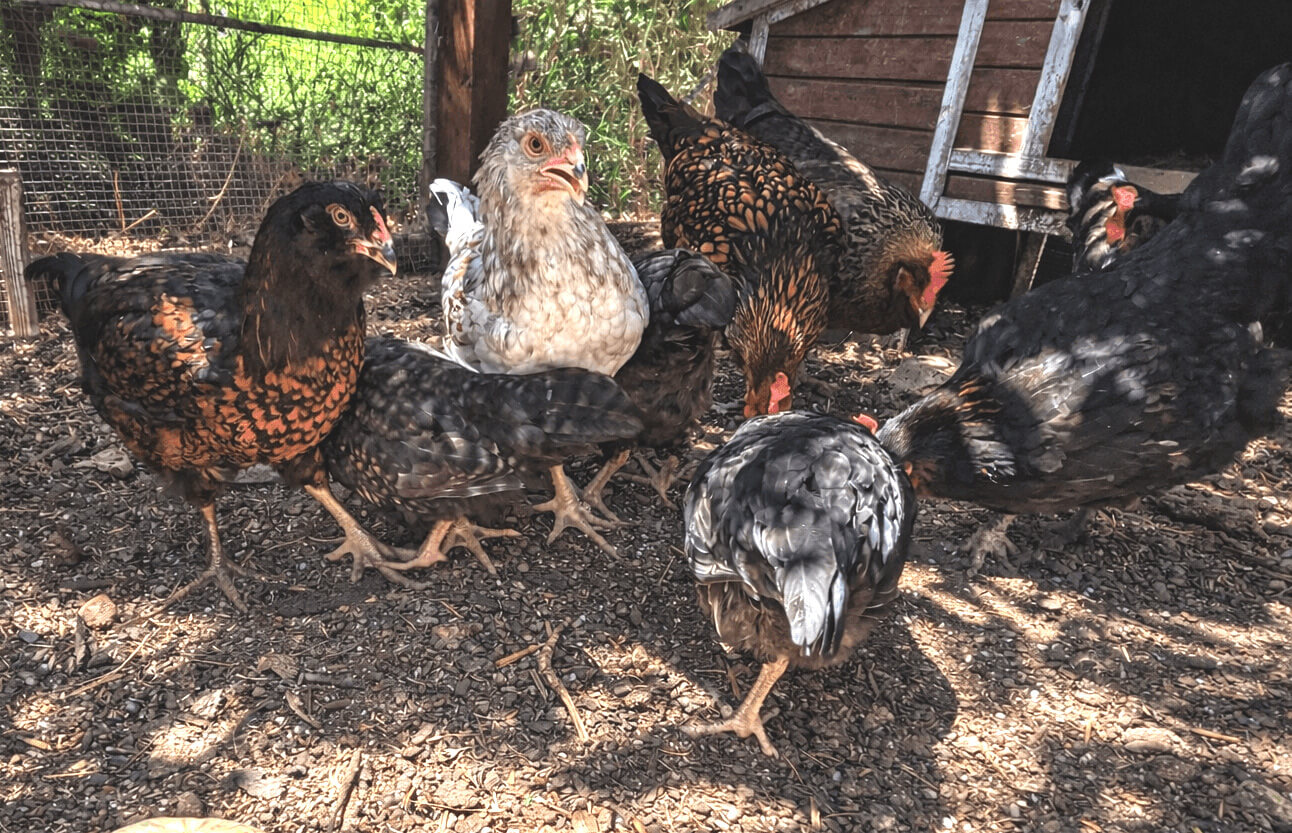
Easter Eggers are visually diverse.
Common traits
- Beard and muffs
- Pea comb
- Wide range of feather colors
What makes them special
- No standard = maximum variation
- Each bird feels unique
They’re basically the “custom character generator” of chickens.
Care Guide: How to Raise Easter Eggers
They’re beginner-friendly, but still need solid basics.
Feeding
- Quality layer feed
- Supplemental calcium
- Occasional treats
What To Feed Chickens for Fast Growth and Egg Laying
Housing
- 4 sq ft per bird (coop)
- 8–10 sq ft per bird (run)
- Good airflow
Essential Tips for Building a Chicken Coop: DIY Guide
Climate
- Cold hardy
- Heat tolerant with shade + water
They’re adaptable—which is a huge win for small farms.
Read the Comprehensive Guide on Chicken Diseases, Symptoms, and Treatments
Breeding Easter Eggers
How Easter Egger Egg Color Genetics Work
Easter Eggers feel a little magical at first—blue eggs, green eggs, sometimes weird in-between shades—but there’s actually a pretty straightforward reason behind it.
At the center of everything is one trait: the blue egg gene.
The Starting Point: Blue Eggs
Chickens like Ameraucana and Araucana lay blue eggs because of a pigment that gets built into the shell itself.
With blue eggs:
- The color goes all the way through the shell
- Crack one open and the inside is still blue
That’s different from brown eggs, where the color is more like a coating on the outside.
Read more about blue eggs and the chicken breeds that lay them
So Where Do Green Eggs Come From?
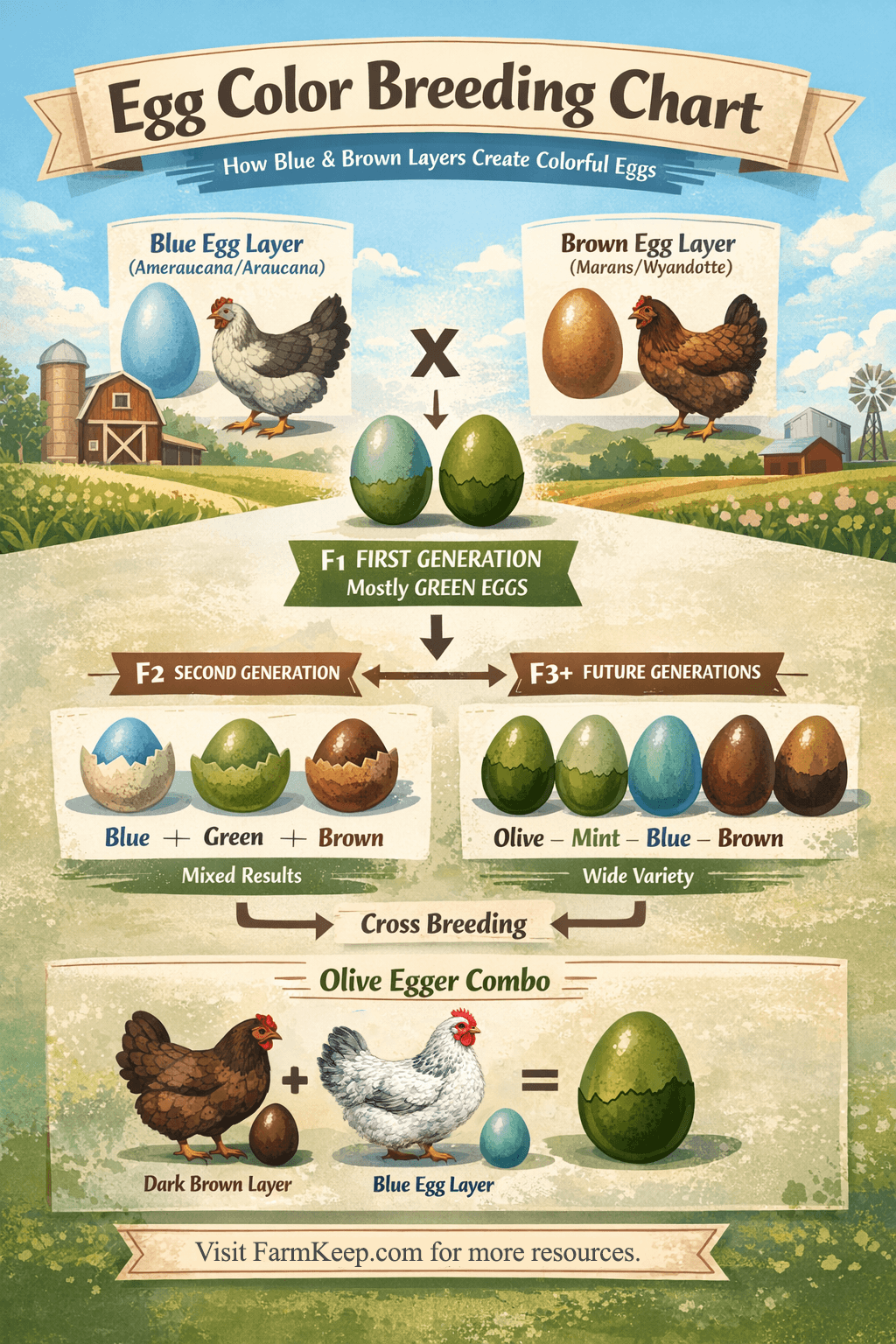
If you cross a blue egg layer with brown egg layer, you usually get green eggs.
What’s happening is simple: the egg starts blue, and a brown tint gets added on top.
Blue + brown = green
How different egg colors are made
Here’s what tends to happen with different pairings:
- Blue × Blue → blue eggs
- Blue × Brown → green or olive eggs
- Blue × White → blue eggs
- Green layer × Brown → darker olive eggs
- Green layer × Blue → lighter green or mint
The exact shade can vary a lot depending on how strong that brown tint is.
That’s why some eggs look pale and pastel, and others look deep olive.
Why Easter Eggers Are So All Over the Place
Because they’re not a true breed, nothing about Easter Eggers is locked in. You can have two hens that look almost identical laying completely different egg colors. And when you breed them? All bets are off.
That’s why hatcheries usually won’t promise exact egg colors—and if they do, take it with a grain of salt.
What Happens When You Start Breeding Them
This is where it gets fun… or frustrating, depending on your personality.
Guide on Incubating Chicken Eggs
First Generation (F1)
Let’s say you cross a blue egg layer with a brown egg layer
Most of the offspring will lay green eggs.
This is the most predictable stage.
Second Generation (F2)
Now you breed those green egg layers together.
This is where things start to scatter.
You might get:
- Blue eggs
- Green eggs
- Brown eggs
- A mix of shades
It’s basically genetics reshuffling the deck.
Third Generation and Beyond
At this point, you’re deep into chaos territory.
You can get:
- Olive tones
- Pale mint greens
- Random variations you didn’t expect
Unless you’re selectively breeding over multiple generations, nothing really “locks in.”
Easter Egger Breeding Outcomes Chart
A Quick Note on Olive Eggers
If you’ve seen those really deep green eggs, those usually come from intentional crosses. Typically a dark brown layer (like a Marans) with a blue egg layer.
That gives you those rich olive colors people go crazy for. And yes—people absolutely breed specifically for this.
Learn more about how to start your own poultry operation.
A Few Things People Get Wrong
Let’s clear up the big ones:
- A single chicken does NOT lay multiple egg colors. One hen = one color, always
- Egg color doesn’t randomly change. It might vary slightly, but it stays consistent
- Feather color doesn’t tell you egg color. There’s no reliable visual shortcut
Where This Gets Messy (Fast)
If you’ve got more than a few chickens, keeping this all in your head stops working real quick.
You forget:
- Which hen lays which color
- Which rooster produced which chicks
- What pairing gave you that one perfect olive egg
And then next season… you’re guessing again.

Track Easter Egger Care and Breeding with FarmKeep
If you’re using something like FarmKeep to track your flock, you can:
- Assign egg color to each hen
- Track production over time
- Log breeding pairs and create pedigree charts
- See patterns instead of guessing
It turns this from: “chicken chaos” into “I know exactly how that egg happened.”
Final Thoughts
Easter Eggers hit a rare balance. They’re practical enough to rely on for steady egg production, but still fun enough to keep your flock interesting day to day. They don’t follow strict standards, and they won’t give you perfectly predictable results—and honestly, that’s the whole appeal. Their variety, quirks, and little surprises are exactly what make people love raising them.
FAQ
What is an Easter Egger chicken?
An Easter Egger is a mixed-breed chicken that carries the blue egg gene. Unlike standardized breeds like Ameraucana or Araucana, Easter Eggers don’t follow strict breed guidelines, which means their appearance and egg color can vary widely.
What color eggs do Easter Egger chickens lay?
Easter Eggers can lay a range of egg colors, including blue, green, olive, and sometimes pinkish or tan. Each hen lays one consistent color for life, but a flock of Easter Eggers can produce a variety of colors.
Do Easter Eggers lay eggs every day?
They are reliable layers but not perfect daily producers. Most Easter Eggers lay around 200–280 eggs per year, which averages to about 4–5 eggs per week, depending on season, age, and care.
Are Easter Eggers good for beginners?
Yes, they’re one of the best chickens for beginners. They are generally friendly, hardy, and adaptable, making them easy to manage in a backyard flock.
What’s the difference between Easter Egger and Ameraucana chickens?
The main difference is that Ameraucana chickens are a recognized breed with consistent traits and lay only blue eggs. Easter Eggers are mixed-breed chickens that can lay a variety of egg colors and have more variation in appearance.
Can one Easter Egger lay different colored eggs?
No. Each individual hen lays one egg color consistently. While shades may vary slightly, a single chicken will not switch between colors.
How can you tell what color eggs an Easter Egger will lay?
There’s no reliable way to know for sure until the hen starts laying. Physical traits like feather color or earlobe color are not dependable indicators of egg color in Easter Eggers.
Are Easter Egger chickens friendly?
Most Easter Eggers are known for being friendly, curious, and social. They tend to integrate well into flocks and are often comfortable around people.
Can you breed Easter Eggers for specific egg colors?
You can influence egg color through selective breeding, but results are not guaranteed. Because Easter Eggers are not genetically standardized, offspring can vary widely in both appearance and egg color.
What is an Olive Egger, and is it the same as an Easter Egger?
An Olive Egger is a specific type of crossbred chicken created by breeding a blue egg layer with a dark brown egg layer. While all Olive Eggers are technically hybrids like Easter Eggers, not all Easter Eggers will lay olive-colored eggs.