Rabbit Gestation Calculator
A rabbit gestation calculator is a handy tool for farmers and breeders to predict when a doe (female rabbit) will give birth. By adding the average gestation period of 31 days to the breeding date, the calculator provides an estimated kindling date. This helps farmers plan ahead for rabbits’ feed, veterinary care, labor, and the overall colony management.
How to Use a Rabbit Gestation Calculator?

Using a rabbit gestation calculator is straightforward. Here's everything you need:
Breeding Date: Enter the exact date you know the rabbit was bred.
Get the Due Date: The calculator will then instantly provide the estimated kindling date.
How to Calculate Rabbit Gestation Period Using Breeding Date?
Use this formula to calculate the average gestation time of rabbits using dates manually:
- Note the Breeding Date: This is the date when the rabbit was bred (exposed to a buck or inseminated).
- Add the Average Gestation Period: Rabbits typically have a gestation period of 31-33 days.
- Calculate the Kindling Date (Due Date): Adding 31 days to the breeding date gives the estimated kindling date.
Kindling Date = Breeding Date + 31 days
Example:
- Breeding Date: March 1, 2025
- Add 31 Days → April 1, 2025
- Expected Kindling Date: Around April 1, 2025 (plus or minus a few days)
For a more detailed visual guide, below are service dates and their relevant due dates
Rabbit Gestation Period Based on Breeds
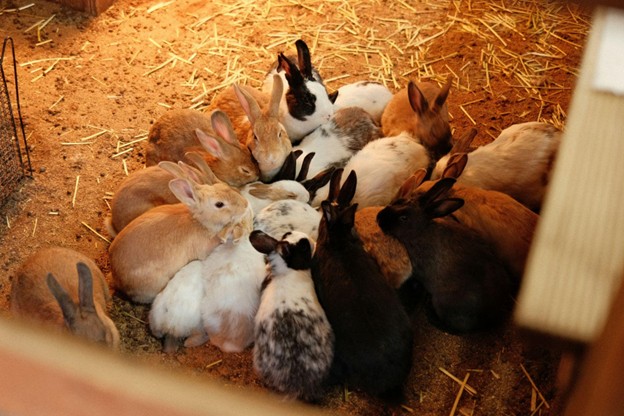
While the average gestation length for rabbits is 31 days, the exact number can vary depending on the breed. Smaller breeds like the Dutch can give birth a bit earlier (28–29 days), while larger breeds such as the Flemish Giant stay closer to the average.
Here are a few examples of popular rabbit breeds and their average gestation period:
Meat & Fur Breeds Gestation Period
Show and Pet Breeds Gestation Period
Key Factors Affecting Rabbit Gestation
The length of a rabbit's pregnancy can vary due to several biological and environmental factors, such as
- Breed: Gestation varies slightly by breed.
- Age: Young does kindling for the first time may have slight variations in gestation compared to mature does.
- Nutrition: Poor or unbalanced feeding can affect pregnancy health and timing.
- Environment: Stress, housing, and temperature can impact gestation.
- Management: Proper breeding practices, sire fertility, and overall care all play a role in a successful pregnancy.
Why Use a Rabbit Gestation Calculator?
A rabbit gestation period calculator offers several key advantages for farmers and breeders:
Predict Kindling Date: Get a precise due date for your rabbit to eliminate uncertainty and reduce the risk of unplanned or difficult births.
Pregnancy Monitoring: Track pregnancy progress, maintain vaccine records, detect potential issues early, and ensure timely veterinary care.
Plan Nesting & Supplies: Place nesting boxes on time, prepare for cushy bedding, and ensure a clean, stress-free environment for the doe to relax in.
Proactive Health Intervention: Careful gestation monitoring can help you identify potential issues early, allowing timely action to protect the health and well-being of both doe and kit.
Optimal Rebreeding Management: Rabbits can breed multiple times a year. Planning the next mating 4–8 weeks after kindling keeps the doe healthy and improves kit survival and growth.
Manage Rabbit Gestation Effortlessly with FarmKeep
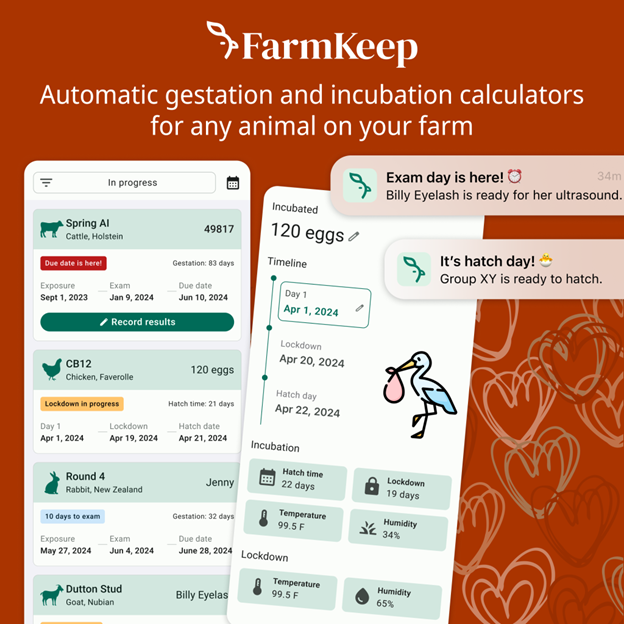
FarmKeep is an all-in-one farm management solution that not only tracks rabbit gestation effortlessly but also helps you:
- Log breeding, AI, and due dates in intuitive calendars
- Set alerts for pregnancy checks and expected births
- Track outcomes, stats, and offspring records
- Centralize all breeding data; no loose papers or spreadsheets
When is the Best Time to Breed Your Rabbit?
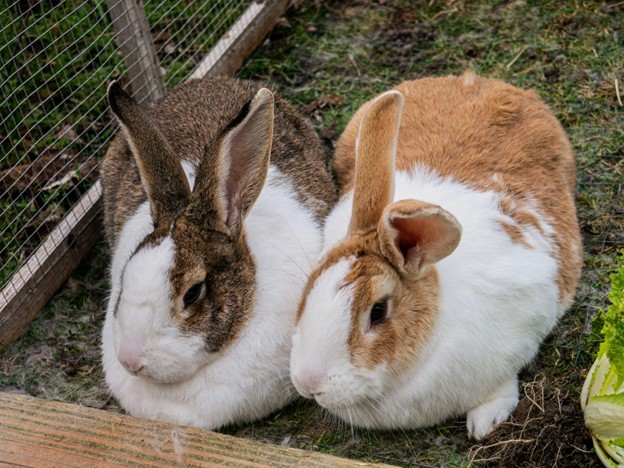
Rabbits are highly fertile and can become pregnant again within hours of giving birth, so careful timing is important for the health of the doe and her kits. The best time to breed is after the rabbit reaches sexual maturity. For small and medium breeds, the ideal time is 4 to 6 months, and for large or giant breeds, it is 7 to 9 months (up to 10–12 months for very large rabbits).
- Age: Ensure the doe is mature enough for breeding.
- Physical and Behavioral Readiness: Check if the doe displays mating-ready behavior; breeding too early can cause weak kits, miscarriages, or litter abandonment.
- Temperature & Climate: Breed during cooler months to reduce heat stress and kit mortality.
- Health & Condition: Only breed healthy, well-conditioned rabbits; overweight or weak does may face pregnancy complications.
- Fertility Management: Since a doe can conceive almost immediately after kindling, scheduling and monitoring rebreeding carefully helps protect her health and improve litter survival.
How to Get Your Rabbit Pregnant?

Rabbits can be bred using several methods, depending on farm setup, scale, and goals:
- Natural Service: Place a buck with a receptive doe. This is simple and works well for small farms, but it can be harder to track exact breeding dates.
- Controlled Breeding: This method requires bringing a buck and doe together at the right time and monitoring receptiveness closely. This helps ensure successful mating and precise kindling dates.
- Artificial Insemination (AI): Involves a trained technician breeding the doe using collected semen. AI allows for greater genetic control and precise timing, though it is more complex and less common on small farms.
Related Rabbit Resources
Check Out Our Other Animal Tools
- Goat Gestation Calculator
- Mare Gestation Calculator
- Sheep Gestation Calculator
- Cattle Gestation Calculator
FAQs
How accurate is the rabbit gestation calculator?
A rabbit gestation calculator is a reliable tool that determines the accurate kindling date for your rabbits. It provides an estimated kindling date based on the average pregnancy length of 31 days.
Can the calculator handle different breeds?
Yes, the calculator can help you estimate kindling dates for small, medium, and large breeds of rabbits.
What should I do if my rabbit goes past the due date?
Slight delays are normal. Monitor the doe for signs of labor and ensure she has a clean, quiet nesting area. If she’s significantly overdue (more than 33 to 34 days), consult a veterinarian to induce labor.
How can the calculator help me prepare for kindling?
By estimating the kindling date, the calculator lets you plan nesting boxes, bedding, feed, and any veterinary care in advance. It can significantly reduce stress for the doe and improve kit survival.
How long does a rabbit pregnancy last?
A rabbit pregnancy can last up to 28 to 32 days, with an average of 31 days.
How do you calculate the due date for a chinchilla rabbit?
Add the rabbit gestation length (about 31 days) to the date of breeding. For example, if a Chinchilla doe is bred on May 1, the estimated kindling date would be June 1.
How many babies can a rabbit have?
Litter size varies by breed and the doe’s age and health. On average, a rabbit can have 4 to 12 kits per litter, though some larger breeds may produce even more.