Goose Feeding Guide: What Geese Eat and How to Feed Them
Proper nutrition is one of the most important factors in raising healthy, productive geese. While geese are exceptional grazers that can obtain much of their diet from pasture, they still require balanced nutrition that changes throughout the year and across different life stages. A growing gosling has very different nutritional needs than an adult breeding goose, and even mature birds require dietary adjustments during winter, breeding season, and periods of poor pasture growth.
Unlike chickens, geese are designed to consume large amounts of grass and forage. On healthy pasture, they may spend most of their day grazing, helping reduce feed costs while maintaining excellent body condition. However, pasture alone is rarely enough throughout the entire year, making supplemental feed an important part of responsible goose care.
Whether you’re raising a pair of backyard geese or managing a breeding flock, this guide will help you understand what geese eat, how much to feed them, and how to build a balanced diet that supports long-term health.

Goose Diet at a Glance
What Do Geese Eat?
Domestic geese are primarily herbivores and natural grazers. In the wild, they spend much of the day eating grasses, aquatic plants, seeds, and tender vegetation. Domestic geese retain these instincts and thrive when given access to quality pasture.
A balanced goose diet typically includes:
- Fresh pasture
- Commercial waterfowl or all-flock feed
- Fresh vegetables
- Occasional fruit
- Clean drinking water
Good nutrition doesn’t come from a single feed—it’s the combination of forage, balanced supplementation, and proper management throughout the year.

Pasture Is the Foundation
Healthy pasture is one of the greatest advantages of raising geese.
Fresh grass provides:
- Natural fiber
- Vitamins
- Minerals
- Exercise
- Mental stimulation
Geese especially enjoy:
- Orchard grass
- Timothy
- Ryegrass
- Kentucky bluegrass
- Clover (in moderation)
- Dandelion
- Plantain
- Chickweed
Even on excellent pasture, continue monitoring body condition to determine whether supplemental feed is needed.
Choosing the Best Commercial Feed
Pasture alone isn’t always enough.
Supplemental feed becomes especially important:
- During winter
- During drought
- For goslings
- During breeding season
- When pasture quality declines
Many goose owners successfully feed:
- Waterfowl pellets
- All-flock pellets
- Waterfowl crumbles (for young birds)
Choose feeds appropriate for the bird’s life stage and avoid making sudden dietary changes.
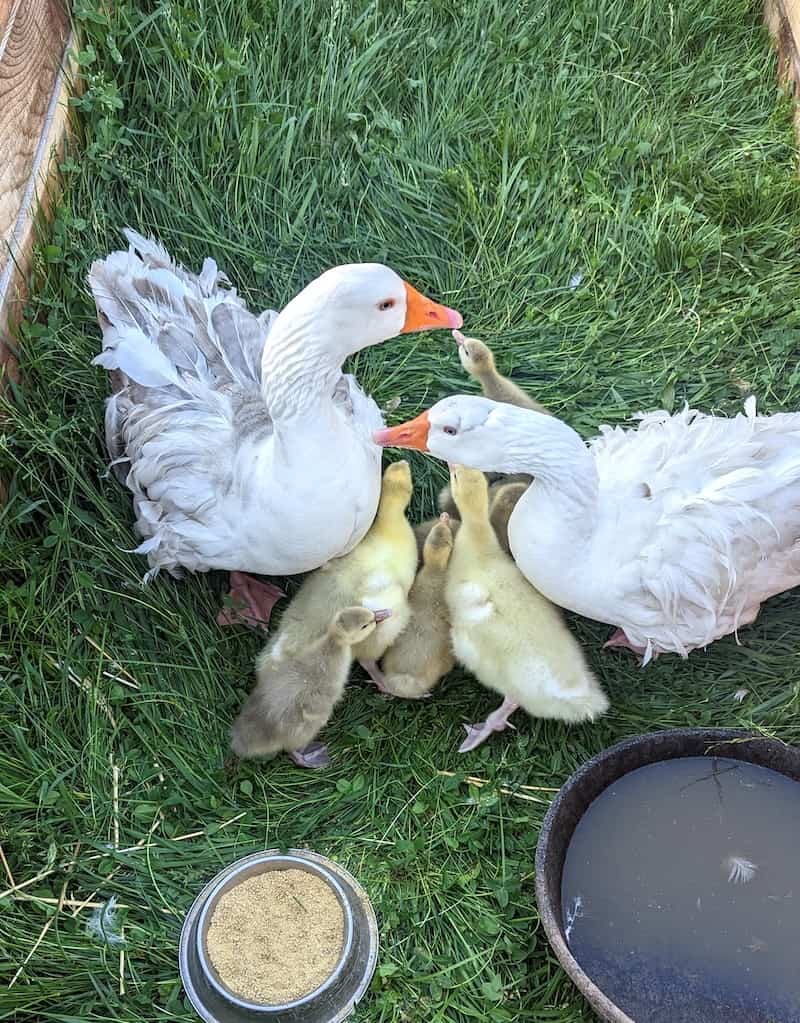
Feeding Goslings
Young goslings grow rapidly and require higher protein than adults.
For the first several weeks:
- Feed a quality starter ration suitable for waterfowl.
- Introduce fresh greens gradually.
- Provide unlimited clean water.
- Allow supervised access to pasture as they grow.
Healthy nutrition during the first few months lays the foundation for strong bones, healthy feathers, and proper development.
Feeding Adult Geese
Adult geese require surprisingly little grain when pasture is abundant.
A healthy adult diet generally consists of:
- Unlimited grazing
- Supplemental feed as needed
- Fresh water
- Seasonal treats
Monitor body condition rather than feeding a fixed amount year-round. Geese grazing lush spring pasture often require less supplemental feed than birds grazing dormant winter pasture.
Feeding Breeding Geese
Breeding birds have increased nutritional demands.
During breeding season:
- Transition to a quality breeder or higher-quality maintenance feed several weeks before laying begins.
- Ensure females receive adequate calcium.
- Maintain consistent body condition.
- Avoid allowing breeding birds to become overweight.
Good nutrition supports fertility, stronger eggshells, healthier embryos, and improved hatch rates.
Seasonal Feeding
Geese don’t eat exactly the same diet all year.
Best Vegetables for Geese
Fresh vegetables make excellent treats and provide variety.
Good choices include:
- Romaine lettuce
- Kale
- Swiss chard
- Cucumber
- Zucchini
- Pumpkin
- Squash
- Peas
- Carrots (chopped)
Offer vegetables in moderation alongside a balanced diet rather than as a replacement for pasture or feed.
Best Fruits for Geese
Fruit should be treated as an occasional snack because of its natural sugar content.
Safe fruits include:
- Apples (remove seeds)
- Watermelon
- Blueberries
- Strawberries
- Pears
- Bananas
- Grapes (in moderation)
- Cantaloupe
Small portions once or twice a week are generally sufficient.
Foods Geese Should Avoid
Not everything that’s safe for people is safe for geese.
Avoid feeding:
- Chocolate
- Avocado
- Moldy feed
- Rotten fruits or vegetables
- Salty snacks
- Sugary processed foods
- Alcohol
- Spoiled grain
Fresh, high-quality feed is always the safest option.
Can Geese Eat…?
How Often Should You Feed Geese?
Healthy adult geese naturally graze throughout the day.
Most flocks do well with:
- Continuous pasture access
- Fresh drinking water at all times
- Supplemental feed once or twice daily as needed
Goslings and breeding birds generally require closer attention to ensure they receive appropriate nutrition.
Common Feeding Mistakes
Many feeding problems are easy to avoid.
Some of the most common include:
- Feeding too much grain
- Relying on bread as a staple food
- Ignoring pasture quality
- Allowing water to become dirty
- Overfeeding treats
- Feeding moldy or spoiled food
- Not adjusting diets seasonally
Regular observation is the best way to determine whether your feeding program is working.

Keep Better Feeding Records with FarmKeep
Nutrition influences nearly every aspect of flock management—from growth and breeding success to egg production and overall health. Tracking feed changes, seasonal diets, body condition, and feeding notes can help you identify what works best for your birds over time.
With FarmKeep, you can record feeding notes for individual geese, manage breeding groups, track egg production alongside nutrition changes, schedule recurring feeding tasks, and keep your entire flock organized from your phone or computer.
Final Thoughts
Feeding geese doesn’t have to be complicated. Quality pasture, balanced supplemental feed, fresh water, and seasonal adjustments form the foundation of a healthy diet. By observing your flock, maintaining good body condition, and offering nutritious treats in moderation, you can support healthy growth, successful breeding, and long-term flock health.
Continue Learning
Interested in learning more about geese? Explore these related guides:
- Goose Breeds: Complete Guide to Popular Domestic Goose Breeds
- Goose Care Guide
- How to Incubate Goose Eggs
- Chinese Geese Breed Guide
- Embden Goose Breed Guide
- African Goose Breed Guide
- Pilgrim Goose Breed Guide
- Sebastopol Goose Breed Guide
- Toulouse Goose Breed Guide
These guides provide more in-depth information on breed comparisons, incubation, nutrition, health, and flock management to help you build a healthy, productive goose flock.
FAQ
Can geese survive on grass alone?
During periods of excellent pasture growth, geese can obtain much of their nutrition from grazing. However, supplemental feed is often necessary during winter, drought, breeding season, and for growing goslings.
Should geese have grit?
Geese grazing naturally often consume enough grit on their own. Birds kept in enclosed areas or without access to natural soil may benefit from supplemental grit.
Can geese eat chicken feed?
In some situations, all-flock or poultry feeds may be appropriate, but waterfowl-specific feeds are generally preferred when available.
Is bread bad for geese?
Bread isn’t poisonous, but it offers very little nutritional value and should never replace a balanced diet.
How much do geese eat each day?
The amount varies depending on pasture quality, season, breed, and age. Geese with abundant grazing typically consume less commercial feed than birds raised on limited pasture.