Sebastopol Geese: Complete Breed Guide
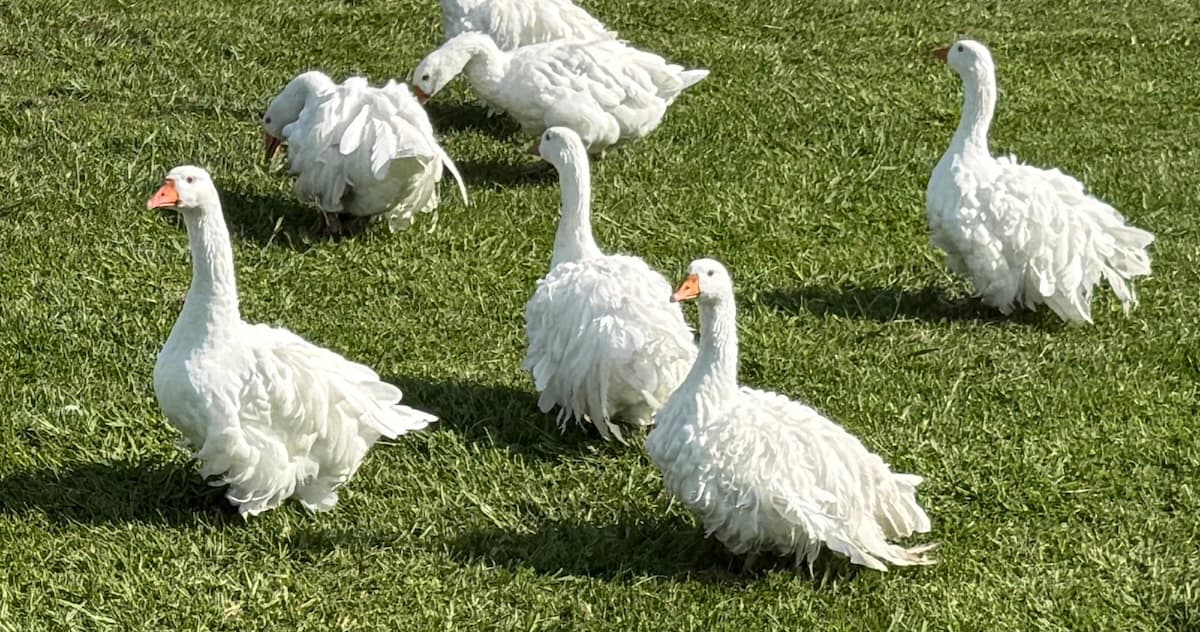
At first glance, Sebastopol geese hardly look like geese at all. Their long, flowing feathers curl away from their bodies in soft waves, giving them an elegant appearance unlike any other domestic goose breed. It’s this distinctive feathering that has made Sebastopol geese one of the most admired ornamental waterfowl in the world.
But these birds offer far more than their appearance. Sebastopol geese are also known for their calm temperament, friendly personalities, and suitability for small farms and hobby homesteads. While they aren’t the most productive breed for meat or egg production, many owners value them for their beauty, companionship, and relatively easygoing nature.
Because of their unusual feather structure, Sebastopol geese have slightly different care requirements than many other domestic goose breeds. Their feathers require extra attention in wet or muddy conditions, and their reduced ability to fly makes them easier to contain than lighter breeds.
Whether you’re researching your first flock or comparing different goose breeds, understanding the strengths and unique needs of Sebastopol geese will help you determine if they’re the right fit for your farm.
Breed Snapshot
Overview of Sebastopol Geese
Sebastopol geese are one of the most distinctive domestic goose breeds thanks to their long, curled feathers that drape loosely over their bodies. Unlike the smooth plumage found on most geese, the feathers of a Sebastopol twist and curl outward, creating an elegant appearance that has made the breed a favorite among waterfowl enthusiasts, exhibition breeders, and small farm owners.
Although often categorized as an ornamental breed, Sebastopol geese are much more than decorative birds. They are intelligent, social, and generally easy to manage, making them well suited for hobby farms, educational farms, and families looking to keep geese for enjoyment rather than commercial production.
Compared to heavier utility breeds such as African or Toulouse geese, Sebastopols are smaller, quieter, and less intimidating. Their calm personalities often make them a popular choice for first-time goose keepers who have adequate space and are prepared to provide the additional feather care this breed requires.
One of the most interesting characteristics of Sebastopol geese is that the same curled feathers that make them so beautiful also affect how they interact with their environment. Their feathers provide less natural weather protection than those of other goose breeds and greatly reduce their ability to fly. As a result, they benefit from cleaner housing, dry resting areas, and thoughtful flock management throughout the year.
Today, Sebastopol geese are raised around the world by breeders, homesteaders, and exhibition enthusiasts who appreciate their unique appearance and gentle nature. While they may never become the most common goose breed on commercial farms, they remain one of the most recognizable and admired domestic geese available.
Quick Facts
Breed Scorecard
History and Origin
Although Sebastopol geese are instantly recognizable for their dramatic curled feathers, their history is surprisingly mysterious. The breed has existed for centuries, yet many details about its early development remain uncertain.
Most historians believe the breed originated in or near the Black Sea region of southeastern Europe, where geese with naturally curled feathers were selectively bred over many generations. The breed eventually became associated with the port city of Sevastopol (historically spelled Sebastopol in English), located on the Crimean Peninsula. As these unusual birds spread throughout Europe during the nineteenth century, they became known by the city’s name—a title the breed still carries today.
Unlike many domestic goose breeds that were developed primarily for meat or egg production, Sebastopol geese were selectively bred for one defining characteristic: their extraordinary feathering. Their long, soft, curled feathers quickly attracted the attention of waterfowl enthusiasts and exhibition breeders, helping establish the breed as one of the world’s most admired ornamental geese.
Today, Sebastopol geese remain relatively uncommon compared to commercial breeds such as Embden or Toulouse geese, but they are highly prized among breeders, exhibitors, and hobby farmers who appreciate their distinctive appearance and gentle temperament.
Physical Characteristics
Sebastopol geese have a graceful appearance that immediately distinguishes them from every other domestic goose breed. Rather than the sleek, tightly layered feathers typical of most geese, Sebastopols have long, flexible feathers that curl, twist, and drape loosely over much of the body.
The result is a bird that almost appears to be wearing flowing ribbons rather than traditional plumage.
Despite their elegant appearance, Sebastopol geese have sturdy bodies and are capable grazers. Their lighter build makes them more agile than heavy utility breeds, although their unique feathering significantly reduces their ability to fly.
Appearance
Adult Sebastopol geese have a medium-sized body with a rounded breast, moderately long neck, and graceful posture. Their most recognizable features include:
- Long, curled body feathers
- Soft, flowing wing feathers
- Rounded body shape
- Bright orange bill
- Orange legs and feet
- Clear blue eyes in most white varieties
Unlike many ornamental birds that have been bred primarily for appearance, Sebastopol geese still retain many of the practical characteristics of domestic geese. They enjoy grazing, swimming, and foraging while maintaining a calm and social disposition.
One interesting detail is that not every feather curls equally. The longest feathers on the back, wings, and tail often display the most dramatic curling, while feathers around the head and neck typically remain smoother.
Size and Weight
Sebastopol geese are considered a medium-sized domestic goose breed.
Typical adult weights include:
- Ganders (males): 12–14 pounds (5.5–6.5 kg)
- Geese (females): 10–12 pounds (4.5–5.5 kg)
Compared to other popular breeds:
- Much lighter than African geese
- Smaller than Toulouse geese
- Considerably lighter than Embden geese
- Similar in size to Pilgrim geese
Their lighter frame makes them easier to handle than many larger breeds while still being substantial enough to thrive outdoors throughout the year.
Feather Structure
The defining characteristic of Sebastopol geese is their unusual feather structure.
Instead of lying flat against the body, many feathers grow with weakened feather shafts that naturally curl and twist outward. This genetic trait produces the breed’s signature flowing appearance and is unlike the feather structure found in any other commonly raised domestic goose.
The degree of curling varies between individual birds. Some develop loose waves, while exhibition-quality Sebastopol geese may display dramatic curls extending several inches beyond the body.
Because these feathers do not interlock as tightly as normal goose feathers, they provide less protection from rain, mud, and cold weather. This characteristic influences many aspects of Sebastopol goose management, including housing, grooming, and seasonal care.
Color Varieties
Although most people picture Sebastopol geese as brilliant white birds, the breed can be found in several attractive color varieties.
Availability often depends on breeding programs, genetics, and regional preferences.
White Sebastopol Geese
White is by far the most common and recognizable color.
These birds feature:
- Pure white curled feathers
- Bright orange bill
- Orange legs and feet
- Blue eyes in most individuals
White Sebastopols are especially popular in exhibitions because their curled feathering creates a striking contrast against the bright plumage.
Buff Sebastopol Geese
Buff Sebastopols display soft tan or cream-colored feathers that give the birds a warm, elegant appearance.
Although less common than white birds, they have become increasingly popular among specialty breeders looking to preserve genetic diversity within the breed.
Gray Sebastopol Geese
Gray Sebastopols combine the breed’s characteristic feather curls with shades of gray throughout the body.
These birds are considerably less common and may vary substantially in appearance depending on breeding lines.
Blue Sebastopol Geese
Blue Sebastopol geese exhibit diluted gray plumage with subtle blue undertones.
This color variety is uncommon and is typically found through specialized breeders rather than large hatcheries.
Saddleback and Other Patterns
Some breeders also work with patterned Sebastopols, including saddleback and other unique feather markings.
These birds are relatively rare and are often sought after by collectors and exhibition enthusiasts.
Not every color variety is recognized by every poultry association, so exhibition standards may differ depending on the country or registry.
Physical Characteristics at a Glance
Why Do Sebastopol Geese Have Curly Feathers?
The first question almost everyone asks when they see a Sebastopol goose is the same:
“Why do their feathers curl like that?”
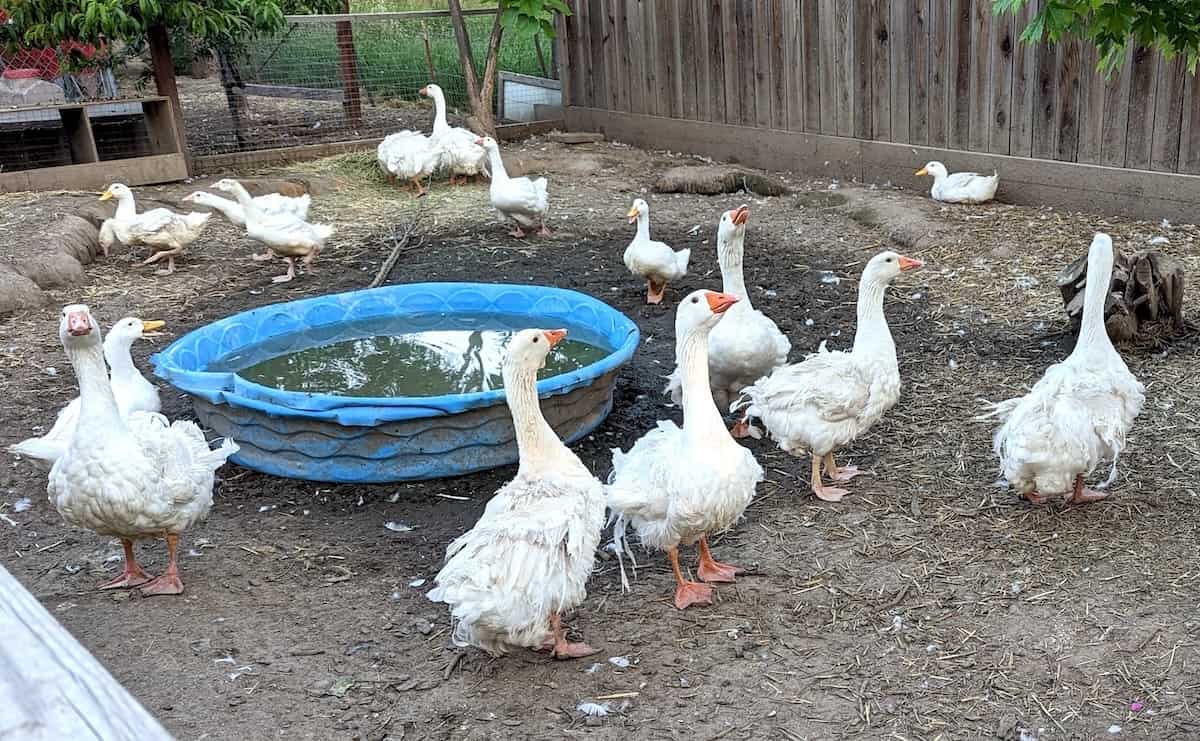
The answer lies in a naturally occurring genetic mutation that affects the structure of the feathers themselves. Unlike the smooth, tightly layered plumage found on most domestic geese, Sebastopol feathers grow with weaker feather shafts that twist and curl as they develop.
This unusual feather structure has been selectively bred for generations, transforming what was once a rare genetic trait into the defining characteristic of the breed. Today, those flowing feathers are the primary reason Sebastopol geese are considered one of the most beautiful and recognizable ornamental goose breeds in the world.
While the curls make these birds exceptionally striking, they also influence how Sebastopol geese move, regulate body temperature, and respond to different weather conditions. Understanding these differences is one of the keys to successfully raising the breed.
The Genetics Behind the Curl
The curled feathers of a Sebastopol goose are inherited through selective breeding rather than grooming or environmental conditions.
Unlike normal goose feathers, which develop with stiff shafts that hold each feather flat against the body, Sebastopol feathers have a softer structure. As they grow, many of the feathers naturally bend, twist, or spiral outward instead of lying neatly together.
The amount of curling varies from bird to bird.
Some Sebastopol geese develop gentle waves throughout their plumage, while others produce long, dramatic curls that cascade several inches below the body. Breeders often select birds with the most attractive feather quality to preserve and strengthen these characteristics in future generations.
Even within the same flock, no two birds look exactly alike.
Not Every Feather Curls
One of the biggest misconceptions about Sebastopol geese is that every feather on the bird is curly.
In reality, the degree of curling varies across different parts of the body.
Typically:
- The longest feathers on the back show the most dramatic curls.
- Wing feathers often twist into loose spirals.
- Tail feathers become long and flowing.
- Neck feathers tend to remain smoother.
- Head feathers usually resemble those of other domestic geese.
This combination creates the elegant, almost cascading appearance that makes Sebastopol geese look unlike any other breed.
High-quality exhibition birds generally display fuller, more evenly distributed curls, although feather quality naturally changes as birds molt and regrow new plumage each year.
How Curly Feathers Affect Flight
One of the most practical consequences of the Sebastopol’s unique feather structure is its reduced ability to fly.
Normal goose feathers lock together to create a smooth, aerodynamic surface capable of generating lift. Sebastopol feathers, however, separate more easily because they do not interlock as tightly.
As a result:
- Air passes through the feathers more easily.
- Wing efficiency is reduced.
- Lift decreases significantly.
- Sustained flight becomes difficult.
Most healthy adult Sebastopol geese can flap, hop, or briefly lift off the ground, but they rarely fly any meaningful distance.
For many owners, this is actually an advantage. Sebastopol geese are generally easier to contain than lighter breeds such as Chinese geese, reducing the need for wing clipping or exceptionally tall fencing.
Weather Resistance
The same feathers that make Sebastopol geese beautiful also require additional consideration during wet weather.
Smooth goose feathers naturally overlap to shed rain and trap insulating air close to the body. Curled feathers leave more gaps between individual feathers, reducing some of that natural protection.
This means Sebastopol geese may:
- Become wet more quickly during prolonged rain.
- Take longer to dry after swimming.
- Require cleaner resting areas.
- Benefit from access to dry shelter during storms.
It’s important to remember that Sebastopol geese are still hardy domestic waterfowl. They enjoy swimming and spending time outdoors, but they generally appreciate having the option to move into a dry shelter during periods of persistent rain or harsh weather.
Providing this choice helps protect feather condition while supporting overall health.
Feather Maintenance
Unlike some ornamental birds, Sebastopol geese do not require brushing, trimming, or specialized grooming.
Instead, good feather condition is maintained through proper husbandry.
Healthy feathers depend on:
- Clean pasture
- Fresh bathing water
- Dry bedding
- Balanced nutrition
- Regular molting
- Minimal feather damage
Allowing geese to bathe regularly is especially important. Bathing helps remove dirt, distribute natural oils through the plumage, and encourages normal preening behavior.
Preening is how geese naturally clean and organize their feathers. A healthy Sebastopol goose spends a considerable amount of time each day bathing and preening to maintain its unique plumage.
Molting and New Feather Growth
Like all domestic geese, Sebastopol geese molt annually.
During this process, older feathers are shed and replaced with new ones.
While molting, birds may temporarily appear uneven or less impressive than they do at full feather. This is completely normal and should not be mistaken for illness or poor health.
As new feathers grow in, the characteristic curls gradually redevelop over several weeks.
For exhibition breeders, understanding the molt cycle is important when planning shows or evaluating feather quality.
Common Misconceptions
Because Sebastopol geese look so different from other breeds, several myths have developed around them.
“Their feathers are unhealthy.”
False.
The curled feathers are simply a normal genetic trait of the breed and are not a sign of disease or poor feather quality.
“They can’t swim.”
False.
Sebastopol geese enjoy swimming just like other domestic geese. While they may dry more slowly because of their feather structure, they still benefit from regular access to clean water.
“They require constant grooming.”
False.
Routine husbandry is usually all that’s required. Providing clean housing, dry bedding, fresh water, and good nutrition allows Sebastopol geese to maintain their own feathers through natural preening.
“They should never get wet.”
False.
Swimming is an important natural behavior for geese. Rather than preventing them from getting wet, the goal is to ensure they have access to clean water for bathing and a dry place to rest afterward.
Why Curly Feathers Make Sebastopol Geese So Special
Many ornamental poultry breeds have been developed for unusual colors, feather patterns, or body shapes, but few are as instantly recognizable as the Sebastopol goose.
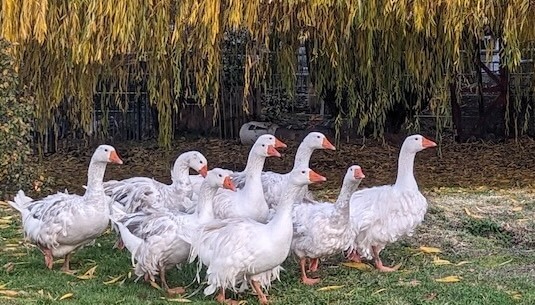
Their flowing plumage creates movement unlike any other domestic goose. As they walk across pasture or glide through the water, their feathers ripple behind them, giving the birds an almost graceful, ribbon-like appearance.
Combined with their calm temperament and social nature, this unique feathering has made Sebastopol geese one of the most sought-after breeds for exhibition, hobby farms, and backyard flocks.
For many owners, it’s this combination of beauty and personality—not productivity—that makes Sebastopol geese such a rewarding breed to keep.
Temperament and Behavior
One of the biggest reasons people choose Sebastopol geese isn’t simply because of their appearance—it’s because of their personality.
While every goose has its own temperament, Sebastopols have developed a reputation as one of the gentlest and most approachable domestic goose breeds. They are naturally curious, social, and often more tolerant of human interaction than heavier utility breeds. For many owners, it’s this combination of beauty and companionship that makes Sebastopol geese so rewarding to keep.
Like all geese, they can become protective during the breeding season and should always be treated with respect. However, outside of nesting periods, Sebastopol geese are generally calm birds that enjoy spending their days grazing, swimming, preening, and interacting with their flock.
Personality
Sebastopol geese are often described as quiet observers of the farm. Rather than constantly patrolling territory like African geese or actively vocalizing like Chinese geese, they tend to have a more relaxed disposition.
Many owners describe them as:
- Gentle
- Curious
- Calm
- Social
- Intelligent
- Easygoing
They enjoy routine and quickly become familiar with the people who care for them. Birds that are handled regularly from a young age often become comfortable approaching their owners and may even follow them around the property in anticipation of feeding time.
Although they are still geese—with all the confidence and independence that comes with the species—Sebastopols are generally considered one of the more approachable breeds for hobby farmers.
Are Sebastopol Geese Friendly?
Yes. Sebastopol geese are widely regarded as one of the friendliest domestic goose breeds.
Their calm temperament makes them particularly popular among:
- Hobby farms
- Educational farms
- Families
- Small homesteads
- Exhibition breeders
Like any animal, individual personalities vary. Early socialization, regular interaction, and positive handling all play important roles in developing friendly adult birds.
Goslings that are gently handled from an early age often grow into adults that willingly approach people, tolerate routine health checks, and remain calm during everyday farm activities.
Intelligence
Sebastopol geese are highly intelligent birds capable of learning routines, recognizing familiar people, and remembering feeding schedules.
Owners commonly notice that their geese:
- Recognize family members
- Wait near gates before feeding time
- Follow predictable grazing routes
- Return to the same nesting areas each year
- Learn daily routines surprisingly quickly
This intelligence also means they benefit from consistency. Predictable feeding schedules, stable flock groups, and familiar environments help reduce unnecessary stress.
Social Behavior
Geese are naturally social animals, and Sebastopols are no exception.
They thrive when kept with other geese and generally do not do well in isolation. A single goose may become lonely, excessively vocal, or overly dependent on human companionship.
Whenever possible, Sebastopol geese should be kept as:
- A bonded pair
- A breeding trio
- A small flock
- Part of a larger compatible goose flock
Within the flock, they establish a natural social hierarchy that usually remains stable throughout the year. Once this hierarchy is established, serious conflicts are uncommon outside the breeding season.
Watching Sebastopol geese interact is one of the pleasures of keeping them. They communicate through subtle body language, soft vocalizations, and synchronized movements while grazing or swimming together.
Noise Level
Compared to many other domestic goose breeds, Sebastopol geese are generally considered moderately vocal.
They certainly announce unusual activity and communicate frequently with one another, but they are not typically as loud or persistent as breeds such as Chinese or African geese.
Common reasons they vocalize include:
- Greeting flock members
- Anticipating feeding time
- Alerting to unfamiliar visitors
- Responding to predators
- Calling to separated flock mates
For farms with nearby neighbors, Sebastopol geese may be a more suitable choice than some of the more vocal utility breeds.
Are Sebastopol Geese Good Pets?
For many owners, this is where Sebastopol geese truly shine.
Their combination of striking appearance and gentle personality makes them one of the most popular goose breeds for people looking for companion waterfowl rather than production animals.
Sebastopol geese often enjoy interacting with their caretakers and can become surprisingly personable over time.
They are particularly well suited for:
- Families with acreage
- Hobby farms
- Educational programs
- Animal sanctuaries
- Small homesteads
Prospective owners should remember that geese are long-lived birds capable of living 15 to 20 years or more. They require daily care, adequate pasture, clean water, and appropriate shelter throughout their lives.
For those prepared to make that commitment, Sebastopol geese can become memorable members of the farm for many years.
Compatibility with Other Farm Animals
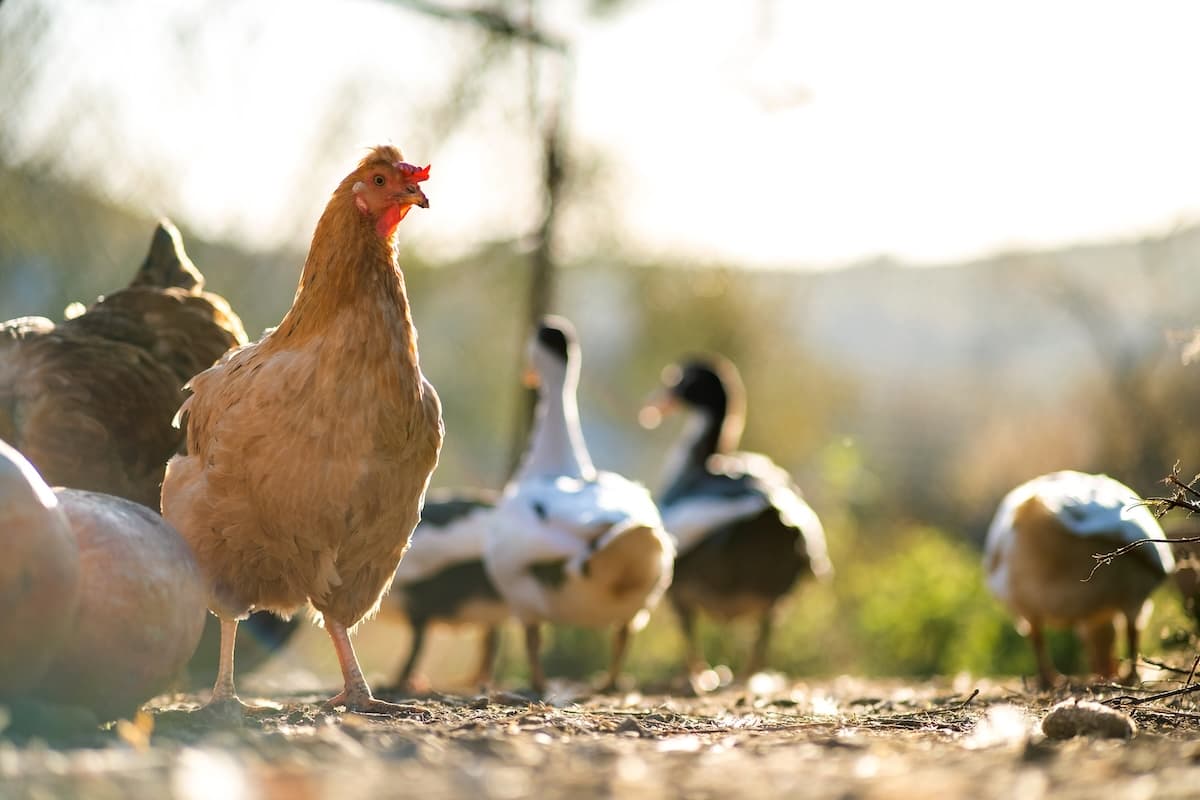
Sebastopol geese generally integrate well into mixed-species farms when introductions are gradual and animals have sufficient space.
Chickens
Sebastopol geese often coexist peacefully with chickens. Because they are calmer than some larger goose breeds, they are less likely to intimidate adult chickens, although separate feeding areas are still recommended.
Ducks
Ducks are often excellent companions for Sebastopol geese.
Both species enjoy access to water and pasture, and many mixed waterfowl flocks spend much of the day grazing together.
Turkeys
Sebastopols can generally live alongside turkeys, provided each species has enough space to establish its own social structure.
Monitoring birds during initial introductions helps minimize unnecessary conflicts.
Goats and Other Livestock
Many hobby farmers successfully raise Sebastopol geese alongside goats, sheep, alpacas, miniature cattle, and other grazing livestock.
Their calm personalities allow them to integrate well into diversified farms while continuing to forage naturally throughout the day.
Breeding Season Behavior
Like all geese, Sebastopol geese become more protective during the breeding season.
Nesting females may become reluctant to leave the nest and may hiss or defend their eggs if approached too closely.
Ganders also become more attentive during this time and may display behaviors such as:
- Neck stretching
- Hissing
- Wing spreading
- Standing between perceived threats and the nest
These behaviors are normal and temporary.
Outside the breeding season, Sebastopol geese generally return to their relaxed social behavior.
Temperament Compared to Other Goose Breeds
Pros and Cons
Egg Production and Breeding
While Sebastopol geese are admired primarily for their striking appearance, they are also dependable seasonal layers and attentive parents. Although they won’t match the egg production of specialized laying breeds like Chinese geese, they produce large, fertile eggs and are often excellent choices for breeders interested in maintaining or expanding their flock naturally.
Many Sebastopol owners eventually discover that breeding these geese becomes one of the most rewarding parts of raising them. Watching a bonded pair raise goslings with the same distinctive feather genetics is part of what has kept this breed popular among enthusiasts for generations.
Egg Production
Sebastopol geese are seasonal layers, producing eggs primarily during the spring breeding season as daylight hours begin to increase.
A healthy adult goose typically lays between 20 and 35 eggs each year, although production varies depending on:
- Age
- Genetics
- Nutrition
- Climate
- Overall flock management
Young geese often lay fewer eggs during their first season, while mature birds generally reach peak production between two and five years of age.
Although Sebastopols aren’t selected for maximum egg production, they consistently produce large, fertile eggs that hatch well under proper conditions.
What Do Sebastopol Goose Eggs Look Like?
Sebastopol goose eggs are:
- Large
- White to creamy white
- Thick-shelled
- Excellent for incubation
Each egg typically weighs between 140 and 180 grams, making them considerably larger than a chicken egg.
Because of their size and shell thickness, goose eggs require slightly different incubation techniques than chicken eggs, particularly regarding humidity and incubation length.
Laying Season
Most Sebastopol geese begin laying sometime between late winter and early spring, depending on climate and daylight.
Typical laying season:
- February
- March
- April
- May
In northern climates, laying often begins slightly later than in warmer regions.
Providing excellent nutrition before breeding season helps support healthy egg production and strong embryo development.
Broodiness
One characteristic many Sebastopol owners appreciate is the breed’s tendency toward broodiness.
Many females willingly incubate their own eggs and become attentive mothers once the goslings hatch.
A broody Sebastopol goose may:
- Build a carefully lined nest
- Spend most of the day sitting on eggs
- Defend the nesting area
- Leave the nest only briefly to eat and drink
- Return consistently until hatching
Not every individual becomes broody, but the breed generally has stronger maternal instincts than many high-production laying breeds.
Fertility and Hatchability
Sebastopol geese are typically good breeders when maintained in healthy condition.
Successful fertility depends on several factors, including:
- Healthy breeding stock
- Proper nutrition
- Clean nesting areas
- Appropriate breeding ratios
- Minimal stress
For most small farms, maintaining one gander for every three to five geese provides excellent fertility while reducing unnecessary competition between males.
Because feathering around the vent can occasionally interfere with successful mating in birds with especially heavy curls, some exhibition breeders lightly trim feathers in this area during breeding season to improve fertility. This is generally unnecessary for most backyard flocks but may be helpful if fertility rates are consistently lower than expected.
Incubation
Sebastopol goose eggs require approximately 30 days of incubation before hatching.
Whether incubated naturally beneath a broody goose or artificially in an incubator, successful hatches depend on maintaining consistent conditions throughout development.
During incubation:
- Eggs should be turned regularly (unless naturally incubated).
- Humidity should be monitored carefully.
- Eggs should be candled periodically to check embryo development.
- Ventilation becomes increasingly important during the final week before hatch.
For a complete day-by-day incubation schedule, candling timeline, and humidity recommendations, see our Incubating Goose Eggs guide.
Raising Sebastopol Goslings
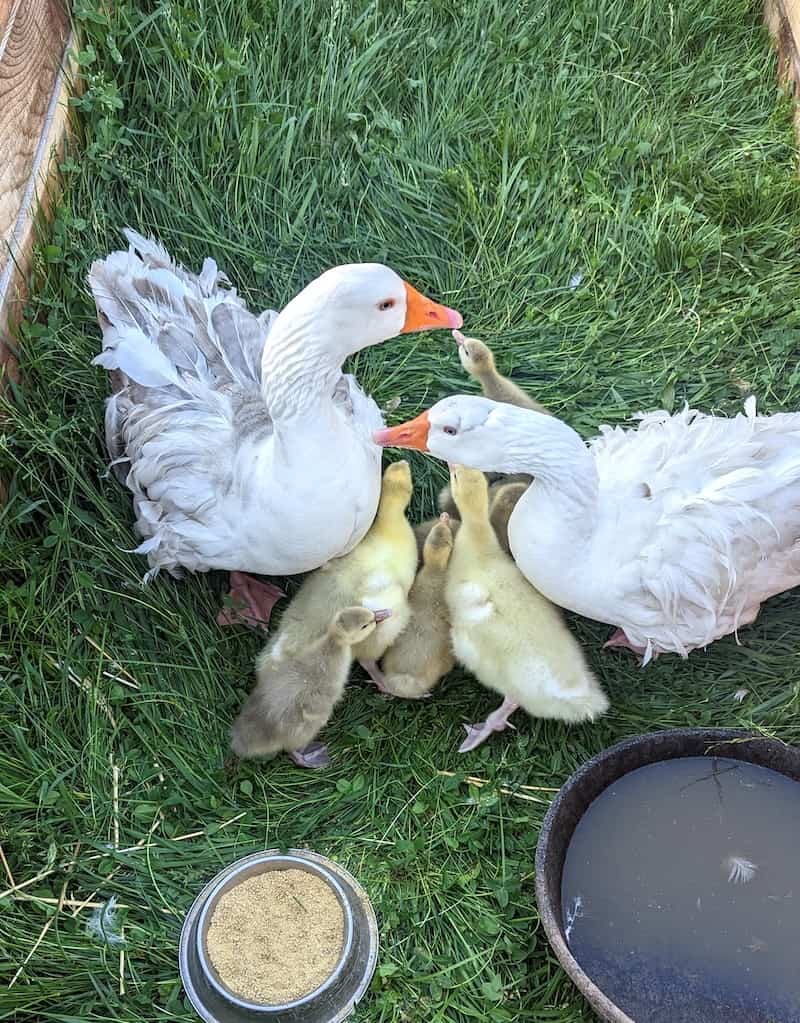
Sebastopol goslings are active, curious birds that grow quickly during their first several months.
Young birds require:
- Warm brooding temperatures
- Clean bedding
- Fresh water
- Appropriate starter feed
- Protection from predators
As they mature, the curled feathers that define the breed begin developing gradually.
Many owners are surprised to learn that newly hatched goslings do not immediately resemble adult Sebastopol geese. The distinctive feather curls become more noticeable as juvenile feathers are replaced with mature plumage.
Watching that transformation is one of the most enjoyable aspects of raising the breed.
Housing
Because of their feather structure, Sebastopol geese benefit from cleaner housing than many other goose breeds.
An ideal shelter should provide:
- Dry bedding
- Good ventilation
- Protection from wind and rain
- Easy access to pasture
- Enough space for birds to move comfortably
Providing 8–10 square feet of indoor shelter per adult goose is a practical guideline for most backyard flocks.
While Sebastopols enjoy spending much of the day outdoors, having access to clean, dry shelter during prolonged wet weather helps keep their feathers in excellent condition.
Pasture and Grazing
Like all geese, Sebastopols are enthusiastic grazers.
Fresh pasture provides:
- Natural forage
- Exercise
- Mental enrichment
- Reduced feed costs
Ideal pasture includes a variety of grasses along with occasional broadleaf plants.
Rotational grazing can also improve pasture quality while helping reduce parasite pressure.
Unlike heavier meat breeds, Sebastopol geese are relatively active grazers and spend much of the day moving across pasture in search of fresh vegetation.
Learn more about geese care in our comprehensive Goose Care guide.
Feeding Sebastopol Geese
Pasture forms the foundation of a healthy diet, but supplemental feed remains important throughout much of the year.
Adult Sebastopol geese benefit from:
- High-quality waterfowl feed
- Balanced poultry rations when appropriate
- Fresh greens
- Clean drinking water
- Seasonal calcium supplementation for laying females
Fresh vegetables such as lettuce, kale, cabbage, and dandelion greens can also be offered as occasional treats.
Avoid feeding moldy feed or spoiled vegetation, as these can quickly lead to illness.
Learn more about diets in our Goose Feeding Guide.
Feather Care
Feather care is one area where Sebastopol geese differ most from other domestic goose breeds.
Fortunately, maintaining beautiful plumage is less about grooming the bird and more about providing the right environment.
Healthy feathers depend on:
- Clean bathing water
- Dry resting areas
- Fresh bedding
- Good nutrition
- Plenty of opportunities for natural preening
Owners should avoid allowing feathers to remain muddy for extended periods, particularly during rainy seasons.
Regular bathing allows geese to clean and condition their feathers naturally while distributing oils throughout the plumage.
Common Health Considerations
Sebastopol geese are generally healthy birds, but their feather structure makes cleanliness especially important.
Regularly observe birds for signs of:
- Wet or matted feathers
- Difficulty walking
- Weight loss
- Nasal discharge
- Limping
- Feather damage
- Reduced appetite
Preventative care—including clean housing, fresh water, proper nutrition, and routine observation—remains the most effective way to maintain a healthy flock.
Daily Care Checklist

Keep Better Records for Your Sebastopol Geese
If you raise Sebastopol geese for breeding, exhibition, or simply as beloved members of your flock, keeping organized records can quickly become just as important as daily care. Tracking breeding pairs, egg production, hatch dates, feather quality, health treatments, lineage, and annual molts helps you make informed breeding decisions while preserving the history of each bird.
With FarmKeep, you can manage every aspect of your flock in one place. Create individual animal profiles, record breeding events, monitor egg production and incubation schedules, log health records, organize pedigrees, and keep your goose records accessible from both your phone and computer—making it easier to care for your birds today and plan for future generations.
Final Thoughts
Few domestic goose breeds capture attention quite like the Sebastopol. Their flowing curled feathers make them one of the most recognizable ornamental waterfowl in the world, but it’s their calm personalities and enjoyable companionship that often leave the greatest impression on the people who raise them.
Although they require a bit more attention to feather condition than most goose breeds, Sebastopols are otherwise hardy, adaptable birds that thrive on pasture with access to clean water, dry shelter, and consistent care. They aren’t the ideal choice if your primary goal is maximum egg or meat production, but for hobby farmers, exhibition breeders, and anyone looking to add a truly unique flock to their property, they offer something few other breeds can match.
Whether you’re drawn to their graceful appearance, their friendly temperament, or the challenge of breeding these remarkable birds, Sebastopol geese continue to earn their place as one of the most admired domestic goose breeds in the world.
Continue Learning
Interested in learning more about geese? Explore these related guides:
- Goose Breeds: Complete Guide to Popular Domestic Goose Breeds
- Chinese Geese Breed Guide
- Embden Goose Breed Guide
- African Goose Breed Guide
- Pilgrim Goose Breed Guide
- Toulouse Goose Breed Guide
These guides provide more in-depth information on breed comparisons, incubation, nutrition, health, and flock management to help you build a healthy, productive goose flock.
FAQ
What makes Sebastopol geese different from other goose breeds?
Sebastopol geese are best known for their long, curled feathers, a unique genetic trait that gives them an elegant appearance unlike any other domestic goose breed. They are primarily raised as ornamental and exhibition birds, although they also make excellent companion animals for hobby farms and homesteads.
Why do Sebastopol geese have curly feathers?
Their distinctive plumage is caused by a naturally occurring genetic trait that affects feather structure. Instead of growing smooth and tightly layered, many of their feathers develop with softer shafts that curl outward. This characteristic has been selectively bred for generations and is now the defining feature of the breed.
Are Sebastopol geese friendly?
Yes. Sebastopol geese are widely considered one of the friendliest domestic goose breeds. They are generally calm, curious, and social, especially when handled regularly from a young age. Their gentle temperament makes them a popular choice for families, hobby farms, and educational programs.
Do Sebastopol geese make good pets?
They can make excellent companion animals for owners with enough space to properly care for them. Sebastopol geese often recognize their caretakers, enjoy following familiar routines, and may become quite tame through regular interaction. Because they can live 15 years or more, prospective owners should be prepared for a long-term commitment.
Can Sebastopol geese fly?
Not very well.
Their curled feather structure reduces the aerodynamic efficiency of their wings, making sustained flight difficult. Most adult Sebastopol geese are capable of short hops or brief flights but rarely travel any meaningful distance through the air.
How many eggs do Sebastopol geese lay?
A healthy Sebastopol goose typically lays 20 to 35 eggs per year during the spring breeding season. While they are not among the highest-producing goose breeds, they produce large eggs with good fertility and often make attentive mothers.
Are Sebastopol geese noisy?
Sebastopol geese are generally less vocal than breeds such as African or Chinese geese, but they still communicate regularly with flock members and will alert owners to unfamiliar activity around the farm. Most owners consider them moderately noisy rather than excessively loud.
Do Sebastopol geese need a pond?
No. A pond is not required to successfully raise Sebastopol geese.
However, they should always have access to clean water deep enough to submerge their bills. Many owners also provide tubs, pools, or other bathing areas that allow the birds to swim, preen, and maintain healthy feathers.
Are Sebastopol geese cold hardy?
Yes, but they require slightly more attention during wet and cold weather than most domestic goose breeds.
Their curled feathers provide less natural weather protection than the smooth plumage of other geese. Providing a dry shelter with clean bedding allows them to stay comfortable during prolonged rain, snow, or freezing temperatures.
Are Sebastopol geese rare?
Compared to commercial breeds such as Embden, Toulouse, or Chinese geese, Sebastopol geese are relatively uncommon. They are most often found through specialty breeders, exhibition flocks, and ornamental waterfowl enthusiasts rather than large commercial hatcheries.