African Geese: Complete Breed Guide
African geese are among the most recognizable domestic goose breeds in the world. Known for their large size, distinctive knob above the bill, and loud, watchful personalities, they have earned a reputation as excellent guardians for farms and homesteads. While many people assume African geese originated in Africa, the breed’s history is more complex, tracing its ancestry to domestic geese developed in Asia before becoming established in Europe and North America.
Today, African geese are raised for a variety of purposes. Some farmers appreciate their impressive body size for meat production, while others value their alert temperament and ability to sound an alarm when unfamiliar people, wildlife, or predators enter the property. They are also popular among hobby farmers who enjoy their intelligence, social behavior, and distinctive appearance.
Like all domestic goose breeds, African geese have their own strengths and challenges. They require adequate pasture, clean water, and thoughtful flock management, but in return they are hardy birds that can live for many years with proper care.
Whether you’re researching your first flock or comparing different goose breeds for your farm, understanding the characteristics of African geese can help you decide if they’re the right fit for your goals.
Breed Snapshot
Breed Scorecard
Overview of African Geese
African geese are a heavy domestic goose breed recognized by their upright posture, broad bodies, and the large knob that develops at the base of the upper bill as they mature. Adult birds also develop a pronounced dewlap—a fold of loose skin beneath the chin—that contributes to their distinctive appearance. Their combination of size, intelligence, and vocal nature has made them a favorite among farmers looking for a multipurpose goose.
Despite their name, African geese are not native to Africa. The breed is believed to descend from the Chinese Swan Goose (Anser cygnoides), with selective breeding over many generations producing the larger birds seen on farms today. This shared ancestry explains why African and Chinese geese have several physical similarities, although African geese are substantially larger and heavier.
African geese are considered a dual-purpose breed. They can produce a moderate number of large eggs each year while also reaching impressive mature weights that make them suitable for meat production. Perhaps their most famous trait, however, is their natural vigilance. African geese are highly observant birds that quickly notice changes in their surroundings and are known for loudly alerting the rest of the flock when something unusual approaches.
Because they are intelligent and social animals, African geese thrive when kept in pairs or groups rather than alone. With proper handling from a young age, they can become calm around their caretakers while still maintaining the protective instincts that have made the breed so popular among small farms and homesteads.
Physical Characteristics of African Geese
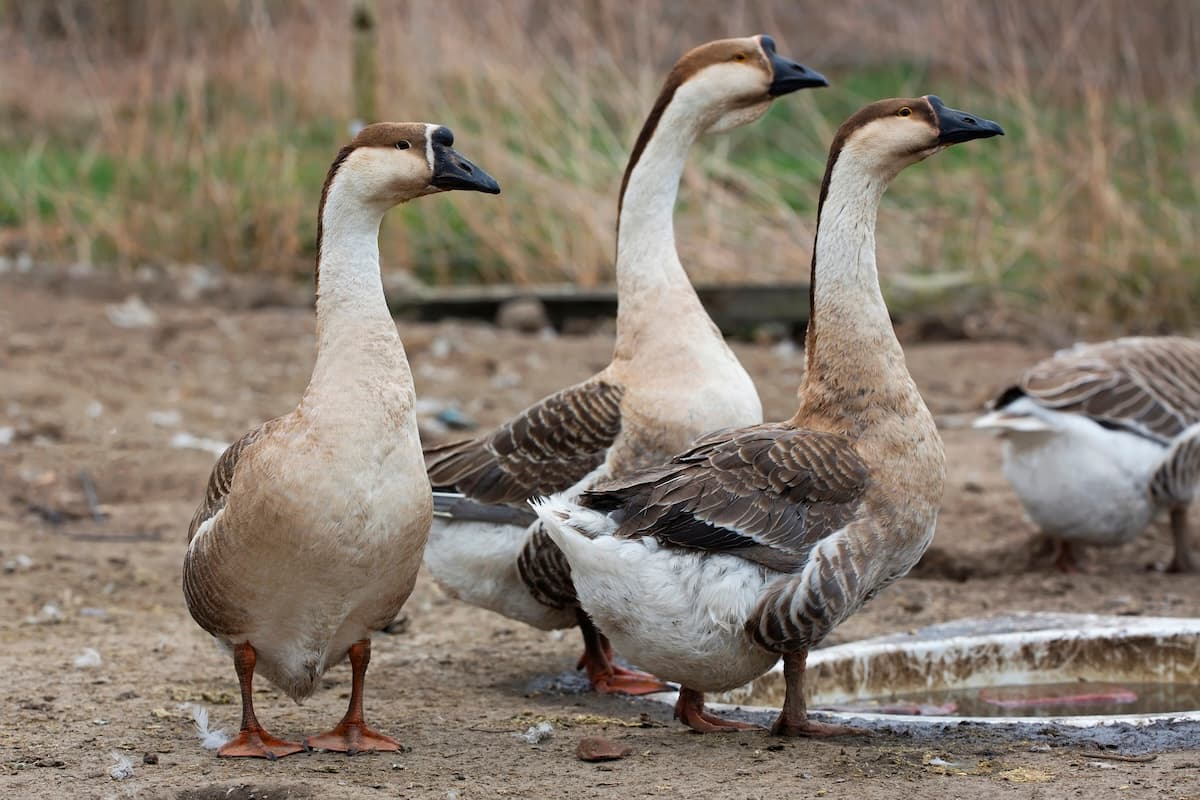
African geese are one of the largest and most distinctive domestic goose breeds. Their upright posture, broad chest, and prominent facial features make them easy to recognize, even from a distance. Mature birds have an elegant but powerful appearance, combining the graceful neck of their Swan Goose ancestors with the heavier body of a utility breed.
Although both males and females share many physical characteristics, ganders (males) are generally larger and develop more pronounced knobs and dewlaps as they mature.
Appearance
The defining feature of an African goose is the large, rounded knob located at the base of the upper bill. This knob gradually enlarges as the bird matures and is typically much more prominent in males than females.
Another signature characteristic is the dewlap—a fold of loose skin beneath the lower bill and neck. In well-developed adults, particularly exhibition-quality birds, the dewlap becomes fuller with age and contributes to the breed’s distinctive profile.
African geese have:
- A long, gracefully curved neck
- Deep, broad body
- Upright posture
- Orange feet and shanks
- Dark bill with a pronounced knob
- Strong, powerful legs designed for walking and grazing
Their feathers fit tightly against the body, giving them a clean, well-defined appearance despite their large size.
Size and Weight
African geese are classified as a heavy goose breed and are among the largest domestic geese commonly raised on farms.
Adult ganders typically weigh between 20 and 22 pounds (9–10 kg), while mature geese generally weigh 18 to 20 pounds (8–9 kg). Well-managed birds from exhibition bloodlines may occasionally exceed these averages.
Despite their size, African geese are surprisingly agile on pasture and spend much of the day grazing. Their larger frame does mean they consume more feed than lighter breeds such as Chinese geese, but they also develop greater muscle mass, making them a popular choice for meat production.
Compared to other common domestic goose breeds:
- Larger than Chinese geese
- Similar in size to Toulouse geese
- Slightly lighter than the heaviest Embden ganders
- Significantly heavier than Sebastopol or Pilgrim geese
The Knob
The knob is perhaps the most recognizable feature of African geese.
Located where the bill meets the forehead, this rounded growth begins developing while young birds mature and continues increasing in size over several years. Nutrition, genetics, age, and sex all influence its final appearance.
Healthy mature males usually develop noticeably larger knobs than females, making the feature one of several helpful indicators when distinguishing sexes in adult birds.
The knob is entirely normal and should not be confused with swelling caused by injury or infection. A healthy knob should appear smooth, symmetrical, and proportional to the bird’s overall size.
The Dewlap
African geese are also known for their prominent dewlap.
The dewlap is a loose fold of skin that hangs beneath the lower jaw and upper neck. Like the knob, it becomes more pronounced as birds mature and is generally larger in ganders than geese.
While a large dewlap is often desirable in exhibition birds, the amount of development varies considerably between bloodlines and individual birds. Production flocks may have smaller dewlaps while remaining perfectly healthy and productive.
Color Varieties
African geese are most commonly found in two recognized color varieties:
Brown African Geese
Brown African geese are the most common variety. They feature rich brown plumage across the back with lighter cream or tan coloring underneath. A dark stripe runs along the back of the neck from the head to the shoulders, a trait inherited from their Swan Goose ancestry.
Online, you’ll also see this color referred to as:
- African brown geese
- Brown African goose
- Brown African geese
These names all describe the same primary color variety.
Gray (Grey) African Geese
Some people search for African gray geese or African grey geese. In practice, these terms are usually referring to the standard brown coloration, which often appears grayish depending on lighting, feather age, or regional naming preferences.
Because “gray” is the preferred spelling in American English and “grey” is more common in British English, both search terms are widely used online. Farmers searching either phrase are generally looking for the same breed.
Including both spellings naturally throughout your content helps match a wider range of search queries without creating duplicate pages.
Lifespan
African geese are long-lived birds when provided with proper nutrition, clean water, predator protection, and appropriate veterinary care.
Most healthy birds live between 15 and 25 years, although exceptional individuals may live even longer.
Several factors influence lifespan, including:
- Genetics
- Diet and body condition
- Predator exposure
- Housing quality
- Access to clean water
- Disease prevention
- Overall flock management
Because geese mature slowly compared to chickens, many owners develop long-term relationships with their birds. Choosing African geese should be viewed as a long-term commitment rather than a short-term livestock project.

Temperament and Behavior
One of the reasons African geese have remained popular on farms for generations is their unique personality. They are intelligent, highly aware of their surroundings, and naturally protective of both their flock and territory. While they are often described as aggressive, that reputation is frequently misunderstood. In reality, African geese are better described as confident and territorial than inherently hostile.
Like many domestic goose breeds, their behavior depends heavily on genetics, socialization, breeding season, and how they are handled from a young age. Birds that are raised around people and handled regularly are often calm and inquisitive with familiar caretakers while remaining cautious around strangers.
For many small farms, this balance makes African geese excellent companions and dependable guardians.
Personality
African geese are observant birds that spend much of the day monitoring their surroundings. They quickly notice unfamiliar people, vehicles, wildlife, or changes within the flock and are usually the first birds to react.
Many owners describe African geese as:
- Intelligent
- Curious
- Confident
- Alert
- Social
- Independent
Unlike chickens, which often spend most of the day foraging with little concern for activity around them, African geese constantly scan their environment. This heightened awareness is one of the reasons they have long been valued as natural “watchdogs” on farms.
They also tend to form strong bonds with both other geese and the people who care for them. Birds that are raised from goslings with regular human interaction often become surprisingly tame and may greet their owners, follow them around the property, or vocalize when they arrive.
Are African Geese Aggressive?
One of the most common questions prospective owners ask is whether African geese are aggressive.
The answer depends largely on the situation.
African geese are naturally territorial, particularly during the breeding season when they are protecting mates, nests, or young goslings. A gander may hiss, stretch his neck, flap his wings, or charge if he believes a threat is approaching his family. These behaviors are normal defensive instincts rather than signs of an aggressive personality.
Outside of breeding season, many African geese are calm birds that coexist peacefully with their caretakers and other livestock.
Most problems arise when:
- Birds have not been socialized with people.
- Geese are cornered or feel threatened.
- Ganders are defending a nest or mate.
- People ignore warning behaviors and continue approaching.
Learning to recognize goose body language—such as lowered heads, extended necks, hissing, or wing displays—can help prevent unnecessary confrontations.
For experienced poultry keepers, African geese are generally predictable birds whose behavior follows clear patterns.
Intelligence
African geese are among the more intelligent domestic poultry species. They quickly learn daily routines, recognize familiar people, and often remember locations, feeding schedules, and flock hierarchy.
Owners commonly observe their geese:
- Waiting at gates before feeding time.
- Following the same grazing routes each day.
- Recognizing vehicles belonging to family members.
- Returning to preferred nesting or sleeping areas without guidance.
Their intelligence also means they benefit from consistent routines and low-stress handling. Frequent changes to housing, flock composition, or feeding schedules can temporarily increase vocalization or cautious behavior until they become accustomed to the new routine.
Vocalizations
African geese are one of the more vocal domestic goose breeds.
Rather than making constant noise throughout the day, they typically vocalize for a reason. Common triggers include:
- A person entering the property
- Wildlife or predators nearby
- Other livestock becoming excited
- Separation from flock mates
- Feeding time
- Breeding activity
Their loud, trumpet-like calls are one of the breed’s defining characteristics. While this makes them excellent guard animals, it may also make them less suitable for neighborhoods with nearby homes or noise restrictions.
For rural farms, however, this vocal behavior is often viewed as an advantage because it provides an early warning whenever something unusual is happening.
Social Behavior
African geese are highly social animals and thrive when kept with other geese. A single goose kept alone may become stressed, excessively vocal, or overly attached to people.
Whenever possible, they should be raised as:
- A bonded breeding pair
- A small flock
- Part of a mixed goose flock
Within the flock, geese establish a clear social hierarchy. Once that hierarchy is formed, conflict is generally minimal outside of breeding season.
African geese also communicate constantly through body posture, soft vocalizations, and subtle movements that help maintain flock cohesion while grazing or traveling across pasture.
Compatibility with Other Farm Animals
African geese can coexist successfully with many other livestock species when given adequate space and introduced gradually.
Chickens
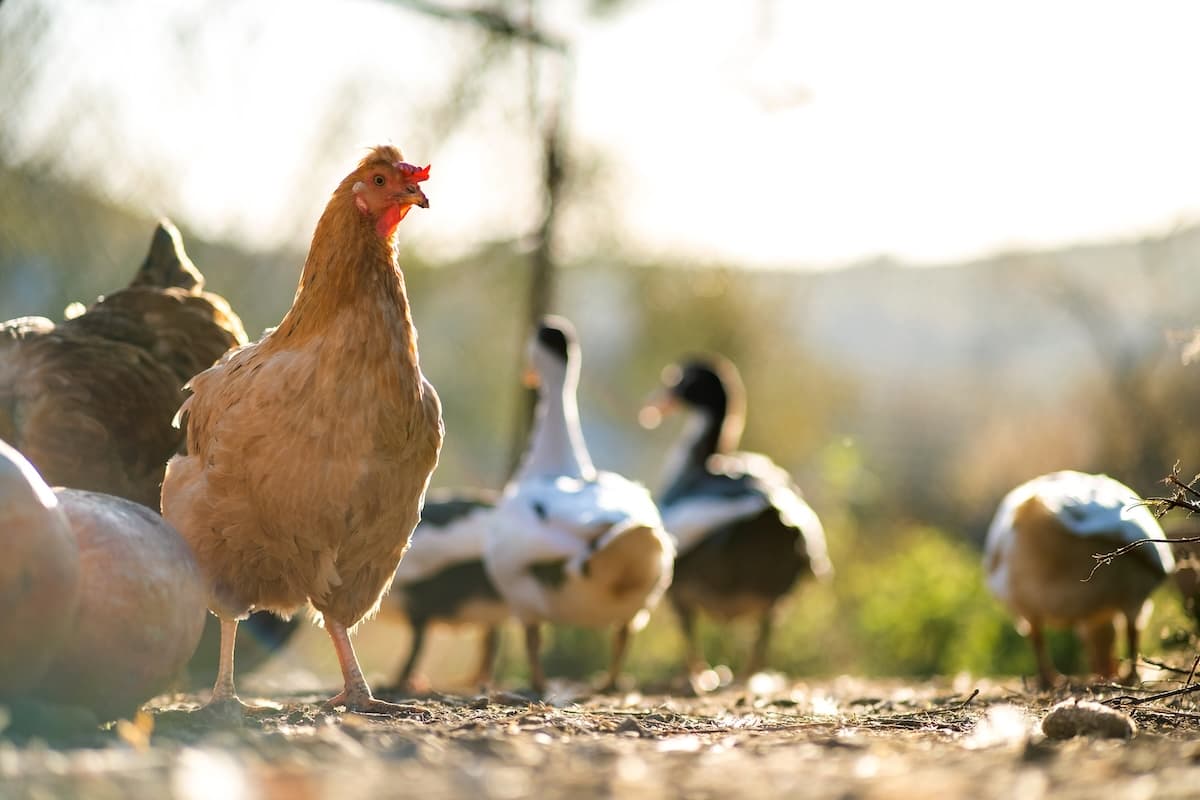
Many small farms successfully keep African geese alongside chickens. Because geese are much larger, they generally ignore adult chickens while sharing pasture or open spaces.
Housing should provide enough room to prevent crowding, and separate feeding stations may help reduce competition.
Ducks
African geese usually mix well with ducks. Since both species enjoy access to water and pasture, they often graze together throughout the day.
Breeding should still be managed separately to avoid unnecessary stress during nesting season.
Turkeys
Turkeys and African geese can often share pasture, although both species establish social hierarchies. Monitoring interactions during introductions helps ensure dominant birds do not repeatedly intimidate younger or smaller poultry.
Goats, Sheep, and Other Livestock
African geese are commonly kept alongside grazing animals such as goats, sheep, alpacas, and cattle.
Because geese naturally graze on grass, they often utilize pasture alongside larger livestock without significant competition for forage.
Many farmers appreciate that African geese also provide an additional layer of awareness, frequently sounding alarms when unfamiliar animals or people approach the pasture.
Do African Geese Make Good Guard Geese?
African geese are widely considered one of the best goose breeds for guarding farms.
Unlike livestock guardian dogs, geese do not physically defend livestock against predators. Instead, they serve as highly effective alarm animals.
Their strengths include:
- Exceptional eyesight
- Strong hearing
- Constant environmental awareness
- Loud alarm calls
- Confidence around unfamiliar activity
They often detect approaching predators, wildlife, or visitors long before other livestock notice anything unusual.
For many small farms, African geese function as an early warning system that alerts both people and animals to potential disturbances.
Are African Geese Good Pets?
Although they are typically raised as livestock, African geese can also make rewarding companion animals for owners who understand their behavior.
Young goslings that are handled regularly often become friendly adults that recognize familiar people and willingly interact with them.
Prospective owners should remember that geese are long-lived animals capable of living two decades or more. They require pasture, clean water, appropriate shelter, and daily care throughout their lives.
For families with adequate space and realistic expectations, African geese can become surprisingly engaging and personable additions to the farm.
Egg Production and Breeding
African geese are considered a dual-purpose breed, valued for both their substantial body size and their ability to produce large, fertile eggs each spring. While they are not the highest-producing domestic goose breed, they are dependable seasonal layers and attentive parents when allowed to hatch their own goslings.
For farmers interested in breeding geese, African geese offer an excellent balance between fertility, hatchability, and strong maternal instincts. Understanding their reproductive cycle can help you maximize hatch success while maintaining a healthy breeding flock.
Egg Production
African geese are seasonal layers, producing eggs primarily during late winter and spring as daylight hours increase. Unlike chickens, which can lay year-round under ideal conditions, geese typically have a defined laying season that lasts several months.
A healthy adult African goose generally lays between 20 and 40 eggs per year, although production varies based on age, genetics, nutrition, climate, and management practices.
Young geese often produce fewer eggs during their first laying season, with production gradually increasing as they mature. Most hens reach peak productivity between two and five years of age before egg numbers slowly decline later in life.
While African geese don’t compete with Chinese geese for annual egg production, they produce large, high-quality eggs with excellent hatchability when properly fertilized.
African Goose Eggs
African goose eggs are significantly larger than chicken eggs, with thick shells that help protect developing embryos during incubation.
Typical characteristics include:
- White to creamy-white shell color
- Large size, typically weighing 140–200 grams
- Thick shell with good durability
- Rich yolk content
- Excellent hatchability when fertile
Because of their size, goose eggs require slightly different incubation practices than chicken eggs, including longer incubation periods and careful humidity management.
Laying Season
The exact timing of egg production varies by climate, but African geese generally begin laying in late winter through early spring.
Typical laying season:
- February
- March
- April
- May
- Occasionally into early summer
Birds raised in warmer climates may begin laying earlier than those in colder northern regions.
Adequate nutrition, body condition, and increasing daylight all play important roles in triggering reproductive activity.
Fertility
African geese are generally considered highly fertile birds when managed appropriately.
Successful fertility depends on several factors, including:
- Proper nutrition
- Healthy breeding stock
- Correct male-to-female ratio
- Adequate exercise
- Minimal stress during breeding season
For small farms, a ratio of one mature gander for every three to five geese often produces good fertility while minimizing excessive competition among males.
Overweight breeding birds may experience reduced fertility, making pasture access and regular exercise important components of reproductive management.
Broodiness and Parenting
African geese often display moderate broodiness compared to some other domestic goose breeds.
A broody goose may:
- Build a nest using straw or vegetation
- Remain on the nest for extended periods
- Become protective of eggs
- Reduce feed intake while incubating
- Defend the nesting area from perceived threats
Many African geese make attentive mothers and are capable of successfully hatching and raising goslings without artificial incubation.
Once the goslings hatch, both parents frequently participate in protecting and leading the young through pasture.
This cooperative parenting behavior is one of the reasons many farmers enjoy breeding geese naturally.
Incubation
Fertile African goose eggs require approximately 30 days of incubation, although hatch dates may vary slightly depending on incubation conditions.
Whether eggs are incubated naturally beneath the goose or artificially in an incubator, maintaining proper temperature, humidity, and egg turning is essential for healthy embryo development.
During incubation, eggs should be:
- Turned regularly (unless being incubated naturally)
- Candled periodically to monitor embryo development
- Protected from excessive moisture loss
- Allowed adequate ventilation as embryos mature
If you’re planning to hatch African goose eggs, our Incubating Goose Eggs guide provides a complete incubation timeline, humidity recommendations, candling schedule, and hatch-day checklist.
Raising African Goslings
African goslings grow quickly during their first several months of life.
Young birds require:
- Warm, draft-free brooding conditions
- Fresh drinking water at all times
- High-quality starter feed formulated for waterfowl or appropriate poultry diets
- Clean bedding
- Gradual introduction to pasture
As they mature, goslings spend increasing amounts of time grazing, allowing pasture to become an important part of their diet.
By several months of age, they begin developing the characteristic upright posture of the breed, while the knob continues enlarging gradually over the first few years of life.
Reproductive Maturity
African geese mature more slowly than many other poultry species.
Most birds reach sexual maturity between 8 and 12 months of age, although peak breeding performance generally occurs after the first year.
Because geese are long-lived animals, productive breeding pairs can remain valuable members of a flock for many years when properly cared for.
Egg Production Comparison
Tips for Improving Egg Production
Healthy, productive geese begin with proper flock management. To encourage consistent egg production:
- Feed a balanced diet that supports breeding birds.
- Maintain healthy body condition without allowing birds to become overweight.
- Provide clean nesting areas with dry bedding.
- Minimize unnecessary stress during the breeding season.
- Ensure geese have access to clean drinking water and quality pasture.
- Keep breeding groups stable to reduce social disruptions.
Remember that geese naturally lay fewer eggs than chickens. Rather than focusing solely on quantity, many breeders prioritize fertility, hatchability, and raising healthy goslings.

Care and Management
African geese are hardy, adaptable birds that thrive in a wide range of climates when their basic needs are met. Compared to many other poultry species, they require relatively little intensive management, making them an attractive option for small farms and homesteads.
The foundation of good goose care is simple: provide quality pasture, clean water, secure shelter, balanced nutrition, and enough space for natural behaviors. When these essentials are consistently available, African geese are generally healthy, productive birds capable of living for two decades or more.
Housing Requirements
Unlike chickens, geese spend most of their day outdoors grazing and exploring. Their shelter primarily serves as protection from severe weather, predators, and a safe place to rest overnight.
A good goose shelter should provide:
- Protection from rain, snow, and strong winds
- Dry, well-drained flooring
- Good ventilation without creating drafts
- Easy access for cleaning
- Adequate space for every bird
Because African geese are one of the largest domestic goose breeds, they require more floor space than smaller breeds.
As a general guideline, provide:
- 8–10 square feet of indoor shelter per adult goose
- At least 100–200 square feet of outdoor grazing space per bird, with additional pasture being even better
The more room geese have to graze naturally, the healthier and cleaner the flock tends to remain.
Pasture and Grazing
African geese are excellent grazers and obtain a significant portion of their nutrition from fresh grasses and other vegetation.
High-quality pasture offers several benefits:
- Reduces feed costs
- Encourages natural behavior
- Provides exercise
- Helps maintain healthy body condition
- Reduces boredom and feather picking
Ideal pasture contains a mixture of:
- Orchard grass
- Timothy
- Ryegrass
- Fescue
- Clover (in moderation)
- Native grasses
Rotational grazing can help maintain healthier pasture while reducing parasite pressure.
Read our full Goose Care Guide to learn more about how to care for geese.
Feeding African Geese
Although geese are efficient grazers, pasture alone rarely provides complete nutrition throughout the year.
Supplemental feed becomes especially important during:
- Winter
- Breeding season
- Drought conditions
- Poor pasture growth
- Raising goslings
Adult African geese typically thrive on a quality waterfowl feed or an appropriately balanced poultry ration supplemented with fresh forage.
Their diet should provide adequate:
- Protein
- Energy
- Vitamins
- Minerals
- Calcium (for laying females)
Fresh greens can also be offered, including:
- Lettuce
- Kale
- Swiss chard
- Dandelion greens
- Cabbage
- Vegetable trimmings
Avoid feeding moldy feed or spoiled vegetation, as these can quickly cause health problems.
Read our comprehensive Goose Feeding Guide to lear more.
Water Requirements
Clean water is one of the most important aspects of goose management.
Unlike chickens, geese rely on water for much more than drinking. They use it to:
- Clean their bills
- Flush their nostrils
- Keep their eyes clean
- Maintain feather condition
- Aid digestion
At minimum, geese should always have access to water deep enough to completely submerge their bills.
While ponds are often associated with geese, they are not required. Many successful flocks are raised without ponds, provided they have a constant supply of clean drinking water and opportunities to bathe periodically.
Water containers should be cleaned regularly, as geese can quickly foul standing water with mud, feed, and droppings.
Fencing and Predator Protection
African geese are large birds, but they are still vulnerable to predators.
Common threats include:
- Coyotes
- Foxes
- Dogs
- Bobcats
- Raccoons
- Large birds of prey (primarily for goslings)
Secure fencing and nighttime housing greatly reduce predation risk.
Recommended practices include:
- Locking birds inside secure housing at night
- Inspecting fencing regularly
- Eliminating gaps beneath fences
- Using predator-resistant latches
- Supervising young goslings during free ranging
Because African geese naturally sound loud alarm calls when disturbed, they often provide early warning of predator activity before an attack occurs.
Common Health Concerns
African geese are generally hardy birds, but like all livestock, they benefit from routine observation and preventative care.
Watch for signs such as:
- Loss of appetite
- Lethargy
- Difficulty walking
- Limping
- Nasal discharge
- Labored breathing
- Swollen joints
- Abnormal droppings
Early detection often leads to simpler and more successful treatment.
Regular pasture rotation, clean housing, fresh water, and balanced nutrition remain the best defense against many common health problems.
Seasonal Care
Summer
African geese tolerate warm weather well but still require protection from excessive heat.
During hot weather:
- Provide constant shade.
- Ensure unlimited access to fresh water.
- Refill water frequently.
- Avoid handling birds during the hottest part of the day.
- Monitor for signs of heat stress.
Large breeds generate considerable body heat, making shade especially important during extended heat waves.
Winter
African geese are naturally cold hardy thanks to their dense feather insulation.
Winter management should focus on keeping birds dry rather than warm.
Important winter practices include:
- Keeping bedding dry
- Providing shelter from wind
- Preventing drinking water from freezing
- Maintaining good ventilation
Wet feathers combined with freezing temperatures pose a greater risk than cold air alone.
Exercise and Enrichment
Healthy African geese spend much of the day walking, grazing, bathing, and interacting with other flock members.
Allowing geese to express these natural behaviors promotes:
- Better muscle development
- Healthy body weight
- Improved breeding performance
- Reduced stress
- Lower incidence of feather picking
Whenever possible, avoid confining geese to small pens for extended periods.
Pasture access remains one of the best forms of enrichment available.
Daily Care Checklist
Uses on the Farm
African geese are among the most versatile domestic goose breeds raised today. Their combination of size, intelligence, grazing ability, and protective instincts allows them to serve multiple roles on a farm, often providing value well beyond egg or meat production.
Whether you’re managing a small homestead or a larger livestock operation, African geese can contribute to flock security, pasture maintenance, breeding programs, and even educational or hobby farming.
Guarding the Farm
One of the African goose’s most well-known qualities is its natural ability to alert farmers when something unusual enters the property.
Unlike livestock guardian dogs, African geese are not expected to physically defend animals from predators. Instead, they act as an early warning system.
Their exceptional eyesight, sharp hearing, and strong territorial instincts allow them to notice disturbances long before many other farm animals.
African geese commonly sound loud alarm calls when they detect:
- Unfamiliar people
- Coyotes
- Foxes
- Loose dogs
- Wildlife
- Delivery vehicles
- Visitors approaching the property
Many farmers appreciate this behavior because it provides valuable time to investigate potential threats before they become serious problems.
If you’re looking for one of the best goose breeds for guarding a farm, African geese consistently rank near the top.
Meat Production
African geese have long been recognized as an excellent dual-purpose breed.
Their large frame, broad breast, and efficient growth make them a practical choice for farmers interested in producing goose meat.
Compared to lighter breeds, African geese offer:
- Higher dressed weight
- Excellent feed conversion on pasture
- Good carcass quality
- Strong muscle development
Although specialized commercial meat operations often favor Embden or Toulouse geese, African geese remain an excellent option for small farms looking for a productive, multipurpose bird.
Egg Production
While African geese are not prolific layers like Chinese geese, they produce a reliable number of large, fertile eggs each breeding season.
Many homesteaders appreciate their balance of:
- Moderate egg production
- Strong fertility
- Good hatchability
- Excellent parenting instincts
This makes African geese particularly appealing for farms that prefer natural flock expansion rather than purchasing replacement birds each year.
Weed Control and Grazing
Like most domestic geese, African geese are outstanding grazers.
Given access to healthy pasture, they spend much of the day consuming grasses and broadleaf weeds while requiring relatively little concentrated feed during the growing season.
Benefits include:
- Reduced mowing
- Lower feed costs
- Improved pasture utilization
- Natural fertilization through manure
- Encouragement of rotational grazing systems
Although they should not be expected to eliminate all unwanted vegetation, African geese can become valuable partners in integrated pasture management.
Companion Animals
Many people are surprised by how personable African geese can become.
When raised from goslings with regular human interaction, they often recognize their caretakers, respond to familiar routines, and develop distinct personalities.
Owners frequently report that their geese:
- Follow them around the property
- Vocalize when they arrive home
- Learn feeding schedules
- Become comfortable with routine handling
While they are still livestock and should be respected as such, African geese can form lasting bonds with their owners.
African Goose vs. Chinese Goose
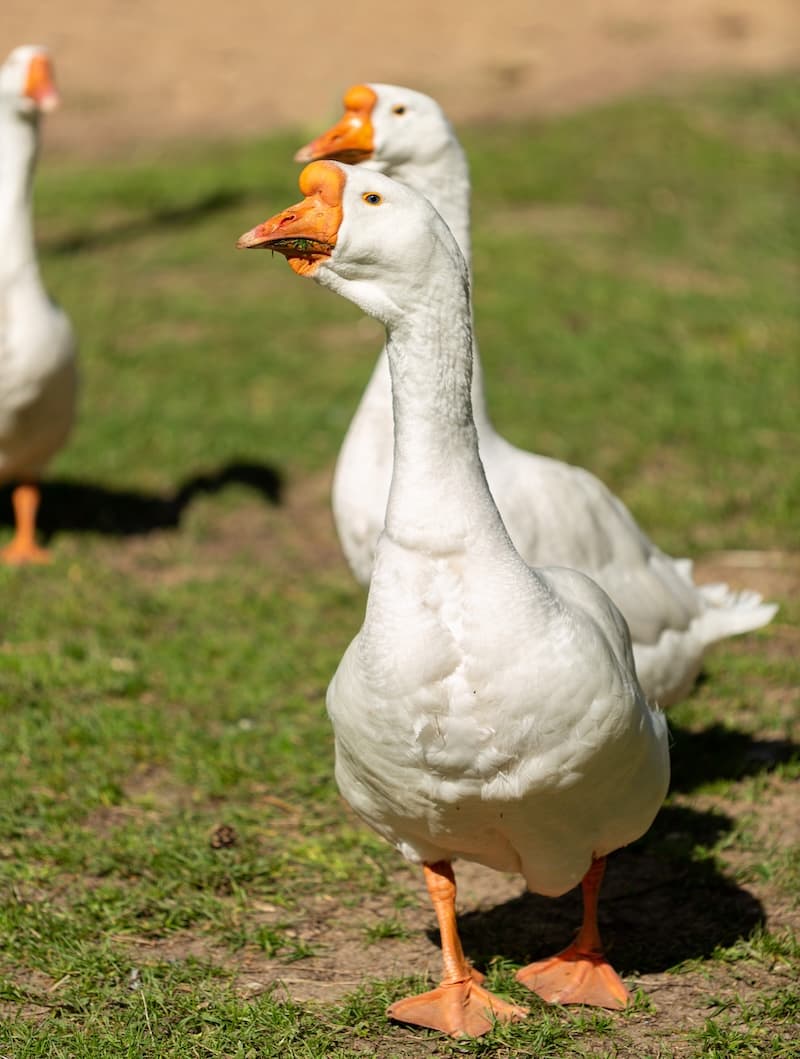
Because African geese and Chinese geese both descend from the Swan Goose (Anser cygnoides), they share several physical characteristics, including an upright posture and a prominent knob at the base of the bill. However, selective breeding has produced two distinctly different birds.
African geese are significantly larger, heavier, and more commonly raised as dual-purpose birds for guarding and meat production. Chinese geese, on the other hand, are lighter, more active, and among the best egg-laying domestic goose breeds.
African Goose vs. Toulouse Goose
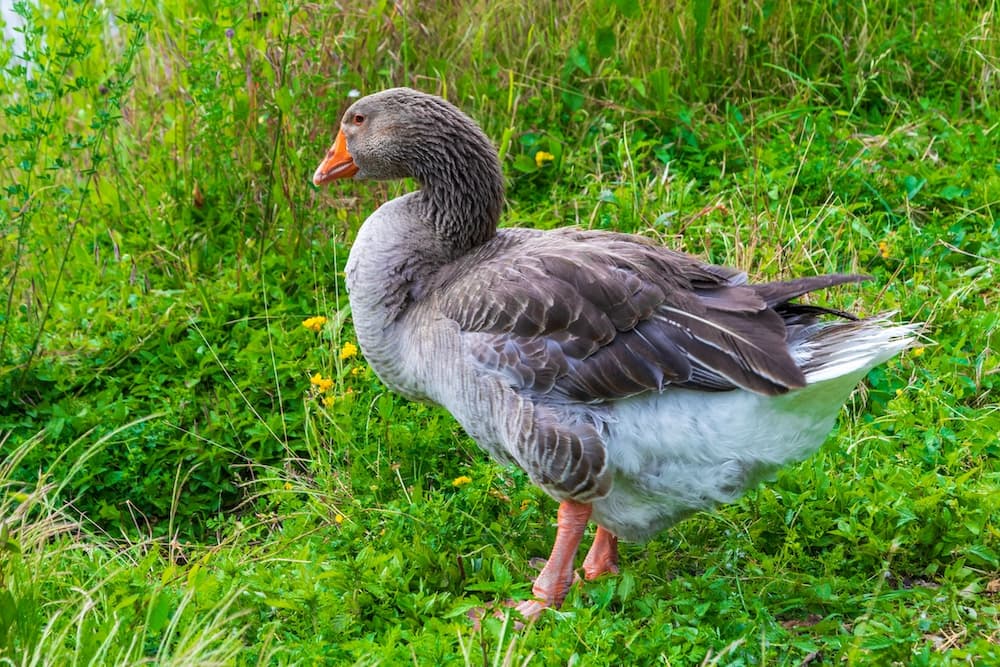
African and Toulouse geese are often compared because both are large utility breeds commonly raised for meat production.
The primary differences lie in their behavior and appearance.
Toulouse geese are generally quieter and more laid-back, making them a popular choice for farmers seeking calm, heavy birds. African geese, meanwhile, are more alert and vocal, making them better suited for farms that value natural security and active flock guardians.
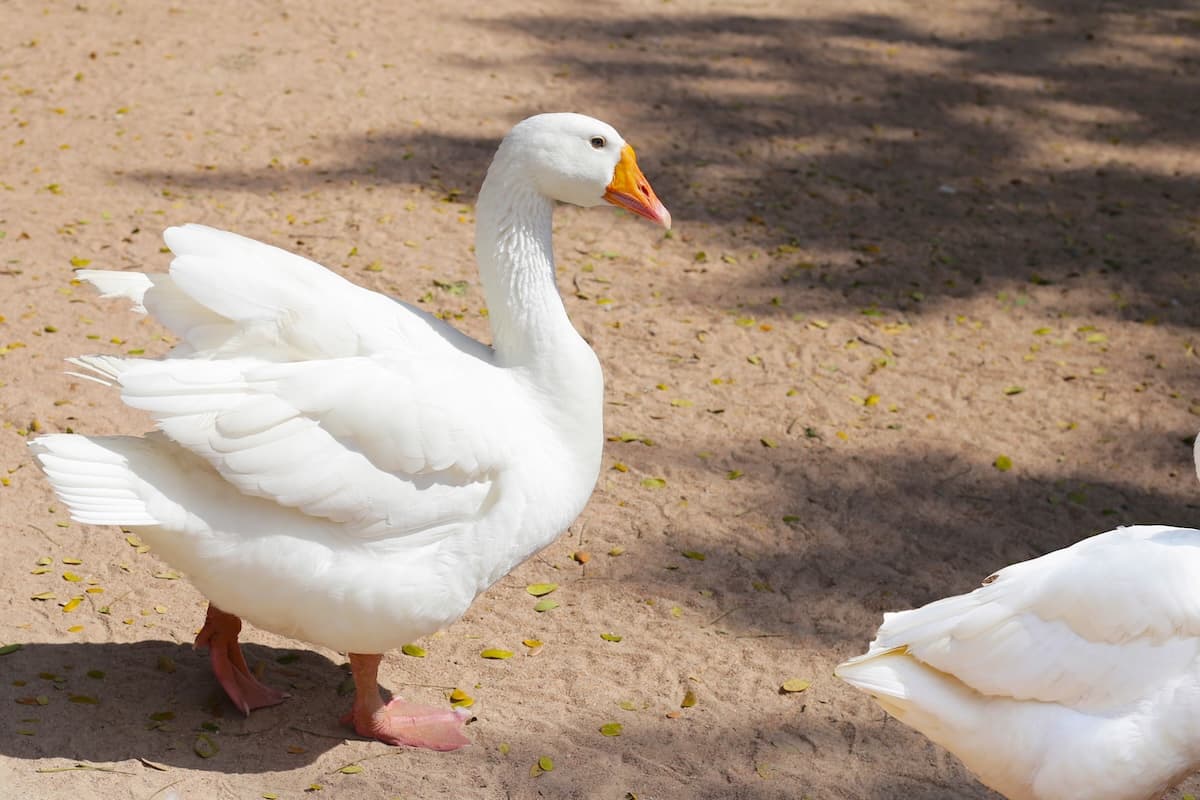
African Goose vs. Embden Goose
Embden geese are another heavy breed frequently compared with African geese.
Both produce excellent meat birds, but they differ noticeably in appearance and behavior.
Embdens are recognized by their pure white plumage and calm disposition, while African geese stand out with their distinctive knob, brown coloration, and vigilant personalities.
Pros and Cons of African Geese
Are African Geese Right for Your Farm?
African geese are an excellent choice for farmers looking for a versatile breed that contributes more than just eggs or meat. Their combination of intelligence, grazing ability, and natural vigilance makes them particularly well suited to homesteads, hobby farms, and diversified livestock operations.
They are especially well suited for:
- Small and medium-sized farms
- Homesteads with ample pasture
- Farmers wanting a natural alarm system
- Families interested in raising geese long term
- Breeders producing goslings each spring
- Farms seeking a dual-purpose goose
They may be less suitable for properties with close neighbors, homeowners associations, or situations where noise must be kept to a minimum.
For most rural properties, however, African geese offer an outstanding balance of productivity, personality, and practicality that few other domestic goose breeds can match.

Keep Better Records for Your African Geese
Whether you’re raising African geese for breeding, meat production, or simply as part of your homestead, keeping accurate records becomes increasingly valuable as your flock grows. Tracking breeding pairs, egg production, fertility rates, hatch dates, health treatments, and lineage can help you make better decisions season after season while preserving the history of your flock.
With FarmKeep, you can organize all of your goose records in one place. Create individual animal profiles, record breeding events, monitor egg production, manage incubation schedules, track expenses, and maintain detailed health records from your phone or computer—making it easier to manage your flock today and plan for future generations.
Final Thoughts
African geese have earned their reputation as one of the most versatile domestic goose breeds available today. Their impressive size, distinctive appearance, natural guarding instincts, and dependable productivity make them a valuable addition to many farms and homesteads.
While they may not be the ideal choice for every situation—particularly where noise is a concern—they excel on rural properties where their alert personalities, strong grazing ability, and social nature can be fully appreciated.
Whether your goal is raising meat birds, producing fertile hatching eggs, maintaining a self-sustaining breeding flock, or simply enjoying the unique personalities of geese, African geese offer an exceptional combination of beauty, intelligence, and practicality.
As with any livestock, success comes from choosing the breed that best matches your goals, available space, and management style. By understanding their characteristics and providing consistent care, African geese can remain productive members of your farm for many years.
Continue Learning
Interested in learning more about geese? Explore these related guides:
- Goose Breeds: Complete Guide to Popular Domestic Goose Breed
- Embden Goose Breed Guide
- Pilgrim Goose Breed Guide
- Sebastopol Goose Breed Guide
These guides provide more in-depth information on breed comparisons, incubation, nutrition, health, and flock management to help you build a healthy, productive goose flock.
FAQ
Are African geese aggressive?
African geese are often described as aggressive, but a more accurate description is protective and territorial. They naturally defend their flock, nesting area, and perceived territory, especially during the breeding season. When raised with regular human interaction and handled respectfully, most African geese become calm around familiar caretakers while remaining alert to unfamiliar people or animals.
How big do African geese get?
African geese are one of the largest domestic goose breeds. Adult ganders typically weigh 20 to 22 pounds (9–10 kg), while mature geese generally weigh 18 to 20 pounds (8–9 kg). Their upright posture, long neck, prominent knob, and broad body make them appear even larger than many other breeds.
How many eggs do African geese lay?
A healthy African goose usually lays 20 to 40 eggs per year, primarily during the spring breeding season. Although they produce fewer eggs than Chinese geese, African geese lay large eggs with excellent fertility and are often reliable parents when allowed to hatch goslings naturally.
What color eggs do African geese lay?
African geese lay large white to creamy-white eggs with thick shells. Individual egg size and shell color may vary slightly between birds, but the eggs are generally much larger than chicken eggs and well suited for incubation.
How long do African geese live?
With proper nutrition, housing, and preventative care, African geese commonly live 15 to 25 years. Their long lifespan makes them a long-term commitment, but it also allows breeding pairs to remain productive members of the flock for many seasons.
Can African geese fly?
Like most heavy domestic goose breeds, African geese have limited flight ability. Their large body size makes sustained flight difficult, and most birds remain on the ground. Some younger or lighter individuals may briefly fly over low fences, but well-fed adult African geese rarely fly significant distances.
Are African geese good with chickens?
Yes. African geese can generally live peacefully with chickens when they have adequate space and proper introductions. Because geese are much larger, it’s important to provide enough room around feeders and shelters to reduce competition. During breeding season, geese may become more protective around nests, so monitoring interactions is recommended.
Are African geese good pets?
African geese can make excellent companion animals for owners who understand their behavior and provide appropriate care. Goslings that are handled frequently often grow into friendly adults that recognize familiar people, respond to routines, and enjoy interacting with their caretakers. They are best suited for properties with enough space for grazing, exercise, and natural behaviors.
Do African geese need a pond?
No. Although geese enjoy swimming, a pond is not required to raise healthy African geese. They do, however, need constant access to clean drinking water that is deep enough for them to fully submerge their bills. Small pools, tubs, or other bathing areas can also help them maintain healthy feathers and natural behaviors.
Are African geese a good choice for beginners?
For many small farms and homesteads, yes. African geese are hardy, adaptable birds that are relatively straightforward to care for once their basic needs are understood. Their size, intelligence, and vocal nature mean they require confident handling and adequate space, but they reward attentive owners with years of companionship and dependable farm utility.