Toulouse Goose: Breed Guide, Size, Eggs, Temperament, and Care
The Toulouse goose is one of the oldest and most famous domestic goose breeds in the world. Originally developed in France, these large gray geese became known for their impressive body size, calm demeanor, and utility as meat birds. Today, Toulouse geese remain popular among homesteaders, small farms, exhibition breeders, and backyard poultry enthusiasts.
While many people recognize the breed for its size alone, there are actually several types of Toulouse geese, each with different characteristics and purposes. Some are bred for exhibition and ornamental flocks, while others are practical utility birds raised for meat production and farm life.
Whether you are considering adding geese to your property for the first time or researching which breed best fits your goals, understanding the Toulouse goose is an important place to start.
What Is a Toulouse Goose?
The Toulouse goose originated in the region surrounding Toulouse, France, where the breed was historically developed for meat production and foie gras. Over time, breeders selected birds for heavier body weight, resulting in one of the largest domestic goose breeds available today.
The breed eventually spread throughout Europe and North America, becoming especially popular among exhibition breeders and small farms. Modern Toulouse geese are commonly divided into two categories:
- Production Toulouse
- Dewlap Toulouse
Production Toulouse geese are generally more practical utility birds, while Dewlap Toulouse geese are larger exhibition birds with pronounced dewlaps and heavier body structure.
The breed is recognized by the American Poultry Association and remains a staple among domestic waterfowl breeds.
Toulouse Goose Breed Characteristics
Toulouse Goose Size and Weight
Toulouse geese are among the heaviest domestic goose breeds. Mature birds develop broad bodies, deep chests, and thick necks.
Appearance
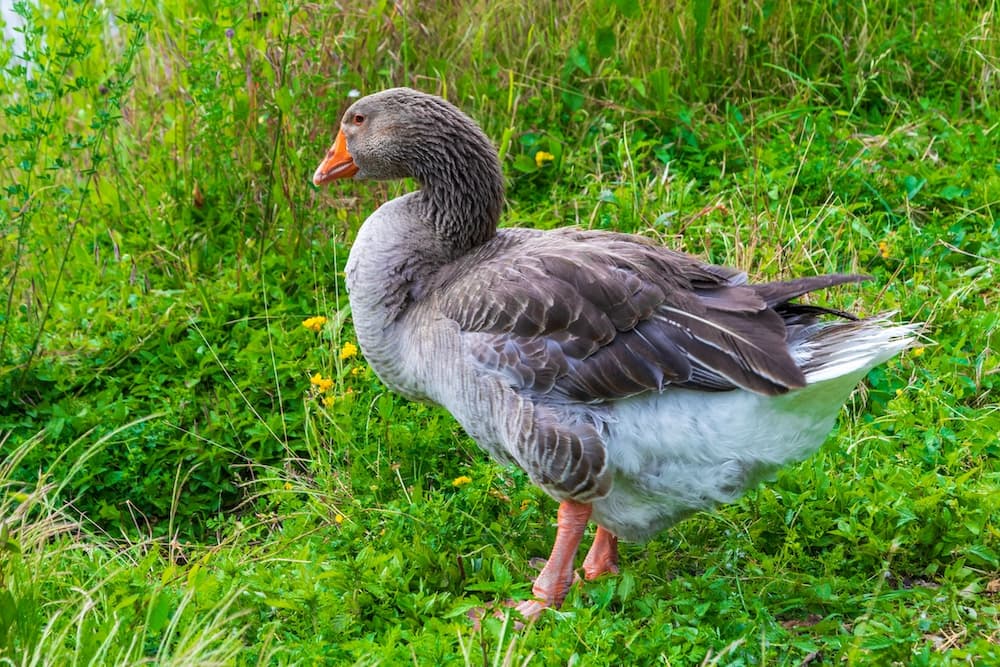
Toulouse geese are easy to recognize thanks to their distinctive gray plumage and large body shape.
Common features include:
- Gray-brown feathers with lighter underbellies
- Orange legs and feet
- Orange or pale-colored bill
- Broad, heavy body structure
- Loose feathering around the abdomen
- Dewlap beneath the lower bill in exhibition lines
Dewlap Toulouse geese often appear much larger and lower to the ground than Production Toulouse birds.
Lifespan
With proper care, Toulouse geese commonly live:
- 10–15 years on average
- Sometimes longer in well-managed flocks
Because geese are long-lived birds, they require a greater long-term commitment than many poultry species.
Toulouse Goose Temperament
One reason Toulouse geese remain popular among backyard farmers is their relatively calm temperament.
Compared to some lighter or more territorial breeds, Toulouse geese are often described as:
- Quiet
- Gentle
- Slow-moving
- Social
- Easy to manage
This makes them appealing for:
- Family farms
- Hobby homesteads
- Mixed-species flocks
- Ornamental ponds
- Beginner goose keepers
That said, all geese can become territorial during breeding season. Ganders may become defensive around nests, goslings, or feeding areas.
Production Toulouse geese are often considered more active and practical farm birds, while Dewlap Toulouse geese tend to be heavier, slower, and more docile.
Production Toulouse vs Dewlap Toulouse
Many people researching Toulouse geese are surprised to learn there are major differences within the breed itself.
For most backyard farmers and homesteaders, Production Toulouse geese are often the more practical choice.
Toulouse Goose Eggs and Egg Production
Toulouse geese are not the highest-producing egg-laying geese, but they still provide a respectable number of large eggs each year.
Typical egg production ranges from:
- 20–40 eggs annually
- Sometimes more in Production lines
Goose eggs are significantly larger than chicken eggs and have rich yolks that many people enjoy for baking and cooking.
Broodiness
Toulouse geese can become broody during the breeding season and may sit on nests naturally. Some lines retain stronger maternal instincts than others.
Seasonal Laying
Like most geese, Toulouse geese are seasonal layers. Egg production typically begins in late winter or spring depending on climate and daylight exposure.
Are Toulouse Geese Good for Meat Production?
Historically, Toulouse geese were developed primarily as meat birds.
Their advantages include:
- Heavy body weight
- Rich meat flavor
- Good fat development
- Large carcass size
Production Toulouse geese are generally considered more practical for meat production than Dewlap lines, which may grow extremely heavy and reproduce less efficiently.
Farmers looking for large roasting birds often compare Toulouse geese with:
- Embden geese
- African geese
- Pilgrim geese
Toulouse geese are particularly valued for flavorful dark meat and traditional European-style goose production.

Housing and Care Requirements
Space Requirements
Geese require significantly more space than chickens.
A good guideline includes:
- Large pasture access whenever possible
- At least 10–15 square feet per goose inside shelter
- Open grazing areas for exercise
Toulouse geese especially benefit from space due to their large size.
Water Needs
Geese do not require ponds to survive, but they do need constant access to clean water deep enough to:
- Wash their bills
- Clean their nostrils
- Maintain healthy feathers
Small pools, troughs, or livestock tubs work well for many farms.
Shelter
Toulouse geese are cold hardy but still need protection from:
- Wind
- Heavy rain
- Mud
- Predators
Simple three-sided shelters often work well in moderate climates.
Feeding Toulouse Geese
Geese are excellent grazers and can consume large amounts of pasture.
Common feed sources include:
- Grass pasture
- Waterfowl feed
- Supplemental grains
- Vegetables and greens
Heavy exhibition lines should be monitored carefully to avoid obesity.
Common Health Issues
Toulouse geese are generally hardy birds, but large body size can contribute to certain management concerns.
Potential issues include:
- Obesity
- Leg strain
- Wet bedding problems
- Parasites
- Foot injuries
- Reduced fertility in heavy exhibition birds
Maintaining dry bedding and proper nutrition goes a long way toward preventing health problems.
Breeding Toulouse Geese
Toulouse geese usually begin breeding around:
- 2–3 years of age for full maturity
Breeding Ratios
Typical breeding groups include:
- 1 gander per 2–4 geese
Incubation
Goose eggs typically hatch after:
- 28–35 days depending on conditions
Many breeders use incubators for more reliable hatch rates.
Gosling Care
Young goslings require:
- Warm brooder conditions
- Clean water
- Starter feed
- Predator protection
Because geese imprint strongly, regular handling during early life often produces calmer adult birds.
Toulouse Goose Pros and Cons
Toulouse Goose vs Other Goose Breeds
Is the Toulouse Goose Right for Your Farm?
Toulouse geese are often an excellent choice for farmers who want:
- Calm, manageable birds
- Large meat geese
- Attractive ornamental waterfowl
- A traditional heritage breed
- Multi-purpose farm geese
They are especially well-suited for:
- Small farms
- Homesteads
- Hobby farms
- Mixed-species operations
However, they may not be ideal for people with limited space or those primarily seeking high egg production.

Managing Toulouse Geese with FarmKeep
Keeping records becomes increasingly important as your flock grows. Tracking breeding pairs, hatch dates, feed costs, egg production, and health records by hand can quickly become difficult.
FarmKeep helps goose owners organize:
- breeding records
- incubation schedules
- feed tracking
- health treatments
- flock inventory
- pasture and location records
Whether you are raising a pair of backyard Toulouse geese or managing a larger waterfowl flock, having organized records makes long-term flock management significantly easier.
Final Thoughts
The Toulouse goose remains one of the most iconic domestic goose breeds for good reason. Its combination of massive size, calm temperament, cold hardiness, and traditional farm utility has helped it remain popular for generations among homesteaders, exhibition breeders, and small farms alike.
For many people, Toulouse geese offer the classic image of farm geese: slow-moving birds grazing pasture, guarding ponds, and adding personality to the landscape. While they are not the most productive egg layers or the most active foragers, they excel as large dual-purpose birds with a strong presence and manageable disposition.
Choosing between Production Toulouse and Dewlap Toulouse lines is an important decision that depends on your goals. Farmers focused on practical flock management, meat production, and easier breeding often prefer Production Toulouse geese, while exhibition enthusiasts may appreciate the dramatic appearance of heavier Dewlap birds.
Like any livestock breed, success comes down to proper care, nutrition, housing, and consistent management. With enough space, clean water, quality pasture, and good record keeping, Toulouse geese can become a long-term and rewarding addition to the farm.
Continue Learning
Interested in learning more about geese? Explore these related guides:
- Goose Breeds: Complete Guide to Popular Domestic Goose Breeds
- Goose Care Guide
- How to Incubate Goose Eggs
- Chinese Geese Breed Guide
- Embden Goose Breed Guide
- African Goose Breed Guide
- Pilgrim Goose Breed Guide
- Sebastopol Goose Breed Guide
- Goose Feeding Guide
These guides provide more in-depth information on breed comparisons, incubation, nutrition, health, and flock management to help you build a healthy, productive goose flock.
FAQ
How big do Toulouse geese get?
Production Toulouse geese typically weigh between 14–20 pounds, while Dewlap Toulouse geese may exceed 25 pounds when fully mature.
Are Toulouse geese friendly?
Toulouse geese are widely considered one of the calmer domestic goose breeds. Birds raised with regular handling are often manageable and social around people.
Are Toulouse geese good for beginners?
Yes. Their generally calm temperament and slower activity level make them a good option for first-time goose owners with enough space to house large birds properly.
How many eggs do Toulouse geese lay each year?
Most Toulouse geese produce around 20–40 eggs annually, though production varies depending on genetics, management, and daylight conditions.
What color are Toulouse geese?
Toulouse geese are primarily gray with lighter feathering underneath. They also have orange feet and a pale orange or horn-colored bill.
Do Toulouse geese fly?
Adult Toulouse geese are very poor fliers due to their heavy body size. Most cannot sustain long-distance flight.
What is the difference between Production and Dewlap Toulouse geese?
Production Toulouse geese are lighter utility birds commonly raised for meat and practical farm use. Dewlap Toulouse geese are larger exhibition birds with heavier bodies and a pronounced dewlap beneath the bill.
Are Toulouse geese noisy?
Toulouse geese are generally quieter than some other breeds, especially compared to African geese, though they will still vocalize loudly when startled or alerting the flock.
How long do Toulouse geese live?
With proper care, Toulouse geese commonly live between 10–15 years, and some birds may live even longer.
Are Toulouse geese good for meat production?
Yes. Toulouse geese have historically been valued as meat birds due to their large body size, rich meat quality, and substantial carcass weight.
Can Toulouse geese live without a pond?
Yes. While geese enjoy swimming water, they do not require a pond. They do need access to clean water deep enough to wash their bills and nostrils properly.
What do Toulouse geese eat?
Their diet commonly includes:
- pasture grass
- waterfowl feed
- grains
- greens and vegetables
- supplemental minerals and grit
Pasture can significantly reduce feed costs during warmer months.
Are Toulouse geese aggressive?
Most Toulouse geese are relatively calm, but ganders can become territorial during breeding season, especially around nests and goslings.
What climate is best for Toulouse geese?
Toulouse geese are cold hardy and perform well in many climates, though they still require dry shelter and protection from excessive mud and wet conditions.
How long do Toulouse goose eggs take to hatch?
Toulouse goose eggs usually hatch in approximately 28–35 days depending on incubation conditions and management practices.