How to Start a Farm: A Complete Guide (2026)
Starting a farm is a dream for many people. Whether you want to grow your own food, raise livestock, build a sustainable lifestyle, or create a profitable agricultural business, farming offers a unique combination of independence, purpose, and connection to the land.
But starting a farm is also a serious undertaking. It requires planning, capital, knowledge, and a clear understanding of how farms actually operate as businesses. Many people romanticize farming, but successful farmers know that building a productive farm takes strategy, patience, and careful management.
In this guide, you’ll learn how to start a farm step by step, including how to choose the right type of farm, secure funding, find farmland, register your farm business, and generate revenue. Whether you’re interested in starting a small farm, livestock operation, homestead, or commercial agricultural business, this guide will help you understand what it takes to get started.

Is Starting a Farm Right for You?
Before jumping into land purchases or livestock investments, it’s important to evaluate whether the farming lifestyle fits your goals and expectations. Many new farmers underestimate the physical, financial, and emotional demands of farming. Farming is rewarding, but it can also involve long hours, unpredictable weather, and significant financial risk.
Here are a few important realities to consider when deciding whether becoming a farmer is right for you.
The Farming Lifestyle
Farming is not a typical 9-to-5 job. During busy seasons like planting, harvesting, lambing, or calving, farmers often work long days and weekends. Livestock farmers may need to check animals daily, including holidays and early mornings.
However, many farmers value the independence that comes with running their own agricultural operation and working outdoors.
Physical Labor
Farming can involve physical tasks such as:
- lifting feed or supplies
- building fences
- maintaining equipment
- caring for animals
- harvesting crops
Modern technology can reduce some of this labor, but farming still requires a certain level of physical stamina.
Financial Expectations
Farms often take time to become profitable. Startup costs, infrastructure investments, and the seasonal nature of agriculture mean that new farms may take several years to reach stable revenue.
That said, small farms can still become profitable if they focus on efficient production, niche markets, and direct-to-consumer sales.
Understanding these realities will help you approach farming with the right expectations and long-term mindset.

Step 1: Decide What Type of Farm You Want
One of the most important decisions when starting a farm is choosing what kind of farming operation you want to run.
Your farm type will influence:
- land requirements
- startup costs
- equipment needs
- revenue models
- labor requirements
There are several common farm models that beginners choose.
Livestock Farms
Livestock farms focus on raising animals for meat, milk, fiber, breeding stock, or eggs.
Common livestock farming operations include:
Livestock farms often require pasture, fencing, feed management, and regular health monitoring. However, livestock can also produce multiple revenue streams such as breeding animals, meat products, milk, fiber, and manure.
Crop Farms
Crop farms grow agricultural plants for food production or commercial sale.
Examples include:
- vegetable farms
- grain farms
- fruit orchards
- vineyards
- herb farms
Crop farms require careful planning around planting schedules, soil health, irrigation, and pest control.
Some crop farms sell wholesale to distributors, while others focus on farmers markets or direct-to-consumer sales.
Mixed Farms
Mixed farms combine livestock and crop production.
For example, a farm might:
- raise chickens and grow vegetables
- raise goats while producing hay
- run cattle while growing grains
Mixed farms often create more resilient systems because crops and livestock can support each other.
For example, animals can fertilize fields, and crops can provide animal feed.
Niche Farms
Some of the most profitable small farms specialize in niche markets.
Examples include:
- mushroom farms
- microgreens farms
- honey production and beekeeping
- flower farms
- specialty livestock breeding
Niche farming operations often succeed by targeting high-value products and local markets.
Choosing the right farm type should align with your interests, available land, market demand, and budget.

Step 2: Create a Farm Business Plan
A farm is both a lifestyle and a business. One of the most important steps when starting a farm is creating a detailed farm business plan. A business plan helps you clarify your goals, understand your costs, and evaluate whether your farm idea is financially viable.
Why a Farm Business Plan Matters
A well-developed farm business plan helps you:
- estimate startup costs
- determine potential profitability
- secure loans or grants
- define your target market
- plan production schedules
Without a business plan, many farms struggle with cash flow, poor planning, or unrealistic expectations.
Key Elements of a Farm Business Plan
A good farm business plan should include the following components.
Farm Mission and Vision
Start by defining why you want to start a farm.
Questions to consider:
- What products will your farm produce?
- Who are your customers?
- What values guide your farm?
For example, your mission might focus on producing local organic food or raising heritage livestock breeds.
Market Research
Understanding your market is essential.
Research:
- local demand for farm products
- nearby competitors
- pricing for agricultural goods
You should also identify whether you plan to sell through farmers markets, restaurants, grocery stores, or direct online sales.
Startup Budget
Your farm startup budget should include:
- land costs or lease payments
- livestock purchases
- equipment
- fencing and infrastructure
- feed and seed costs
- insurance and permits
Estimating these expenses early helps prevent financial surprises.
Production Plan
A production plan outlines how your farm will operate.
Examples include:
- crop planting schedules
- breeding cycles for livestock
- harvest timelines
- labor requirements
Marketing Plan
Your farm marketing strategy determines how you will sell your products.
Common sales channels include:
- farmers markets
- farm stands
- online stores
- CSA programs
- wholesale buyers
By planning these elements ahead of time, you build a roadmap for launching your farm successfully.

Step 3: Secure Funding for Your Farm
Starting a farm often requires significant capital for land, infrastructure, livestock, and equipment.
While some farms begin with personal savings, many new farmers use a combination of funding sources.
Personal Savings
Many small farms begin as bootstrapped operations funded by personal savings.
Advantages of using personal savings include:
- full ownership of the farm
- no loan interest or repayment obligations
- complete financial control
However, relying solely on savings can limit how quickly you scale your farm.
USDA Beginning Farmer Loans
In the United States, the USDA offers loan programs designed to help new farmers get started.
Common programs include:
- Farm Ownership Loans
- Farm Operating Loans
- USDA Microloans
These programs may help farmers purchase land, livestock, equipment, and supplies.
Many programs are specifically designed for beginning farmers who have less than 10 years of farming experience.
Farm Grants
Grants are another potential funding source for farms, especially those focused on sustainability, conservation, or agricultural innovation.
Examples include:
- Sustainable Agriculture Research and Education (SARE) grants
- state agriculture department grants
- conservation programs
Grants typically require proposals and specific project goals.
Agricultural Loans and Lenders
Many banks and agricultural lenders provide financing for farms.
These loans may cover:
- farmland purchases
- equipment financing
- operating capital
Agricultural lenders understand the seasonal nature of farming and often provide loan structures tailored to farm businesses.
Alternative Funding Methods
Some farmers also explore creative funding options.
Examples include:
- crowdfunding campaigns
- partnerships with investors
- community-supported agriculture (CSA) prepayments
- leasing equipment instead of purchasing
Combining multiple funding sources can help new farms reduce financial risk and grow gradually.

Step 4: Find Land for Your Farm
Land is one of the biggest challenges for new farmers. Farmland prices can vary dramatically depending on region, soil quality, water access, and infrastructure. Fortunately, buying land is not the only option.
Leasing Farmland
Leasing farmland is often one of the best ways for beginner farmers to start. Leasing land allows you to operate a farm without making a large upfront land purchase.
Advantages of leasing farmland include:
- lower startup costs
- reduced financial risk
- flexibility to relocate or expand
Common farmland lease types include:
Cash Rent
The farmer pays a fixed annual rent to the landowner.
Crop Share
The farmer and landowner share a percentage of the crop revenue.
Grazing Leases
Livestock farmers lease pasture for grazing animals.
Many successful farms start by leasing land before eventually purchasing property later.
Buying Farmland
Purchasing farmland offers long-term stability and asset ownership. However, buying land is often one of the largest expenses when starting a farm.
Before purchasing farmland, consider:
- soil fertility
- water availability
- drainage and irrigation potential
- zoning regulations
- proximity to markets
Working with agricultural real estate agents or local extension offices can help identify suitable farmland.
Creative Ways to Access Land
Many farmers begin farming without buying land at all. Alternative land access options include:
- leasing unused farmland from landowners
- partnering with landowners who want their land farmed
- participating in farm incubator programs
- working with land trusts that support new farmers
These options allow new farmers to gain experience and build capital before purchasing their own land.
Read more about how to start a homestead with no money.

Step 5: Purchase Equipment and Build Infrastructure
Once land is secured, the next step is building the infrastructure needed to operate your farm.
The specific equipment and infrastructure you need depends heavily on the type of farm you are starting.
Common Farm Infrastructure
Many farms require basic infrastructure such as:
- fencing
- barns or shelters
- irrigation systems
- storage buildings
- feed storage areas
Livestock farms may require additional facilities like:
- animal pens
- water systems
- feeders
- handling equipment
Crop farms often need irrigation systems, tractors, seeders, and harvesting equipment.
Start Small
Many successful farmers recommend starting small and gradually expanding.
Instead of purchasing expensive equipment immediately, consider:
- buying used equipment
- renting equipment
- sharing equipment with nearby farmers
Starting small allows you to reduce financial risk while learning how your farm operates.
Step 6: Register Your Farm Business
Even small farms are businesses and may need to register with local and federal authorities.
Registering your farm business ensures that you operate legally and can take advantage of tax benefits available to agricultural businesses.
Choose a Business Structure
Common farm business structures include:
- sole proprietorship
- limited liability company (LLC)
- partnership
- corporation
Many small farms choose LLC structures to separate personal and business liabilities.
Obtain an EIN
If your farm operates as a business entity, you may need an Employer Identification Number (EIN) from the IRS.
This number allows your farm to:
- open business bank accounts
- hire employees
- file business taxes
Check Local Regulations
Depending on your location, farms may need permits related to:
- zoning
- livestock density
- food processing
- water usage
Local agricultural extension offices are often helpful resources for understanding regional regulations.
Step 7: Track Your Farm Records and Finances
Good record keeping is one of the most important factors in farm success.
Farmers need accurate records to track:
- livestock health
- breeding schedules
- crop production
- farm expenses
- revenue and profitability
Without good records, it becomes difficult to understand whether your farm is actually making money.
Livestock Records
Livestock farms should track information such as:
- animal identification
- breeding history
- health treatments
- vaccinations
- production data
Production Tracking
Production records may include:
- egg production
- milk yields
- crop harvests
- feed consumption
These records help farmers improve efficiency and identify trends over time.
Financial Tracking
Farms should also track all income and expenses including:
- feed costs
- veterinary bills
- equipment purchases
- product sales
Using farm management software such as FarmKeep can simplify record keeping and help farmers stay organized.

How Farms Make Money
Understanding how farms generate revenue is essential when planning your agricultural business. Most farms rely on multiple income streams to remain profitable.
Selling Livestock
Livestock farms can generate revenue through several channels.
Examples include:
- selling breeding animals
- selling feeder animals
- selling meat animals
- selling eggs or milk
Livestock breeding operations can be especially profitable when producing high-quality breeding stock.
Selling Farm Products
Many farms generate revenue through agricultural products such as:
- vegetables
- fruit
- eggs
- milk
- meat
- honey
These products may be sold through farmers markets, grocery stores, restaurants, or direct online sales.
Value-Added Products
Some farms increase profitability by creating value-added products.
Examples include:
- cheese and dairy products
- jams and preserves
- soaps and skincare products
- wool or fiber products
- freeze-dried foods
Value-added products often have higher profit margins than raw agricultural products.
Direct-to-Consumer Sales
Selling directly to consumers allows farmers to capture more of the final retail price.
Common direct sales channels include:
- farmers markets
- farm stands
- community supported agriculture (CSA) programs
- online stores
Direct marketing helps farmers build relationships with customers and increase brand recognition.
Agritourism
Some farms generate additional income through agritourism experiences.
Examples include:
- farm tours
- workshops
- pumpkin patches
- farm stays
Agritourism can create additional revenue streams while educating the public about agriculture.
Read more about how to make money with a small farm.
How Much Does It Cost to Start a Farm?
Farm startup costs vary widely depending on the size and type of farm. Some small farms start with just a few thousand dollars, while larger farms require significant investments. Here are some common farm startup expenses.
Because costs vary significantly, many farmers start small and reinvest profits into expanding their operations.
Common Mistakes New Farmers Make
Many beginner farmers encounter similar challenges. Understanding these common mistakes can help you avoid them.
Starting Too Big
New farmers often try to launch large operations immediately.
Starting small allows you to learn gradually and reduce financial risk.
Underestimating Labor
Farming requires significant time and effort.
Proper planning helps ensure that you have enough labor to manage daily farm tasks.
Ignoring Financial Tracking
Without accurate financial records, it’s difficult to evaluate profitability.
Tracking expenses and revenue helps farmers make better business decisions.
Lack of Marketing Strategy
Producing farm products is only half the challenge.
Successful farms invest time in marketing, branding, and customer relationships.
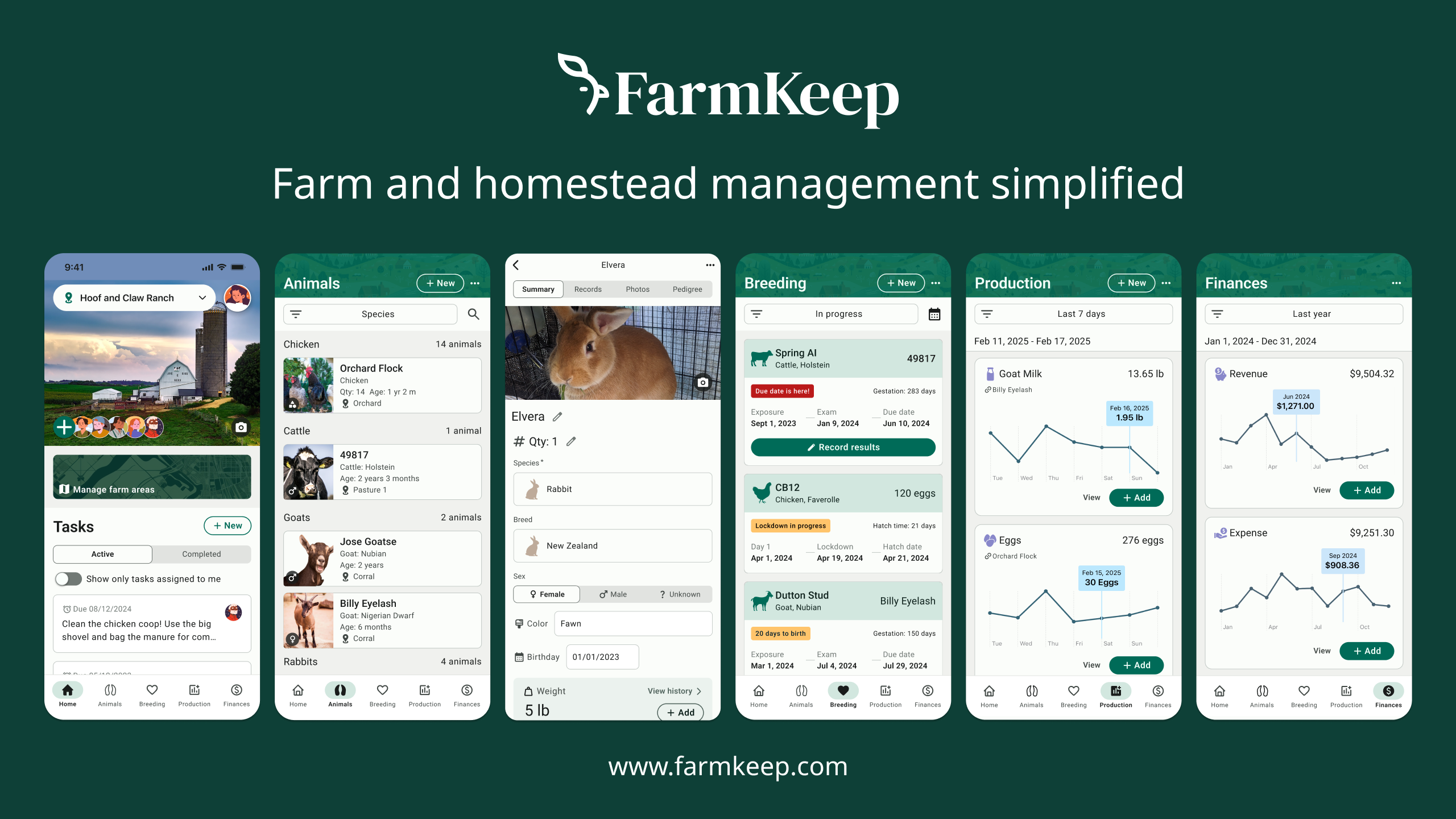
How FarmKeep Can Help You Start and Manage Your Farm
Starting a farm involves a lot of moving pieces—tracking livestock, planning production cycles, managing expenses, and keeping records organized. As your farm grows, spreadsheets, notebooks, and scattered documents can quickly become difficult to manage. This is where farm management software can make a major difference.
FarmKeep is designed to help farmers organize their operations in one place, making it easier to track the information that keeps a farm running smoothly.
Centralize Your Farm Records
One of the biggest challenges new farmers face is keeping accurate records. FarmKeep allows you to store important farm data in one organized system, including:
- livestock records and animal profiles
- breeding dates and gestation tracking
- health treatments and vaccinations
- production data such as eggs, milk, or fiber
- crop planting and harvest information
Having these records organized makes it easier to make informed decisions and improve farm performance over time.
Track Expenses and Farm Finances
Understanding your farm’s finances is essential for long-term success. FarmKeep helps farmers record expenses and income so you can see how your farm business is performing.
With better financial tracking, you can:
- monitor startup costs
- track feed, equipment, and veterinary expenses
- analyze revenue from farm products
- evaluate profitability across different farm activities
This data helps you refine your farm business plan and make smarter financial decisions.
Manage Breeding and Production Cycles
If your farm includes livestock, keeping track of breeding timelines and production cycles is critical. FarmKeep provides tools that help farmers record breeding dates, track gestation timelines, and plan upcoming production events.
This makes it easier to manage herd growth, predict births, and coordinate farm tasks around breeding schedules.
Keep Your Entire Farm Organized
FarmKeep brings together many aspects of farm management in one place, helping farmers stay organized as their operations grow.
Instead of juggling multiple notebooks or spreadsheets, you can manage:
- livestock records
- production tracking
- financial data
- farm tasks and activities
All from a single platform designed specifically for farmers.
Plan Today, Manage Tomorrow
Creating a farm business plan is an important first step toward building a successful agricultural operation. As you begin implementing that plan, having the right tools to manage your farm can make the process much easier.
FarmKeep helps farmers turn their farm plans into real, organized systems—so you can focus on growing your farm instead of managing paperwork.
Download FarmKeep to start tracking your farm records, production, and finances all in one place.
Final Thoughts
Starting a farm is both a challenging and rewarding journey.
With the right planning, funding, land access, and business strategy, it’s possible to build a successful farming operation that produces food, supports your livelihood, and contributes to your local community.
By taking the time to plan carefully, start small, and track your farm records and finances, you can build a strong foundation for long-term agricultural success.
FAQ
Can you start a farm with no money?
Starting a farm with no money is difficult, but it is possible if you start small and use creative strategies. Many beginner farmers start by leasing land instead of purchasing it, partnering with landowners who have unused farmland, or participating in farm incubator programs designed to support new farmers.
Other options include applying for beginning farmer grants, using crowdfunding, or starting a small-scale farm business that requires minimal equipment. Many successful farms began with small operations such as vegetable gardens, backyard poultry, or microgreens production before expanding into larger agricultural businesses.
How many acres do you need to start a farm?
The number of acres needed to start a farm depends entirely on the type of farming you plan to do.
Some farms can operate successfully on very small parcels of land. For example, market garden farms producing vegetables or microgreens may operate on one to five acres. Small poultry farms or specialty crop farms may also require only a few acres.
However, livestock operations such as cattle ranching typically require much larger areas of pasture. Some grazing systems may require several acres per animal depending on the climate, soil, and forage conditions.
Ultimately, the land requirement for starting a farm varies widely based on your production model and management practices.
How much does it cost to start a farm?
Farm startup costs vary widely depending on the scale of the farm and the type of agriculture you plan to pursue.
Small hobby farms or micro farms may start with only a few thousand dollars, especially if land is leased and equipment is minimal. Larger commercial farms, on the other hand, can require hundreds of thousands of dollars when land, machinery, livestock, and infrastructure are included.
Typical startup expenses include farmland, fencing, equipment, livestock, irrigation systems, barns, and operating capital for feed, seeds, and labor.
Many new farmers start small and reinvest profits into gradually expanding their farm operations.
How do beginner farmers get funding?
Beginner farmers often combine several funding sources to start their farm.
Some of the most common funding options include personal savings, agricultural loans, farm grants, and government programs designed for beginning farmers. In the United States, the USDA offers loan programs specifically for new farmers, including farm ownership loans and microloans.
Some farmers also raise capital through crowdfunding, private investors, or community supported agriculture (CSA) programs where customers prepay for seasonal produce.
Creating a clear farm business plan can significantly improve your chances of securing funding.
Is farming profitable for small farms?
Small farms can be profitable, especially when they focus on high-value crops, niche markets, or direct-to-consumer sales.
Many successful small farms generate income by selling products directly through farmers markets, CSA subscriptions, farm stands, or online stores. By eliminating middlemen, farmers can capture a larger portion of the final retail price.
Small farms may also increase profitability by producing value-added products such as cheese, jams, soaps, fiber products, or prepared foods.
Profitability ultimately depends on production efficiency, marketing strategy, and choosing the right products for your local market.
What type of farm is most profitable?
The most profitable farms often focus on specialty crops, niche livestock, or value-added agricultural products.
Examples of profitable small farm enterprises include microgreens production, specialty mushroom farms, flower farms, beekeeping operations, pastured poultry, and heritage livestock breeding programs.
Farms that sell directly to consumers typically achieve higher margins compared to farms selling wholesale commodities.
Profitability also depends heavily on location, market demand, and production efficiency.
Can you start farming without owning land?
Yes, many farmers start farming without owning land. Leasing farmland is one of the most common ways for beginner farmers to access land without making a large upfront investment.
Some farmers also partner with landowners who want their land managed or participate in farm incubator programs that provide temporary access to farmland, equipment, and training.
These options allow farmers to gain experience and generate income before eventually purchasing farmland.
What licenses or permits do you need to start a farm?
The licenses and permits required to start a farm depend on your location and the types of products you plan to sell.
Common requirements may include registering your farm business, obtaining an employer identification number (EIN), and complying with zoning regulations. Farms that process food products such as dairy, meat, or canned goods may also need additional food safety permits.
Local agricultural extension offices can provide guidance on the specific regulations that apply in your area.
How do farms make money?
Farms generate income through a variety of revenue streams including selling crops, livestock, dairy products, eggs, or specialty agricultural goods.
Many farms increase profitability by creating value-added products such as cheese, jams, soaps, fiber products, or processed foods. Others diversify income through agritourism activities such as farm tours, workshops, farm stays, or seasonal events.
Successful farms often combine several revenue streams to build a resilient and sustainable business.
How long does it take to start a farm?
The timeline for starting a farm varies depending on the complexity of the operation.
Some small farms can begin production within a few months, especially if they are focused on vegetable production or poultry. Larger farms that require infrastructure, breeding livestock, or perennial crops may take several years to fully establish.
Many farmers begin with a small operation and gradually expand their farm as they gain experience and financial stability.